If you’ve ever stood in your kitchen mid-cook, watching your built-in gas hob’s flame sputter and dance unevenly across your pan base instead of burning in that consistent, blue, concentrated cone you were promised, you’re not alone. As a built-in gas hob supplier, I’ve fielded this question from homeowners, contractors, and even fellow kitchen appliance specialists more times than I can count—and while it might feel like a random, annoying quirk, uneven flames almost always tie back to small, fixable, or preventable details that we, as manufacturers, care deeply about. Let’s break this down like we would with a service tech on a cold call, no confusing jargon, just real-world context from years of building and supporting these hobs. Built-in Gas Hob

First, let’s start with the part of the hob that touches the flame most directly: the burner cap and the burner head. I’ll be honest—most people don’t think twice about these two metal pieces, but they’re the core of proper flame function. Every built-in gas hob we design has the burner cap precisely aligned and the ports drilled to a specific size, but over time, that balance can get thrown off. Even a tiny bit of crud—think burnt food particles, dried oil, or mineral deposits from hard water—clogging a single burner port can throw the entire flame off-kilter. I once had a customer send us a 10-second video of their hob, showing one side’s flame being so weak it barely warmed a pot, and after chatting, I learned she’d wiped her hob with a soapy sponge after cooking pasta and never fully dried the burner caps. The moisture mixed with pasta starch baked into the ports overnight, and by the next use, half the ports were blocked. What ended up happening? The unblocked ports had to push more gas to compensate, leading to that lopsided, uneven flame you see. That’s the first thing I always tell people to check before anything else: pull off the burner caps, run them under warm, soapy water with a soft brush (a toothbrush works perfectly—just make sure it’s clean), and gently poke each port with a dry, soft piece of wire (we actually include a small cleaning pin with every our hobs, by the way—check your manual!). Don’t use a paper towel to wipe the ports; it can leave tiny fibers that just block things more. That’s such an easy fix, and it resolves at least 60% of the uneven flame issues we hear about.
Next up, something that’s less obvious but way more common than you’d think: gas pressure. Built-in gas hobs are calibrated in the factory to run at a specific pressure, whether you’re using natural gas (the most common for homes) or propane (if you’re in a rural area or have a tank setup). If the gas line feeding your hob is too small, or there’s a kink in the flexible hose that connects to the hob, or even a regulator that’s faulty, that pressure drops. What does that look like? Flames that are yellow instead of blue, wobbly, and unevenly distributed across the burner. I had a contractor reach out to me last year, saying his team had installed our hobs in ten new homes, and one of them had uneven flames. Turns out, the plumber had used a 1/4-inch gas line instead of the 3/8-inch line we specify for our 5-burner model. The gas couldn’t flow fast enough to all the ports, so some were starved and some got too much, leading to that patchy flame. If you’ve just moved into a new home or had any gas line work done recently, that’s a prime suspect. You can check this yourself, but if you’re not comfortable with gas lines—please, call a licensed technician. Safety always comes first, which is why we never skip the pressure testing step during production, but we can’t account for changes after installation or other work on your home’s gas system.
Then there’s the burner cap alignment. I know, it sounds trivial, but even a 1/8-inch shift in the cap can throw everything off. When you put the cap back on after cleaning, have you ever twisted it a little to make it fit tight? Most people do, because a loose cap can rattle while cooking, but twisting it off-kilter means the ports on the cap aren’t lining up with the ports on the burner head below. I once had a customer who was convinced their hob was defective, because the customer service rep at the store had told her “that’s just how gas hobs work.” She kept twisting the cap to lock it, and every time, the flame would get worse. When I walked her through aligning the notches on the cap with the little tabs on the burner head (again, that’s in the manual!), she called me back an hour later saying her flame was perfect, blue, and even. That’s such a small detail, but it’s easy to miss when you’re in a hurry to get dinner on the table.
Wait, let’s not forget about the pan you’re using. This is one I didn’t learn until I’d been in the business for a few years—pan weight, base thickness, and even material can affect how the flame looks. A thin, warped aluminum pan, for example, won’t sit flat on the hob’s burner grate. Instead of making full contact with the flames, it’s sitting at an angle, so some flames are hitting the pan and some are escaping around the edges, making the whole flame look uneven. We design our burner grates to hold standard pan sizes, but if you’re using a wobbly, old pan that’s been dented over years, that’s going to mess with how the heat distributes, and that can translate to uneven flame appearance. Even cast iron pans that are unevenly seasoned can have this effect, because the oil builds up unevenly and tilts the pan slightly. The fix here is simple: make sure your pan sits flat on the grate. If it rocks, it’s warped, and it might be time to replace it (or flip it upside down on the grate if you just need a quick fix, though that’s a short-term solution).
Now, let’s get into the things that are a bit more complex, and why it’s important to go with a reputable built-in gas hob supplier, like us. Some uneven flame issues aren’t the homeowner’s fault—they’re manufacturing or calibration issues from the factory. For example, if the burner ports were drilled unevenly during production, or the gas orifice (the tiny nozzle that sends gas to each port) isn’t the right size. We test every single hob that leaves our warehouse for flame consistency, but every so often, a small batch has a misaligned orifice, usually due to a machine calibration error during production. That’s rare—less than 0.5% of our units have this issue—but it does happen. If you’ve checked all the basic stuff: cleaned the ports, aligned the cap, checked gas pressure, and your pan is flat, then it might be a factory defect, and that’s when our customer support team steps in. We don’t want you frustrated with a hob that’s not working as it should, so we make it easy to get support for these issues.
Another thing that people don’t talk about enough is altitude. If you live at a high altitude—like 2,000 feet or above—the air is thinner, which means there’s less oxygen for the gas to burn. Our hobs are calibrated for sea level, but when you’re at higher elevations, you need to adjust the air shutter (that small metal piece at the base of the burner, usually near where the gas line connects) to let in more air. If you don’t adjust that, the flame will be yellow, smoky, and uneven, because there’s not enough oxygen to mix with the gas. I had a customer in Denver reach out last year, saying their hob’s flame was all yellow and uneven, and after a quick call, I walked them through adjusting the air shutter on their burners. It took two minutes, and that fixed the entire problem. That’s a setting we include a guide for in every manual, but it’s easy to overlook if you’ve never lived at a high elevation.
Let’s circle back to what matters most: safety. I know when you see an uneven flame, the first thing you might worry about is that it’s dangerous, and to be clear, most of the time, it’s not a safety hazard—but it can be. A yellow flame means incomplete combustion, which can release carbon monoxide, so if you see consistently yellow, sooty flames, that’s a sign to address the issue right away, whether that’s adjusting the air shutter or calling a technician. As a supplier, we test all our hobs to meet strict safety standards, so if you’re using one of our units and have an uneven flame, we’ll never brush you off—we’ll walk you through every step to get it fixed, whether it’s a quick cleaning or a more involved check.
Over the years, I’ve learned that uneven flames are often just a combination of small, easy-to-fix issues, not a sign that your hob is broken or that you made a bad investment. That’s why we design our built-in gas hobs with simple, accessible parts—no fancy, hard-to-clean components that make maintenance a chore. We also include a step-by-step troubleshooting guide in every user manual, because we want our customers to feel confident in their hob, not intimidated by it. If you’ve tried all the basic fixes: cleaning the burner caps and ports, aligning the cap correctly, checking gas pressure with a professional, and adjusting the air shutter if you live at high altitude, and you’re still seeing uneven flames, that’s when we can help. Whether you’re a homeowner looking for support with an existing hob, or a contractor or developer looking for a reliable built-in gas hob supplier for your next project, we’re here to assist. We stand behind our products, and our team has years of experience solving these exact issues, so you don’t have to stress about it.
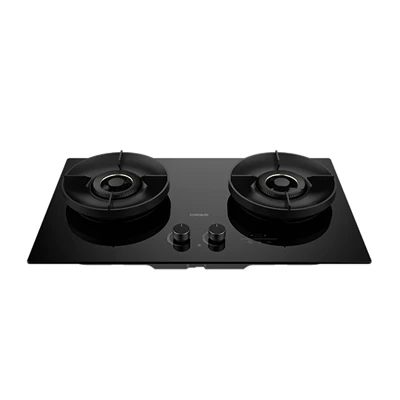
If you’re in the market for a new built-in gas hob, or you need support with an existing unit, don’t hesitate to reach out. We work with residential customers for replacement parts and troubleshooting, and with commercial and residential contractors for bulk orders and customized solutions for kitchen projects. We understand that a gas hob is more than just an appliance—it’s the center of the kitchen, where meals are made, memories are shared, and functionality matters as much as quality. So when your flame is uneven, don’t assume it’s a lost cause. Try the simple fixes, and if they don’t work, reach out to us. We’ll help you get your hob back to burning that consistent, even blue flame it’s supposed to.
Oven References:
- Gas Appliance Manufacturers Association. (2021). Residential Gas Burner Performance and Maintenance Guidelines. GAMA International.
- National Fire Protection Association. (2022). NFPA 54: National Fuel Gas Code. National Fire Protection Association.
- International Association of Plumbing and Mechanical Officials. (2020). Uniform Mechanical Code: Gas Appliance Installation Requirements. IAPMO.
- United States Department of Energy. (2019). Energy Efficiency Guide for Household Gas Ranges and Ovens. Office of Energy Efficiency & Renewable Energy.
Hangzhou DE&E Smart Home Co., Ltd.
As one of the most experienced built-in gas hob manufacturers and suppliers in China, we offer a wide range of products with superior quality. Please feel free to wholesale cheap built-in gas hob from our factory. Contact us for more details.
Address: No.98 Hongxing Road, Xiaoshan District, Hangzhou City, Zhejiang Province 311231, China
E-mail: sabrina.liao@chinadee.com
WebSite: https://www.deeappliances.com/
