If you’ve ever stood in an auto parts aisle or a mechanic’s workshop, watching a car owner tug at a dead battery that’s sat unused for months, you’ve probably seen a charger with a little-known setting labeled “desulfation mode.” For years, we’ve heard customers bring this up: they plug their charger into a battery that won’t hold a charge, tap that desulfation button, and walk back an hour later with a battery that turns the engine over like new. But what actually is desulfation mode, and is it a magic fix for every dead battery? As a car battery charger supplier, we field this question every week, so let’s break it down with real, practical science—no jargon, no hype, just what works for everyday drivers. Car Battery Charger
First, we need to start with why car batteries die prematurely, especially when left unused. Most standard car batteries are lead-acid batteries, the kind in 90% of passenger vehicles on the road today. They work by creating a chemical reaction between lead plates submerged in sulfuric acid: when the battery is charged, lead sulfate (PbSO4) breaks down into lead, lead dioxide, and sulfuric acid; when discharged, those materials turn back into lead sulfate. The problem is, if a battery sits at a low charge for too long—say, a car parked for three months without being started, or a short commute that doesn’t let the battery fully recharge—lead sulfate doesn’t dissolve back into the acid. Instead, it forms hard, crystalline deposits on the lead plates, a process called sulfation. Over time, these crystals build up so thick they block the plates, prevent the chemical reaction, and leave the battery unable to hold a charge. That’s sulfation at work, and it’s the number one cause of battery failure, not just old age.
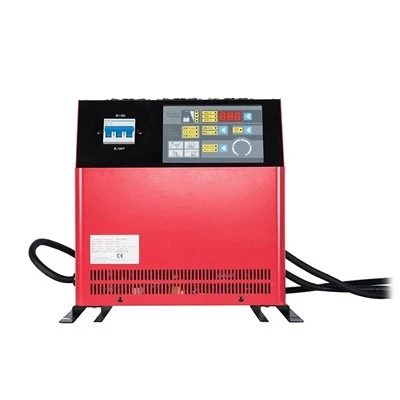
Now, desulfation mode is the specific setting on modern car battery chargers designed to reverse that early stage of sulfation. It’s not some gimmick—its science is rooted in pulsing high-frequency, low-voltage electrical current through the battery. Let’s be clear: it only targets the soft, newly formed sulfation crystals, not the hard, permanent ones that have been building for years. Think of it like limescale in a coffee pot: you can dissolve fresh, thin limescale with a mild vinegar soak, but if it’s hardened over years, it’s impossible to remove without replacing the pot. Desulfation is that vinegar soak for your battery.
Here’s how it works in practice, from what we’ve seen with our own chargers over thousands of customer use cases. When you activate desulfation mode, the charger doesn’t just send steady current like a standard charge. It sends short, repeated electrical pulses—usually between 14 and 16 volts, which is slightly higher than a regular 12-volt charge. These pulses vibrate the soft lead sulfate crystals, breaking them apart so they can dissolve back into the sulfuric acid solution. The charger monitors the battery’s voltage in real time: once it detects that the sulfation crystals are mostly gone, it automatically switches back to a standard charging mode to bring the battery to a full 12.6-volt state without overcharging the delicate plates.
But wait—desulfation mode doesn’t work for every dead battery, and that’s something we make a point to tell our customers upfront. We see too many people buy a cheap charger, press desulfation on a battery that’s been dead for two years, and get frustrated when it doesn’t work. Let’s outline the key conditions that make desulfation mode effective:
First, the battery must be a lead-acid type—flooded, AGM (Absorbent Glass Mat), or gel cell—since lithium-ion batteries use a completely different chemical reaction and sulfation isn’t an issue for them. If you plug a lithium-ion battery into a desulfation setting, it’s useless, even potentially dangerous, because lithium-ion batteries can’t handle the voltage pulses designed for lead-acid.
Second, the state of sulfation matters. If your battery’s open-circuit voltage (the voltage when it’s not connected to a charger or car) is above 9.6 volts, that means the sulfation is still in the early, reversible stage. If it’s below 9.6 volts, the lead plates are likely damaged beyond repair, and desulfation won’t bring it back. We always tell customers to test their battery’s voltage with a multimeter first: set it to DC volts, touch the red lead to the positive terminal, black to negative, and take a reading. If it’s between 10.5 and 12.4 volts, that’s mild sulfation—perfect for desulfation. If it’s under 10.5 volts, that’s severe sulfation, and you’ll probably need a new battery, no matter what the charger says.
Third, the battery’s age matters. A brand-new battery that just died from being left uncharged for a month will respond great to desulfation. A four-year-old battery that’s sat unused for six months has a 50/50 chance, depending on how much sulfation has built up. A seven-year-old battery that’s failed entirely? Desulfation won’t fix it—those hard crystals have etched the lead plates, and there’s no way to reverse that damage.
We also get asked a lot if desulfation mode can harm a good, healthy battery. The short answer is no, not when you use a quality charger designed for this function. Good chargers with desulfation mode have built-in safety features: they’ll automatically detect if a battery is healthy, skip the desulfation pulses, and go straight to a slow, trickle charge. Cheap, no-name chargers might skip that detection step, which could overheat a healthy battery or cause minor damage—another reason we always recommend using a reputable charger, not the $10 plug-in from a gas station.
From our experience as a battery charger supplier, desulfation mode is one of the most valuable features for casual drivers who don’t drive daily, people who use classic cars that sit for weeks, or anyone who’s had to jump their battery once or twice in a month. We’ve had customers tell us they’ve saved hundreds of dollars over the years by reviving a battery that would’ve otherwise been tossed. But it’s important to manage expectations: it’s not a “permanent fix” or a replacement for regular battery maintenance.
To make desulfation mode work correctly, here’s a step-by-step guide we share with every customer who buys our chargers:
- Disconnect the battery from the car first, if possible. If you can’t disconnect it, make sure all accessories (radio, lights, phone chargers) are off to avoid voltage spikes.
- Test the battery’s open-circuit voltage with a multimeter first to confirm it’s above 9.6 volts. If it’s lower, stop—desulfation won’t work.
- Connect the charger’s positive clamp to the battery’s positive terminal, negative to negative. Double-check the connections; reversed clamps can damage both the charger and battery.
- Select the desulfation mode on your charger, then let it run. Most chargers will take 1 to 12 hours, depending on the level of sulfation. Don’t disconnect it early—wait for the charger to switch back to the “main charge” mode automatically.
- Once charged, test the battery’s voltage again. It should be around 12.6 volts, which is a fully charged state. If it’s below 12.4 volts, there’s still some sulfation left, and you can run desulfation mode again for a few more hours.
- After using desulfation, keep the battery on a trickle charge for 24 hours to lock in the charge and prevent new sulfation from forming.
We also want to stress that regular maintenance is way more effective than relying on desulfation to fix problems. If you drive your car at least once a week for 15 minutes, you’ll keep the battery’s charge up and prevent sulfation entirely. For cars that sit for long periods, a trickle charger (which often has a built-in desulfation mode) is the best investment—we sell hundreds of these specifically for classic car owners, seasonal vehicles, and boats that are stored for winter.
So what’s the bottom line on desulfation mode? It’s a science-backed, useful tool for extending the life of your lead-acid car battery, as long as you use it correctly and set realistic expectations. It’s not a replacement for a dead, old, or damaged battery, but it can save you money and hassle if you catch sulfation early.
If you’re curious to test desulfation mode for your own battery, or have questions about which charger works best for your vehicle, we’re here to help. Reach out to our team to discuss your needs, whether you’re a casual driver with a seasonal car, a classic car enthusiast, or a mechanic looking for reliable charging solutions for your shop. We can walk you through what chargers work for different battery types, how to use desulfation mode safely, and even offer maintenance tips to keep your battery running longer.
Marine Battery Charger References
- Linden, D., & Reddy, T. B. (2019). Handbook of Batteries (4th ed.). McGraw-Hill Education.
- Automotive Battery Council International. (2022). Lead-Acid Battery Maintenance and Failure Analysis. National Battery Manufacturers Association.
- SAE International. (2021). Test Methods for Lead-Acid Battery Sulfation Reversal. SAE International Journal of Passenger Cars – Electrical Systems.
Huizhou Qiangfeng Power Technology Co., Ltd.
Huizhou Qiangfeng Power Technology Co., Ltd. is one of the most professional car battery charger manufacturers and suppliers in China, featured by quality products and good service. We warmly welcome you to buy customized car battery charger made in China here from our factory. If you have any enquiry about quotation and free sample, please feel free to email us.
Address: No. 28, Hu’ao Avenue, Shiwan Town, Boluo County, Huizhou City, Guangdong Province
E-mail: Komco@Jinlidianqi.cn
WebSite: https://www.autobatterychargers.com/
