Hey there, let’s talk about something that’s probably keeping the lights on in your neighborhood right now—and you’ve probably never even heard of it: the distribution chamber. Full disclosure, I’ve been selling these things for 12 years, so I’ve seen firsthand how most folks in the power space sleep on them until something goes wrong. Let’s break it down, no boring jargon, promise. Distribution Chamber
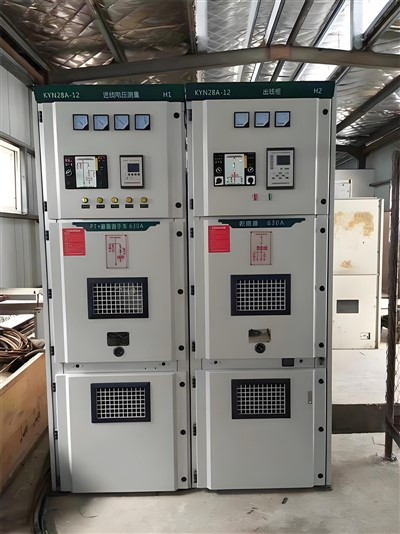
First, let’s get one thing straight: the power grid isn’t just a bunch of big power plants and tall transmission lines strung between mountains. That’s the super-high-voltage stuff moving electricity hundreds of miles. Once that juice gets close to homes, schools, and local businesses, it has to get “scaled down” to a safe, usable voltage—like 120/240V for your house, 480V for a corner grocery store’s fridge. That’s where distribution chambers come in. They’re basically the unsung middlemen of the grid, and their role is way more than just a box to hide wires.
Wait, let’s make that concrete. If a transmission line is coming into your town from a hydro dam or a coal plant, it’s pulling like 138,000 volts. That’s way too hot to plug into a coffee maker, right? So first, it hits a substation, which has big transformers that drop it down to, say, 12,470V— that’s the “distribution voltage” for local lines. But that step-down isn’t just a transformer sitting in a field. You need a secure, weatherproof, maintainable spot to put all the gear that handles that voltage change, plus the stuff that keeps power flowing where it needs to go, and protects everything from surges. That’s the distribution chamber.
I’ve seen contractors call them “vaults” or “power pits” or even just “the concrete box” depending on where you are, but they all do the same core job: house the low-to-medium voltage distribution gear so it works 24/7, no matter the rain, snow, or random critters that like to chew wires. Let’s list out the key roles here, because this isn’t one-trick pony work.
First and biggest: voltage transformation and regulation. Like I said, the transmission line can’t just dump 138k volts into a neighborhood. The distribution chamber holds those medium-voltage transformers that drop it down to the local voltage. But it doesn’t stop there—these chambers also have voltage regulators, right? Because if a whole neighborhood is running their ACs at 7pm, the voltage might dip, and if everyone turns off their AC at 10pm, it might spike. The regulators in the chamber adjust that automatically so your fridge doesn’t turn into a box of spoiled food and your phone charger doesn’t blow up. I’ve had a few clients tell me they used to skip a decent regulator setup in cheap chambers, and got 20+ calls a week from homeowners saying their electronics died during peak usage. Don’t cut that corner.
Second role: circuit protection and fault isolation. Let’s be real—wires break, trees fall on lines, squirrels get into energized parts and cause a short, that spark that knocks out power for half the block. The distribution chamber has all the breakers, fuses, and reclosers that handle that. If a fault happens, the recloser will try to reset itself once or twice (that’s why sometimes your power flickers for a second and comes back) but if it’s a real bad issue—like a downed line—the breaker in the chamber will flip. The best part here? It isolates that fault to just a small section of the grid, not the whole town. I had a project out in rural Ohio a few years back where a oak tree fell on a line; the old setup before our chambers would’ve knocked out power for 3 entire counties. With our chambers, that fault tripped just the one 4-block stretch, and the rest of the county was fine. Folks don’t realize how much that isolation cuts down on outage time—people don’t lose groceries, hospitals don’t go on backup generators unnecessarily, small businesses don’t lose a day of sales. That’s huge.
Third: routing and distribution management. The chamber isn’t just a box for one transformer. It’s the hub where all the local feeder lines split off. You have one big line coming into the chamber, then it splits into lines that go to the east side of town, the west side, the strip mall, the elementary school. That means when a line needs maintenance, the techs can shut off just that feeder from the chamber, no need to kill power for everyone. Also, modern chambers are getting smarter—we’ve been adding smart meters and IoT sensors to them over the last 5 years. So grid operators can monitor how much power is going to each section in real time, spot a line that’s overloaded before it causes a fault, even adjust voltage remotely without sending a tech out. I worked with a utility in Texas during last summer’s heatwave that had these smart chambers; they caught an overloaded feeder in a suburb before it could cause a blackout that would’ve affected 10,000 people. That’s the value right there.
Fourth: safety and environmental protection. This is a big one that a lot of people miss. All that energized gear inside—high voltage, right? If someone could wander up and touch it, that’s a death sentence. The distribution chamber is locked, reinforced, only accessible to licensed utility techs with the right tools. It also keeps the gear safe from the elements: rain can short out wires, snow can weigh down equipment, rodents can chew through insulation. We build our chambers with materials that are corrosion-resistant, too—for coastal areas where salt air eats away at metal, we use fiberglass-reinforced plastic (FRP) instead of concrete that cracks and rusts. And we have to keep things from leaking oil, too—transformers use oil to cool down, so the chamber has spill containment pans under every transformer. You don’t want that oil seeping into the ground and contaminating a water table, that’s a huge environmental headache for utilities.
Wait, let’s address a common myth I hear all the time: “Can’t we just put all this gear on poles?” Yeah, sometimes, but poles only work for low-density areas. If you’re in a city, hanging 10 transformers and breakers on poles is ugly, blocks signs, can’t handle as much load, and if a truck hits a pole, half the neighborhood is out. Underground distribution with chambers is way more reliable in dense areas. Plus, in areas with heavy snow or ice, pole-mounted gear gets knocked down way more often. I had a client in Denver a couple years ago who switched from pole to chamber-mounted gear for their downtown area. Their outage rate dropped 60% in a year. That’s not a small number.
Now, let’s talk about what makes a good distribution chamber, because not all are created equal. I’ve seen cheap chambers made with thin concrete that cracks after 3 years, or no proper spill containment, or no room to actually work on the gear inside. A good chamber isn’t just a box—it’s designed for maintainability. Techs need to be able to fit inside, move gear around, pull wires without banging their heads or cramming into a space so small they can’t do their job. We design our chambers with modular layouts, so if a utility needs to add a new transformer or a smart sensor down the line, they don’t have to dig up the whole chamber and start over. That saves them tens of thousands of dollars in retrofitting costs.
Also, fire safety! The gear inside can get hot, especially during peak summer. Good chambers have ventilation systems that prevent overheating, plus fire suppression that kicks in automatically if there’s a problem. No one wants a chamber fire that spreads to nearby buildings or takes out a whole grid section. I’ve had a few horror stories from competitors who skipped proper ventilation because they wanted to cut costs, and their chambers overheated during heatwaves and caused minor fires. That’s not the kind of reputation you want.
Let’s circle back to why this matters right now. Everyone’s talking about the grid modernization push, and the transition to solar and wind, right? Distributed energy resources (solar panels on homes, small wind turbines, battery storage) are popping up everywhere, and they’re adding power back into the grid, not just taking it. Distribution chambers have to adapt to that. They need bi-directional meters that can track power going from a homeowner’s solar panel back to the grid, they need to handle variable voltage from these renewable sources, they need to adjust dynamically instead of just sending power one way. That’s a big shift from how chambers were designed 20 years ago. I’ve been working with utilities to upgrade our chambers to handle this new two-way flow, and it’s been crazy to see how critical these old hubs are for the energy transition.
Wait, let’s make this personal. Last month, I was talking to a utility manager in Arizona who told me about a blackout last summer that affected 25,000 people. The problem? Their old, outdated distribution chamber couldn’t handle the extra load from all the new rooftop solar in the area, so a fault happened and they couldn’t isolate it properly. It took 8 hours to fix, and the hospital in the area almost had to switch to backup generators permanently because the outage lasted so long. That’s the kind of thing that makes me proud of the work my team does. We don’t just sell boxes—we sell reliable power that keeps people’s lives running. No one thinks about the distribution chamber until the lights go out, but when you look at how much of the grid depends on it, it’s like the heart of the distribution side—pumping power to where it needs to go, and keeping the bad stuff from spreading.
So, if you’re a utility engineer, a grid planner, a contractor working on a local project, or anyone who’s tired of unnecessary blackouts cutting into your community, the distribution chamber isn’t something to skimp on. You want something that’s built to last, designed for your specific environment (coastal, desert, snowy, dense city), and can adapt to new tech as the grid changes. We’ve been doing this for over a decade, worked on projects in 12 states, and I can tell you from experience that investing in a good distribution chamber pays off in fewer outages, lower maintenance costs, and happier customers.

If you’re looking to upgrade your grid’s distribution infrastructure, or just have questions about what kind of chamber would work best for your project, reach out to us to chat. We can walk through your needs, show you case studies from similar areas, and make sure you get something that works for the long haul. The grid only gets more important, and the distribution chamber is the backbone that holds it all together. Let’s make sure yours is built right.
Tertiary Distribution Box References
- North American Electric Reliability Corporation (NERC). (2022). Distribution Grid Reliability Best Practices.
- U.S. Department of Energy (DOE). (2021). Modernizing Distribution Systems for Distributed Energy Resources.
- International Electrotechnical Commission (IEC). (2019). IEC 62271-202: High-Voltage Switchgear and Controlgear – Part 202: AC Metal-enclosed Switchgear for Rated Voltages Above 1 kV Up to and Including 52 kV.
Anhui Nanxian Electric Co., Ltd.
With abundant experience, we are one of the most professional distribution chamber manufacturers and suppliers in China. We warmly welcome you to buy advanced distribution chamber for sale here and get quotation from our factory. All customized products are with high quality and low price.
Address: Factory Unit 03-2, Building 21, Feidong Yinfeng Industrial Park Co., Ltd., Northeast Corner of Manquan Road and Changle Road, Hefei Circular Economy Demonstration Park, Feidong County, Hefei City, Anhui Province.
E-mail: 541580567@qq.com
WebSite: https://www.nxelepower.com/
