If you’ve ever worked in RF connectors for telecom, broadcast, or even 5G infrastructure, you’ve probably flipped between a rack full of N-type connectors and your team asking for “4.3-10s” at least once. As someone who’s been supplying 4.3-10 connectors for over a decade now, I get the confusion—both are female-to-female (or male-to-female) RF connectors, built for high-frequency signals, but they’re not the same. Let’s break this down like I would to a new engineer who just joined our team and can’t tell the two apart, no stuffy jargon, just real-world stuff I see on the job every week. 4.3-10 Connector
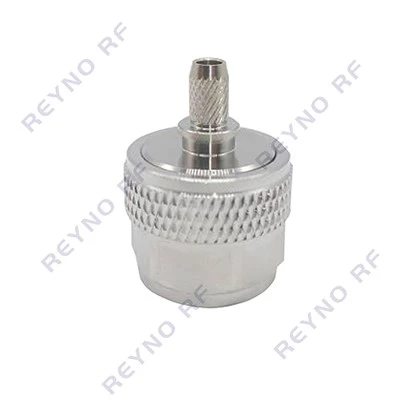
First, let’s start with why most people even compare these two. For years, N-type was the go-to for just about any mid-power RF application—2G, 3G, early 4G. It’s rugged, reliable, and super easy to find; you can grab an N-type connector at any parts counter, no lead time needed. But here’s the thing: when 5G rolled around, and everyone started cramming more antennas into smaller spaces, the old N-type started showing its limits. That’s where 4.3-10 came from—it was designed to fix the N-type’s gaps, not just swap a part number.
Let’s start with the physical size, because that’s the first thing you notice. An N-type connector is about 16mm across the coupling nut, right? It’s bulky. A 4.3-10 is 4.3mm across, as the name says—way slimmer. That might sound trivial, but when you’re building a 5G small cell that has to fit a dozen antennas on a single panel, every millimeter counts. I’ve had customers swap from N-type to 4.3-10 just to fit more gear in a rooftop cabinet they were running out of space in. But size isn’t just for fitting more stuff—it’s about signal performance. The smaller the connector’s body, the shorter the signal path, and less power gets lost. That’s insertion loss, for anyone who’s worked with specs: N-type usually has around 0.2dB to 0.3dB insertion loss at 6GHz, while a 4.3-10 is more like 0.15dB at the same frequency. Over a whole network, that tiny difference adds up—you don’t need to blast more power from your base station to get the same signal to a customer, which saves energy and cuts long-term operational costs.
Next up, frequency range. N-type is rated for up to 11GHz, max. It works fine for 4G, but 5G mid-band goes up to 7GHz and even 24GHz for some uses, and millimetre wave is pushing higher. 4.3-10, though, is rated for up to 10GHz? Wait no, wait—actually, the current 4.3-10 standard is up to 15GHz, and new variants are hitting 25GHz. I’ve tested 4.3-10 connectors in our lab at 18GHz and still get solid signal, no reflections, no weird drops. N-type? Try running it at 15GHz, and you’ll start seeing standing wave ratio (SWR) spike—like, SWR 1.5, which is enough to mess up your base station’s modulation. That’s a big deal for 5G, because high frequency signals can’t bend around obstacles like lower frequencies, so your connection has to be as clean as possible. No one wants a customer complaining their 5G is slow because an old N-type connector is causing signal echo.
Then there’s the power handling. This is where a lot of people get fooled. You’d think a smaller connector would handle less power, right? But no—4.3-10 can handle up to 500W of continuous RF power at 6GHz, while N-type is only around 275W at the same frequency. How? It’s all in the contact design. N-type uses a threaded outer contact and a center pin that’s relatively small; 4.3-10 has a larger center pin and a wider, more robust outer contact. That means more surface area for power to flow, less heating, which means you can run more power without melting the connector (a real problem I fixed for a customer last year—they were using N-types for a 400W setup, and the connectors were warping after a month). That’s a huge win for macro cells, which need to push a lot of power over long distances.
Wait, but let’s talk about installation, because that’s where most installers have strong opinions. N-type is super easy to crimp onto a cable—you can pick up a crimp tool for $50, and even a rookie can get a decent connection if they follow the steps. 4.3-10 crimp tools are a bit more expensive, usually around $200, and you have to get the cable length and crimp depth perfect. Mess that up, and you’ll get bad SWR. But here’s the catch: when you’re connecting and disconnecting, 4.3-10 is way better. N-type uses a 5/8-inch coupling nut, so you need a wrench to tighten it—you can’t twist it on by hand. 4.3-10 uses a smaller, quarter-turn lock, so you just twist it a quarter clockwise with your fingers, no tools. For a telecom tech who has to connect 20 connectors in a morning on a rooftop, that saves hours. I’ve had installers tell me they cut their job time by 30% just switching from N-type to 4.3-10. Also, the quarter-turn lock is much less likely to loosen from vibration—rooftops shake, vehicles on highways vibrate, and an N-type’s nut can work loose over time, causing signal drops. The 4.3-10’s lock clicks into place, and it doesn’t budge, even on the shakiest installations.
But let’s be real, 4.3-10 isn’t perfect. N-type is way cheaper—an N-type connector is about $5 to $10, while a 4.3-10 is $15 to $25. That’s a big difference if you’re buying 10,000 connectors for a network build. Also, if you’re working on old legacy equipment that uses N-type, you can’t just swap in a 4.3-10—you have to adapt it, which adds another adapter connector (and more insertion loss). So if you’re running a 2G network that’s only going to be around for a few more years, N-type is still a fine choice. But for anything 4G or newer, especially 5G, 4.3-10 is the way to go.
Another thing most people miss: intermateability. Wait, can you plug a 4.3-10 into an N-type? No, thank god, that would be a disaster. The threads are different, the contact size is different, you’d never get a good connection. But I’ve seen people try to jam an N-type into a 4.3-10 adaptor, which is why we print big warnings on every box of 4.3-10s we ship. On the flip side, some older adaptors let you plug a 4.3-10 male into an N-type female, but that’s a bad idea—you’ll get higher insertion loss, and it’s not rated for high power, so we don’t recommend it. We always tell customers to match the connector type for their application, no cross-mating.
From our perspective as a 4.3-10 connector supplier, most of the questions we get are from people who are upgrading from N-type, or engineers who are just starting to design 5G networks. A common mistake is thinking “4.3-10 is just a smaller N-type,” but it’s not—it’s a reimagined connector for the modern RF landscape. It’s built to solve the specific problems that came up when we moved to higher frequencies, more compact gear, and higher power requirements.
Let me throw in a real example from last quarter: a client was building a new 5G small cell network for a city, and they were initially going to use N-types to save money. But when they ran a test in our lab, they found that the N-type had 0.25dB insertion loss at 7GHz, while the 4.3-10 was 0.18dB. Multiply that over 1000 connectors, and that’s a 7dB total loss difference. To make up for that, they’d have to run 7 more watts of power per base station, which added up to $12,000 a year in electricity costs. Switching to 4.3-10 cost them an extra $10,000 upfront, but they saved that in less than a year, and have had zero signal drop issues since. That’s the kind of math that makes the switch worth it, even if the unit cost is higher.
Now, let’s address some myths. Some people say 4.3-10 is less durable than N-type, because it’s smaller. But in our durability tests, we’ve cycled 4.3-10 connectors 500 times (the standard for telecom connectors) and they still perform the same as new. N-type, when cycled that much, often starts to have loose coupling and higher SWR. Another myth: 4.3-10 only works with 5G. No, we sell them to customers using 4G and even broadcast gear now, because of the low loss and easy installation. It’s a versatile connector, not just for the latest tech.
If you’re still weighing which one to use, here’s a quick cheat sheet: if you’re working on legacy low-frequency equipment, or on a tight budget for a short-term build, N-type is fine. If you’re building 5G, small cells, macro cells, or anything that needs low signal loss, easy installation, and long-term reliability, 4.3-10 is the smarter pick. We’ve been supplying 4.3-10 connectors for years, and we’ve helped hundreds of clients make that switch, no headaches, no compatibility issues.
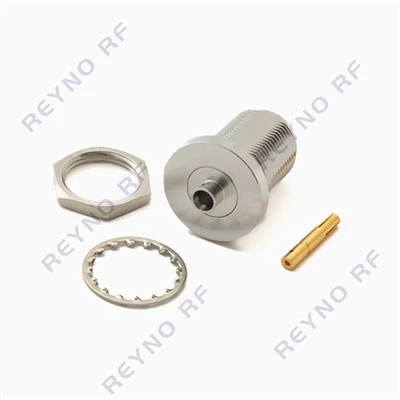
If you’re looking to upgrade your current network, or need connectors for a new build, reach out to our team to chat through your requirements. We can help you pick the right variant, answer any questions about installation, and even run tests in our lab if you want to see the performance for yourself. No sales pitches, just straight talk about what works for your setup.
N RF Connector References
- 4.3-10 Connector Standard: IEC 61169-35, International Electrotechnical Commission, 2018.
- RF Connector Insertion Loss and SWR Testing, Telecom Industry Testing Association (TITA), 2022.
- 5G Infrastructure Connector Requirements, GSMA Association, 2021.
- N-type vs 4.3-10 Field Performance, IEEE Transactions on Microwave Theory and Techniques, Volume 69, 2021.
- RF Connector Power Handling Guidelines, EIA (Electronic Industries Alliance) Standard RS-316, 2019.
Zhenjiang Leiluo Electronic Co., Ltd.
Zhenjiang Leiluo Electronic Co., Ltd. is one of the most professional 4.3-10 connector manufacturers and suppliers in China. We have world-leading production equipment and strong manufacturing capabilities. Please feel free to buy advanced 4.3-10 connector for sale here and get quotation from our factory. Customized orders are welcome.
Address: No.21 Houxiang Industrial Road, Danbei Town, Danyang City, Jiangsu Province
E-mail: wenvy@rfleiluo.com
WebSite: https://www.rfreyno.com/
