As a vacuum casting supplier, I get this question all the time from product designers, prototype engineers, and startup teams working on their first functional parts: “Can vacuum casting produce parts with undercuts?” It’s a fair question. Undercuts—those recessed features, holes, or geometries that prevent a part from being pulled straight off a mold tool—are one of the biggest pain points in low-volume manufacturing. For teams that rely on prototyping to validate designs before committing to high-volume tooling, they often assume undercuts are off-limits if they’re working with processes like vacuum casting. But the short answer is: yes, vacuum casting can absolutely produce parts with undercuts—you just have to understand how the process works, and how we as a mold partner tailor it to your design. Vacuum Casting
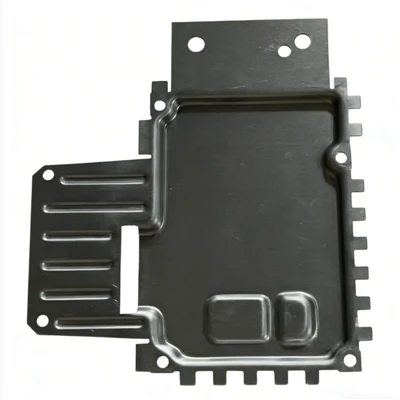
First, let’s break down what vacuum casting is, for anyone who might be new to the space. Vacuum casting is a low- to medium-volume manufacturing process that uses silicone molds to produce replica parts from a master model (usually 3D-printed in stereolithography, or SLA, for high detail). The process works by pouring liquid polyurethane resin into a silicone mold under vacuum, which removes air bubbles and ensures every detail of the mold surface is captured. The mold is then cured in an oven, and the part is removed once solid. It’s ideal for small runs (1 to 100 parts, typically) because silicone molds are cheap to make compared to aluminum or steel injection molds, and the parts have excellent surface finish and mechanical properties that mimic production-grade plastics.
Now, why do people assume undercuts are a problem here? The main issue with undercuts and vacuum casting is that silicone, while flexible, has limits to how much it can stretch or deform without damaging either the mold or the final part. If an undercut is too deep, too sharp, or wrapped around too much of the part, trying to pull it straight out of the mold will tear the silicone, deform the part, or both. But that’s not a hard rule—it’s a constraint we work with, not against.
Let’s start with the types of undercuts we can handle, and the design rules that make it possible. There are two main categories of undercuts: external undercuts (features protruding outward that would interfere with straight removal) and internal undercuts (recessed features like internal threads, grooves, or holes that can’t be machined straight through). The good news is modern mold design and post-processing techniques let us address both.
For external undercuts, the most common solution we use is split molds, or multi-part silicone molds. Wait, you might think—silicone molds are usually a single part around a master, right? Not when there’s an undercut. If your part has an external undercut, say, a tab that wraps 180 degrees around a cylinder, we can split the silicone mold into two or more interlocking sections that fit together around the master. When the part is cured, we disassemble the mold sections one at a time, instead of trying to pull the part straight out, then peel the remaining silicone away from the part. This works as long as the undercut’s angle and depth fall within silicone’s stretch limit—generally, we recommend undercuts that are no deeper than 15mm, and have a draft angle of at least 1 degree, to avoid stretching the silicone too thin or creating too much stress on the material. We’ve done this for all kinds of consumer parts: phone accessory housings with curved tabs, toy components with protruding wheels, even medical device casings with lugs that lock into place. A client a few months back was working on a custom watch case that had a 12mm external undercut for a stainless steel bezel to slide into; we split the silicone mold into three sections, removed each one without damage, and delivered 20 prototype parts that fit their bezel perfectly.
Internal undercuts are a bit trickier, but just as doable. The most straightforward internal undercut many designers need is internal threads. A lot of people assume vacuum casting can’t make threaded holes, so they machine those features into parts after casting—but that adds time and cost, especially for small runs. We can create internal threaded undercuts in silicone molds two ways: either by using removable mold cores, or by designing the silicone mold to flex away from the thread’s ridges. For small, simple internal threads (M3 to M8, for example), we use 3D-printed PTFE or nylon cores that we place into the mold before casting. Once the part is cured, we can pull the core straight out through a larger access hole in the part. For deeper threads, or threads that wrap around more than the core allows, we design the silicone mold to have split sections around the internal thread’s undercuts, so we can disassemble the mold to remove the core, then remove the part. Another common internal undercut we handle is internal grooves—like the channel inside a pump housing that holds an O-ring, or the recess inside a connector for a seal. For these, we use flexible silicone inserts that sit inside the mold; after curing, the insert is soft enough to stretch slightly out of the groove, letting us pull it out of the part without damaging the part’s internal channel. Last year, we worked with a fluid systems startup that needed 50 prototype pump components with a 8mm internal O-ring groove that was too small to machine after casting; we used a custom flexible silicone insert, delivered the parts in 10 days, and they passed all their pressure tests without leaks.
Now, what are the limits? It’s important to be transparent here, because not all undercuts are created equal, and pushing past those limits will cause problems. First, depth: as I mentioned, external undercuts deeper than 15mm can cause silicone to stretch too much, leading to mold tears or part deformations. For internal undercuts, depth is less of an issue, but the width of the undercut’s opening matters—if an internal groove is only 1mm wide at the access hole, we can’t fit a tool or a removable core through it, so we can’t produce that feature with vacuum casting. Second, draft angle: any undercut needs a slight draft, or taper, to allow the mold or core to be removed. A 0-degree draft undercut, where the feature is perfectly perpendicular to the part’s main axis, will almost always cause sticking, because there’s nowhere for the silicone to compress or stretch away from the part. We recommend a minimum of 1 degree of draft for all undercuts, though 2 to 3 degrees is even better for larger or more complex features. Third, geometry: undercuts that are very sharp, or that wrap 360 degrees around a part, are harder to handle. A full 360-degree external undercut, for example, would require splitting the mold into four or more sections, which increases mold cost and complexity, and runs a higher risk of misalignment during assembly. In those cases, we often work with clients to adjust the design slightly—adding a 0.5-degree draft, or splitting the undercut into two smaller features—to make it compatible with vacuum casting, without sacrificing the part’s function.
A common misconception we hear is that vacuum casting can’t produce high-detail undercuts, or parts with multiple complex features. That’s not true, either. We’ve done parts with undercuts and thin walls (as thin as 0.5mm) that require precise detail, like custom drone propeller mounts with internal locking lugs, or electronic enclosures with external clips that fit over other components. The key is matching the mold design to the part’s features. For very high-detail undercuts, we use SLA masters, which can capture features as small as 0.1mm, so the silicone mold picks up every detail of the undercut’s edges, no sharp corners or rough spots. That’s a big advantage over processes like 3D printing the part directly, which can have layer lines or inconsistent detail on undercuts.
Another thing to consider: secondary operations. Even if an undercut is too complex for us to mold directly, we can often add it as a post-casting operation, right there in our shop. For small runs, machining undercuts with a CNC mill is affordable, and for larger runs, we can use EDM (electrical discharge machining) to create precise internal undercuts. That’s a middle ground for clients who have a very complex undercut design that’s not compatible with vacuum casting molds, but don’t want to pay for high-volume injection mold tooling upfront. For example, a medical device client we worked with had a part with a 20mm internal undercut that wrapped 270 degrees around the part—too deep for a split silicone mold. We cast the part with a straight-through hole, then machined the undercut with a small, high-precision end mill, and delivered parts that met their regulatory requirements. It’s a bit slower than molding the undercut directly, but it’s still cheaper than waiting for steel injection molds, and perfect for runs of less than 100 parts.
Let me also share a common mistake we see designers make when working with vacuum casting and undercuts: waiting until the design is finalized to talk to their mold supplier. A lot of teams will spend weeks perfecting their part’s CAD, only to reach out and say “we need this undercut feature,” and then have to go back and adjust the design. As a vacuum casting supplier, we’re here to be part of the design process, not just a shop that takes files and ships parts. We can help you adjust undercut depth, draft angle, and geometry early on, so you don’t have to rework your entire part to make it compatible with the process. Last quarter, a startup came to us with a design for a custom housing that had two 18mm external undercuts, which we would have had to split the mold into four sections for. We suggested trimming the undercuts down to 12mm, adding a 1.5-degree draft, and splitting the mold into two sections instead, which cut their mold cost by 25% and reduced lead time by 3 days, without affecting the part’s function. That kind of early collaboration is why vacuum casting works so well for prototyping—we can adapt to your design, instead of you adapting to a rigid manufacturing process.
Now, when is vacuum casting with undercuts not the right choice? It’s worth being honest about that, too. If you’re planning to produce 1,000+ parts with complex, 360-degree undercuts, injection molding will almost always be more cost-effective, because aluminum molds can handle undercuts with mechanical lifters, which are more scalable than silicone molds. If your undercut is deeper than 20mm, or has less than 0.5 degrees of draft, we might recommend either adjusting the design or using a different process for prototype runs, like resin 3D printing with soluble support structures. But for 1 to 100 parts, the most common range for startups, product designers, and engineering teams, vacuum casting is a far better option than other low-volume processes, and undercuts are absolutely achievable with the right mold design.
At the end of the day, vacuum casting’s biggest advantage over other prototyping processes isn’t just cost—it’s flexibility. We can adjust molds, work around feature constraints, and deliver parts with undercuts that are ready for functional testing, user research, and even pre-production runs. A lot of people still think of vacuum casting as only for simple, blocky prototypes, but that’s outdated. We’ve produced parts for aerospace, consumer electronics, medical devices, and automotive with all kinds of undercuts, and delivered parts that perform exactly like the final production components.
If you’re working on a design with undercuts, and you’re curious if vacuum casting can work for you, don’t hesitate to reach out. We can review your CAD files, walk you through the mold design options, and give you a clear idea of what’s feasible, what might need a small adjustment, and what your lead time and cost will be. Whether you need a single prototype or a small run of 50 parts, we’re here to help you get the parts you need, without the hassle of reworking your design last minute.
CNC Milling References
- Rosato, D. V. (2000). Injection Molding Handbook. Kluwer Academic Publishers.
- Gibson, I., Rosen, D. W., & Stucker, B. (2015). Additive Manufacturing Technologies: 3D Printing, Rapid Prototyping, and Direct Digital Manufacturing. Springer.
- Engineering Toolbox. (2024). Draft Angles for Molding and Casting.
- Vacuum Casting Association. (2023). Best Practices for Undercut Design in Low-Volume Silicone Molding.
- Standards Australia. (2022). AS/NZS 1301.401s: Methods of Test for Pulps and Papers – Physical Properties.
Dongguan Xinchuan Precision Manufacturing Co., Ltd.
As one of the most professional vacuum casting manufacturers and suppliers in China, we offer a quick lead time for customized orders. Please feel free to buy precision vacuum casting made in China here from our factory. Contact us for quotation.
Address: #16 Gangjian Road, Changping Town, Dongguan City, Guangdong, China. 523000
E-mail: FreeQuote@xcprecision.com
WebSite: https://www.xcprecisions.com/
