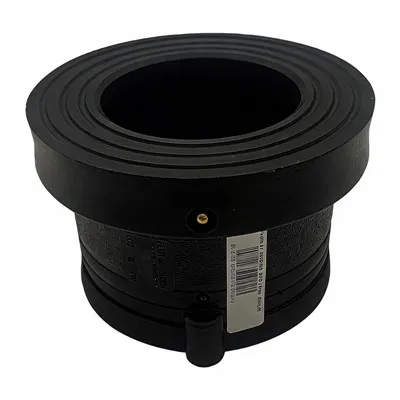
If you’ve ever worked with plumbing systems, you’ve probably heard about PPR fittings—polypropylene random copolymer fittings, the go-to choice for residential and commercial hot and cold water lines, heating systems, and even industrial fluid transfers. But if you’ve dug a little deeper than just the basics of why PPR is durable, you might have wondered: what’s the big deal about pressure drop in PPR fittings? As a PPR fittings supplier with over 15 years on the ground, I’ve fielded this question from plumbers, contractors, and even system designers dozens of times. It’s not just a technical detail—it’s a make-or-break factor for a system’s efficiency, long-term performance, and even cost. Let’s break this down like we would over a cup of coffee at a job site: no overly jargon-heavy stuff, just what matters for anyone working with or specifying PPR fittings. PPR Fittings
First, let’s define pressure drop in simple terms. When fluid moves through a pipe, it doesn’t just glide without resistance. Friction between the fluid and the inside of the pipe wall, plus any turns, bends, or fittings that change the flow direction or speed, creates a loss of energy as the fluid travels. That loss is pressure drop, measured in units like psi (pounds per square inch) or meters of water column (mH2O). For plumbing systems, pressure drop isn’t just an abstract number: too much of it, and your water heater might not push hot water up to the third floor of an apartment building, or your underfloor heating could run cold because the fluid can’t circulate properly.
Now, why do PPR fittings specifically matter here? Unlike metal fittings, which have rough inner surfaces and can develop buildup over time, PPR is a smooth, non-corrosive plastic. That’s a key advantage for reducing friction loss, but it’s not the only factor. The design of the PPR fitting itself—how it’s molded, the shape of the inlet and outlet, how smoothly it transitions from the pipe to the fitting’s interior—directly impacts how much pressure drop it causes.
Let’s talk about what influences pressure drop in PPR fittings, beyond just material. The first is fitting type. A straight coupler, which just joins two sections of pipe end-to-end, has a much lower pressure drop than a 90-degree elbow, which turns flow 90 degrees. A tee, which splits flow into two directions, will have a different drop depending on whether the flow is going straight through or turning into the branch. For example, studies of standard PPR fittings show that a 20mm (3/4-inch) 90-degree elbow has a pressure drop roughly 10 to 15 times that of a straight coupler of the same size. That gap might seem small for a single fitting, but if you have a system with 20 elbows, that adds up quickly—enough to require a larger pump or reduce flow rates by 15% or more, which translates to higher energy costs over time.
Size matters too. Smaller PPR fittings, like 16mm (1/2-inch) sizes, have higher relative pressure drop than larger ones. Why? Because the inner diameter is smaller, so fluid velocity is higher (same volume of flow through a tighter space = faster speed), and friction has a bigger impact. A 25mm (1-inch) elbow, for instance, has about 30% less pressure drop than a 20mm elbow of the same angle and design. That’s a critical detail for systems where space is tight but flow rates can’t be compromised—like small residential plumbing runs where you’re dealing with multiple 90-degree turns in a compact area.
Another often-overlooked factor is fitting manufacturing quality. Not all PPR fittings are created equal. Cheaper, low-quality fittings might have rough mold lines inside, uneven wall thickness, or poorly blended transitions between the pipe and the fitting. For example, a shoddy 90-degree elbow might have a sharp inner corner instead of a smooth radius, which disrupts flow and increases turbulence—adding 20 to 30% more pressure drop than a high-quality, precision-molded PPR fitting. Over years, that extra pressure drop means your system’s pump has to work harder, leading to higher electricity bills and shorter equipment lifespan. As a supplier, we’ve seen firsthand how contractors who cut corners on fitting quality end up with callbacks for poor water pressure, even with identical pipe and system design.
Now, let’s get to some real-world numbers to put this in perspective. Let’s take a standard hot water system in a 3-story residential building, where we’re running 20 meters of 20mm PPR pipe, plus four 90-degree elbows, two tees, and one straight coupler. Using industry-standard fluid flow rates for residential water systems (around 0.5 liters per second for 20mm pipe), the total pressure drop from just the fittings would be roughly 1.2 mH2O, or about 0.12 psi. That might sound negligible, but if we used a low-quality fitting that added 30% more drop, that jumps to 1.56 mH2O. If you scale that to a commercial building, with 100 fittings across multiple floors, the total pressure drop from fittings can easily add up to 5 to 8 mH2O—enough to require upgrading a pump that would otherwise work fine with high-quality PPR fittings.
This is why as a PPR fittings supplier, we work closely with engineers and contractors to help them calculate pressure drop correctly, rather than just quoting part numbers. Many people make the mistake of only looking at pipe pressure drop and forgetting that fittings contribute a huge portion of total system loss. For example, in a typical plumbing system, fittings can account for 30 to 50% of the total pressure drop. Ignore that, and you’ll end up with a system that’s underperforming, wasting energy, or requiring costly adjustments after installation.
Another point: PPR fittings’ pressure drop is consistent over time, unlike metal fittings. Copper or brass fittings can corrode, develop mineral scale, or develop leaks that change the inner surface and increase pressure drop over 5 to 10 years. PPR is non-corrosive, so the inner surface stays smooth for the entire lifespan of the system (which can be 50+ years for PPR). That means when you specify PPR fittings, you’re not just getting a low initial pressure drop—you’re ensuring that pressure drop stays predictable and low for decades, which helps with long-term system planning and maintenance.
Now, what about common misconceptions? One we hear all the time is that all 90-degree PPR elbows have the same pressure drop. That’s not true. The angle of the elbow (whether it’s a regular 90-degree or a long-radius 90-degree) makes a big difference. A long-radius elbow has a much smoother turn, so flow is less disrupted, leading to 40 to 50% lower pressure drop than a standard short-radius elbow. For systems where flow rate is a priority—like commercial heating or high-rise plumbing—using long-radius PPR elbows can save significant energy over time, even if they cost a little more upfront.
Another misconception is that pressure drop only matters for large systems. Even small residential systems can be affected. For example, in a 2-story home, if you have 10 fittings adding up to 1 mH2O of pressure drop, that’s enough to make the shower on the second floor feel weak, especially if you’re running other hot water appliances like a dishwasher or washing machine at the same time. Choosing PPR fittings with low pressure drop can eliminate that common complaint without having to upgrade your main water supply line.
So, what should you look for when selecting PPR fittings to minimize pressure drop? First, prioritize precision-molded, high-quality fittings from reputable suppliers. As someone who’s spent years sourcing and testing products, I can tell you that not all “standard” PPR fittings meet the same tolerance for smooth inner surfaces and proper radius design. Second, match fitting size to pipe size—using a fitting that’s the same outer diameter as your pipe ensures a smooth transition, rather than a reducer that can cause turbulence. Third, choose the right fitting type: use straight couplers instead of multiple elbows where you can, opt for long-radius elbows for high-flow areas, and specify branch flow tees instead of regular tees when you’re splitting flow, as branch tees have lower pressure drop for the diverted flow.
For system designers, there are also standard formulas to calculate pressure drop from PPR fittings, called the equivalent length method. This method assigns a length of straight pipe to each fitting that would cause the same pressure drop as the fitting. For example, a 20mm standard 90-degree PPR elbow has an equivalent length of about 0.8 meters of straight pipe, while a long-radius 90-degree is 0.5 meters. Adding these equivalent lengths to your total pipe length gives you a more accurate total pressure drop for the entire system. This is a tool we often share with our clients to help them with their designs, because it removes the guesswork from pressure drop calculations.
At the end of the day, pressure drop in PPR fittings isn’t just a technical spec—it’s a key part of building a plumbing or heating system that works efficiently, lasts a long time, and doesn’t cost you extra money down the line. As a PPR fittings supplier, we don’t just sell parts; we work with our customers to understand their specific needs, whether it’s a small residential renovation or a large commercial project, and recommend the right fittings to balance performance, cost, and durability. If you’re planning a project, troubleshooting low water pressure, or just want to make sure your system is as efficient as possible, don’t hesitate to reach out to our team to discuss your requirements. We’re here to help you find the right solutions that fit your needs.
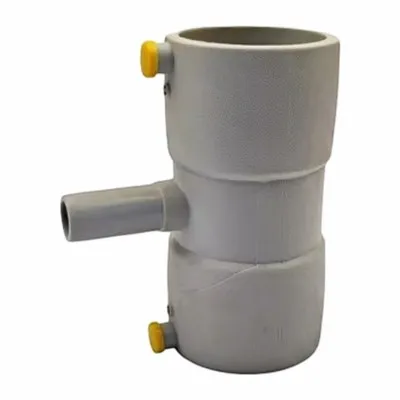
Electrofusion Fittings References
- Karassik, I. J., et al. Pump Handbook. 4th ed., McGraw-Hill Professional, 2001.
- American Society of Heating, Refrigerating and Air-Conditioning Engineers (ASHRAE). ASHRAE Handbook: Fundamentals. ASHRAE, 2021.
- International Organization for Standardization (ISO). ISO 15874: Plastics Piping Systems for Hot and Cold Water – Polypropylene (PPR). ISO, 2019.
- Plumbing-Heating-Cooling Contractors Association (PHCC). Plumbing Engineering Design Handbook. PHCC, 2018.
Qingdao Polyfusion Machinery Co., Ltd.
As one of the most professional PPR fittings manufacturers and suppliers in China, we have world-leading production equipment and strong manufacturing capabilities. Please feel free to buy bulk high quality PPR fittings from our factory.
Address: Chengyang Industry Zone, Chengyang, Qingdao, Shandong, China
E-mail: export01@qdpolyfusion.com
WebSite: https://www.polyfusionfittings.com/
