As a door systems supplier with over 12 years on the ground supporting commercial and industrial clients across the Midwest, I’ve lost count of how many times I’ve heard the same question from property managers, facilities directors, and building owners: “How often do I actually need to service my door systems?” It’s a fair question—too little service leads to unexpected breakdowns that disrupt operations, too much wastes money on unnecessary work. Over the years, I’ve seen first-hand how misaligned service schedules turn minor issues into major headaches: a commercial loading dock door that skips a scheduled lube job can snap a torsion spring overnight, shutting down a warehouse line that runs $10,000 an hour. A high-traffic entry door with loose hinges ignored for six months can develop misalignment that frays wire cables, leading to a safety hazard for staff and visitors. Let’s break this down beyond generic “every 12 months” rules—because the right service frequency depends entirely on your door type, how it’s used, and environmental factors. Door Systems
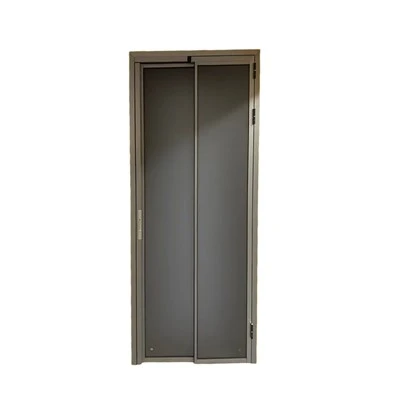
First, let’s split door systems into the two most common categories we work with daily: overhead sectional doors (for warehouses, loading docks, retail backstocks) and pedestrian entry doors (storefronts, office lobbies, healthcare facilities). These have wildly different usage patterns that demand different service schedules, and even within each category, you can’t apply a one-size-fits-all timeline.
Overhead sectional doors are the workhorses of commercial and industrial spaces. We service everything from small 10×10 dock doors at neighborhood convenience stores to 16×20 industrial doors at manufacturing plants. Their primary drivers of wear are cycle count and usage intensity. A cycle is one full open and close, right? For a retail store that opens at 7 a.m. and closes at 9 p.m., that’s two full cycles a day, 365 days a year—around 730 cycles annually. A manufacturing plant with three shifts might run 10 cycles an hour, 24/7, hitting 87,600 cycles a year. That’s a massive difference in stress on springs, rollers, tracks, and cables.
For low-cycle overhead doors (under 1,000 cycles a year—think a small warehouse door that’s only opened once a day, a garage door for a small office), we recommend a basic safety inspection every 18 months. That inspection isn’t just a once-over: we check for worn rollers that skip in tracks, frayed cable strands, and loose track mounts that can cause the door to come off track. We also test the auto-reverse feature, a non-negotiable for compliance with OSHA standards, because if that fails, you’re facing fines up to $15,625 per serious violation. Last year, we had a client in Toledo whose door’s auto-reverse was faulty—they got a $12,000 OSHA citation, all because they’d skipped three inspections. For low-cycle doors, beyond the 18-month inspection, a full lubrication and spring tension check every three years is enough to prevent rust and premature component wear.
Medium-cycle overhead doors (1,000 to 10,000 cycles a year—most retail stores, distribution centers, small manufacturing facilities) are where we see the most service gaps. These doors open multiple times an hour, so parts wear faster. We recommend a full service (inspection, lubrication, spring tension adjustment, cable tightening) every 12 months here. Wait, why not every six months? For most medium-cycle doors, that’s overkill—unless you’re dealing with extreme environments. We did a service last spring for a food distribution center in Cleveland that has a 2,000 square foot overhead door opening into a cold storage bay. The cold, humid air corroded rollers and tracks twice as fast as a standard climate door, so we adjusted their schedule to every 9 months. Environmental factors matter a lot here: salt air from coastal facilities, dust from mining operations, or extreme temperature swings all speed up wear. A saltwater-exposed overhead door in Miami might need service every 6 months just to prevent rust, while a door in a dry Arizona warehouse only needs the standard 12-month service.
High-cycle overhead doors (over 10,000 cycles a year—major distribution hubs, large manufacturing plants, airport hangars) are in a league of their own. These doors run almost constantly, so wear is a daily event. We recommend bi-annual full services: every 6 months. But we also add quarterly minor checks—we can send a tech out to tighten loose tracks, test auto-reverse, and check for early cable fraying between full services. Last year, a logistics client in Columbus whose door was cycling 12,000 times a year noticed a small fray in one cable during a quarterly check. We replaced it before it snapped, which would have shut down their entire shipping line for 8 hours—costing them an estimated $48,000 in lost revenue. That’s the value of aligning service frequency to actual usage, not a generic rule.
Now for pedestrian entry doors, which many property managers overlook because they seem “less high-stakes” than a loading dock door. Nothing could be further from the truth—high-traffic storefront doors, for example, see 1,500 to 2,000 openings a day during peak hours. Those hinges, closers, and locks take a beating. We split pedestrian doors into three subcategories: manual pedestrian doors (storefront, office entry), automatic sliding doors (retail entrances, hospitals), and high-security entry doors (jail facilities, bank lobbies).
Manual pedestrian doors: For standard use (low-traffic office entry, residential commercial entry), we recommend a service every 12 months. The service here includes checking hinge tension, lubricating pivot points, tightening frame hardware, and testing the door closer’s adjustment—so it doesn’t slam and injure someone, or swing too slow and block a fire exit. For high-traffic manual doors (retail storefronts, coffee shops with 500+ daily openings), we bump that up to every 8 months. I learned this lesson early: a local café in Akansas kept their doors on a 12-month service schedule, and after 10 months, the hinge pins wore so thin the door sagged, leaving a gap that allowed a cold draft (and a pest problem) into their kitchen. They shifted to 8-month services, and we haven’t had a hinge issue since. Also, if a door is exposed to extreme weather—like a storefront in Minnesota that deals with snow and ice in winter—we add a quick hardware check every 6 months to make sure the door doesn’t freeze shut or ice can’t build up in the track.
Automatic pedestrian doors: These require much more frequent service than manual doors, because they have motors, sensors, and safety features that need regular calibration. A small retail automatic door might see 500 openings a day, while a hospital emergency door sees 2,000+ during peak hours. For automatic doors, we recommend a full service every 6 months for standard use, and every 3 months for high-traffic or critical access doors (like hospital entrances that must stay operational 24/7). The most common issues we see with automatic doors are misaligned sensors (which cause them to stop randomly or not detect a person in their path), worn motor belts, and faulty safety edges (which prevent the door from closing on someone). Last year, we serviced a hospital in Dayton where an automatic emergency door’s safety edge was faulty—instead of reversing when it hit a cart, it closed, injuring a nurse. We replaced the edge during a quarterly service, and that incident could have cost the hospital a malpractice claim, not to mention employee morale. For automatic doors, it’s also critical to test the emergency release function every 3 months—so if the power goes out, staff can open the door quickly, which is a fire code requirement in most jurisdictions.
High-security entry doors: These are different from standard pedestrian doors—they’re built for forced entry resistance, with reinforced frames and heavy-duty locks. For these, we recommend a service every 12 months, but with a focus on lock and frame integrity. If a high-security door sees frequent use (like a bank teller entry door), we add a lock check every 6 months. We recently serviced a bank in Cincinnati where a teller door’s lock cylinder was worn out after two years of daily use. We replaced it during a 6-month check, preventing a key stickup that could have put staff at risk. For high-security doors in areas with high crime rates, we also adjust to every 9 months to check for any tampering or hardware wear.
Wait, let’s not forget the hidden factor: compliance and liability. Many property owners don’t realize that door systems are subject to federal, state, and local codes, and improper maintenance can lead to fines, lawsuits, and safety hazards. OSHA requires automatic reverse features on overhead doors for commercial use, and fire codes require emergency releases on all doors in public buildings. The International Building Code (IBC) also sets standards for door hardware operation and safety. A 2022 study by the Door and Hardware Institute (DHI) found that 60% of commercial door injuries were caused by lack of regular maintenance—including hinge failures, door slams, and automatic door sensor errors. That’s not just a statistic; that’s a real person getting hurt, and a business facing liability.
I also want to address the common misconception that newer doors don’t need service. A lot of clients come to us with brand new doors, thinking they’re “maintenance-free.” But even modern doors have moving parts that wear, and they need initial calibration to work at peak performance. We recommend a service 6 months after installation for all new doors, to adjust for any settling (for overhead doors) or initial hardware wear (for pedestrian doors). Last year, we installed a new set of storefront doors for a grocery chain in Indianapolis, and during their 6-month check, we found that the automatic door sensors were misaligned, causing them to stop every time a person walked through. We fixed it right away, and that would have led to frustrated customers and lost sales if we’d waited until the 12-month mark.
So how do you create the right service schedule for your doors? Let’s outline a quick checklist:
- Count your annual cycles: For overhead doors, track how many times it opens and closes in a year. For pedestrian doors, estimate daily openings and multiply by 365.
- Note your environment: Coastal, industrial, cold storage, or high-traffic retail? These will speed up wear, so adjust your frequency up.
- Check codes and compliance: Review OSHA, IBC, and local fire codes for any mandatory service requirements in your area.
- Add quarterly checks for high-use or critical doors: Doors that run 10+ hours a day, emergency exits, or high-security doors benefit from quick checks between full services.
At the end of the day, the goal of door service isn’t just to fix problems—it’s to prevent them. Skipping a service might save a few hundred dollars today, but it could lead to a $10,000+ repair bill, a safety incident, or a costly shutdown tomorrow. We’ve seen clients who stuck to a tailored schedule save an average of 20% a year on door maintenance costs, compared to those who only service doors when they break. Their doors last longer, work more efficiently, and keep staff and visitors safe.

If you’re not sure what service frequency your door systems need, or you want to audit your current schedule to make sure it’s aligned with usage and code, we can help. We’ll send a tech to your location to assess each door, count cycles, check for wear, and create a customized service plan that fits your budget and needs. Whether you’re a small retail store with one entry door or a warehouse with 12 overhead doors, we’ve got the experience to get your door systems working at their best. Don’t wait for a breakdown—reach out to us to discuss your needs today.
Outdoor Protection Systems REFERENCES
Door and Hardware Institute (DHI). (2022). Commercial Door Maintenance Best Practices & Safety Compliance Report.
Occupational Safety and Health Administration (OSHA). (2023). 29 CFR 1910.212: General Requirements for Industrial Door Systems.
International Code Council (ICC). (2021). International Building Code (IBC) Chapter 24: Doors and Occupant Load.
National Fire Protection Association (NFPA). (2022). NFPA 101: Life Safety Code, Chapter 7: Means of Egress.
Longyan Fumao Aluminum Co., Ltd.
As one of the most professional door systems manufacturers and suppliers in China, we’re featured by quality products and good price. Please rest assured to buy customized door systems made in China here from our factory. Welcome to contact us for pricelist.
Address: Room 301, No.126 Qingyun West Road, Xinluo District, Longyan City, Fujian Province
E-mail: fumaolvye@163.com
WebSite: https://www.fumaoalu.com/
