If you’ve ever walked into a workshop where a hydrogen-oxygen welding machine is humming along, you’ll notice something subtle: the air feels different—not stuffy, not harsh, just balanced. When we first started selling these machines a decade ago, I’d get a lot of questions from workshop owners and welders alike: “How much air do I need? Can I just open a window and call it a day?” Over the years, I’ve learned that ventilation for hydrogen-oxygen welding isn’t just a box to check on a safety form—it’s critical to protecting your team, your equipment, and the quality of your work. As a supplier, I’ve spent countless hours working side-by-side with our customers to nail down these requirements, and today I want to break down what you actually need to know. Hydrogen-oxygen Welding Machine
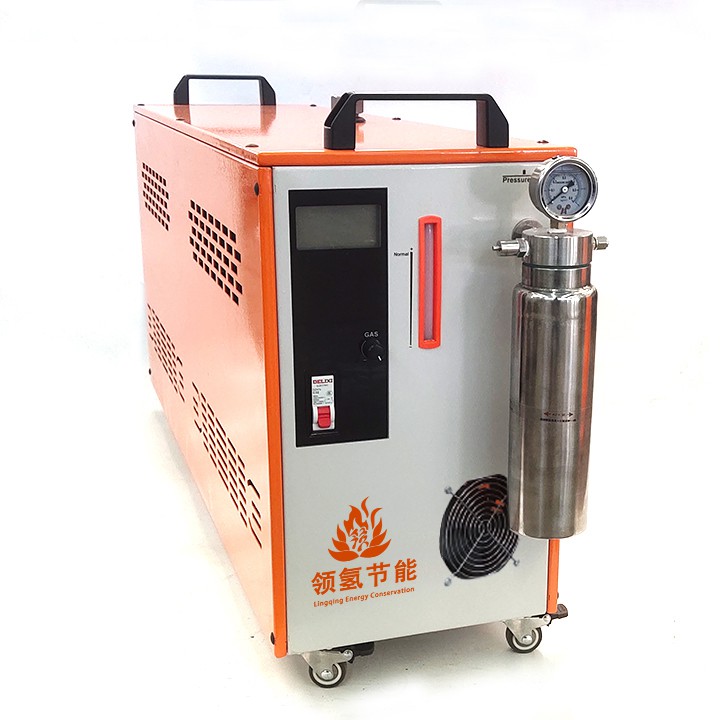
First, let’s get one thing straight: hydrogen and oxygen are gases. Simple as that. Hydrogen is the lightest element on the periodic table, so it rises fast—think balloons at a kid’s birthday party. Oxygen, on the other hand, is a bit heavier than nitrogen, so it mixes evenly with air but doesn’t linger in pockets like some heavier fumes. Unlike traditional welding processes that spew metal fumes, nitrogen oxides, and volatile organic compounds (VOCs), hydrogen-oxygen welding produces almost no toxic byproducts. The main thing to worry about here isn’t fumes—it’s gas buildup. If hydrogen accumulates in an enclosed space, it can create a highly flammable atmosphere. Mix hydrogen with air in concentrations between 4% and 75% by volume, and you’ve got a recipe for an explosion or fire. That’s the core of all ventilation requirements for these machines.
Let’s start with the basics: the minimum ventilation rate. This isn’t a guess—there are solid industrial standards backing this up. From our experience working with OSHA (the U.S. Occupational Safety and Health Administration) and global workshop safety groups, the general rule for enclosed spaces is 1,000 cubic feet of fresh air per minute per welder, or roughly 28 cubic meters per minute per operator. But that number changes depending on the size of your space and how many machines you’re running. If you have a 10x10x10 foot workshop (1,000 cubic feet total) with two hydrogen-oxygen welders, you’re going to need more than just a window open. I’ve seen small workshops try to get away with a single exhaust fan, and within an hour, hydrogen levels were hovering at 8%—well above the 4% lower explosive limit (LEL).
Here’s where location matters. Because hydrogen rises, exhaust vents should be placed as high as possible in the room—near the ceiling, not just above the workbench. I always tell customers to test this: hold a lighter just below the ceiling (safely, no flammables nearby) and watch how the air moves. If the flame flickers, that means there’s enough air flow to pull hydrogen upward. Fresh air intakes, on the other hand, should be low to the ground, near floor level. This helps push the lighter hydrogen upward where the exhaust can catch it, instead of letting it spread across the room. Too many people get this backwards, and suddenly they’re moving the risk instead of eliminating it.
Now, if you’re working in a smaller space—like a mobile welding truck, a repair shop booth, or a garage with limited square footage—your ventilation needs get more specific. For workstations under 500 cubic feet, you can’t rely on general room ventilation alone. We recommend local exhaust ventilation (LEV) systems here, which are hoods placed directly above the welding area to capture hydrogen as it’s released, right at the source. The hood should be within 12 inches of the weld tip, and the air flow through the hood needs to be at least 100 feet per minute. I remember a customer who fixed this for his small car repair shop: he had a 300 cubic foot booth with one welder, and before adding a small LEV hood, he was getting LEL readings of 12%. After installing the hood and running it 24/7 when welding, that number dropped to less than 0.5%—safe and worry-free.
Another thing to consider is continuous monitoring. Hydrogen is odorless, colorless, and tasteless—you can’t see or smell a leak, so you need a way to check in real time. That’s why we supply hydrogen gas detectors with all our machines, and we always advise customers to calibrate them monthly. For spaces with high machine usage (three or more welders working at once), we recommend dual detectors: one near floor level (to catch oxygen buildup, which can displace air and cause dizziness or fainting) and one near the ceiling (to track hydrogen levels). The detector should alarm at 20% of the LEL, which is 0.8% hydrogen by volume—giving you plenty of time to adjust ventilation if something is off.
Wait, but what about when you’re not welding? A common mistake I see is turning off ventilation when the workday is done. Even if you’re not actively welding, there can be residual gas in pipes, hoses, or around the machine’s valves. A loose fitting or a minor leak can build up overnight, especially if the workshop is closed and windows are shut. We tell all our customers to leave the ventilation system running for at least 15 minutes after the last weld is finished to flush out any leftover gas. It only takes a small amount of hydrogen to create a hazardous atmosphere, and it’s not worth cutting corners here.
Let’s talk about different working environments, because not every workshop is the same. If you’re working outdoors—like on a construction site, a shipyard, or a farm repair station—ventilation requirements change a lot. Outdoors, you have natural air flow, but you still need to keep the wind direction in mind. Never set up a hydrogen-oxygen welding station downwind from other workers, because small hydrogen plumes can drift and affect people not wearing detectors. We recommend that outdoor stations have a portable exhaust fan if you’re working in a low-wind area, just to make sure no gas builds up around the machine. I once had a customer working on a bridge in a valley with almost no wind, and he had a scare when a gust of wind died down and his detector went off. Adding a portable fan fixed that problem immediately.
What about oxygen levels? This is a part of ventilation that often gets overlooked. Hydrogen needs oxygen to burn, but too much oxygen in a closed space is also a risk—it can make other materials (cloth, wood, oil) burn much faster than normal. OSHA says that oxygen levels should stay between 19.5% and 23.5% for safe working conditions. Too far below that, and workers can get dizzy, confused, or even pass out without realizing it. Too far above, and a small spark or static electricity can cause a fire that spreads quickly. Good ventilation for hydrogen also keeps oxygen levels balanced, so that’s a bonus—you’re solving two problems with one setup.
As a supplier, I can’t tell you how many times I’ve seen customers skip proper ventilation to save money or time, only to run into issues down the line. A few years ago, we had a small manufacturing plant that bought four of our hydrogen-oxygen machines to replace old acetylene welders. They installed them in a 2,000 cubic foot room with only two windows, and they thought that was enough. Within a month, their detector went off twice, and they almost had a scare when a valve started leaking. We worked with their team to calculate their exact needs: 4,000 cubic feet per minute of fresh air, plus three high ceiling exhaust vents and a portable LEV for each welder. After making those changes, their gas levels stayed steady and safe, and they even reported that their weld quality improved because the steady air flow kept the welding area consistent. That’s the thing about good ventilation—it’s not just safety; it makes your work better too.
Let’s get practical, with a quick checklist you can use for your workspace: First, calculate your total room volume (length x width x height). Second, count how many hydrogen-oxygen welders you’re operating. Multiply the number of welders by 1,000 cubic feet per minute (or 28 cubic meters per minute) for general room ventilation. If your room is smaller than 500 cubic feet, add a local exhaust hood with at least 100 feet per minute of air flow. Third, place exhaust vents near the ceiling, fresh air intakes near the floor. Fourth, install calibrated hydrogen gas detectors that alarm at 0.8% LEL, and add an oxygen detector if you have multiple machines or a small space. Fifth, run ventilation for 15 minutes after the last weld is done, and calibrate your detectors once a month. That checklist works for 90% of the workshops we work with, and it’s easy to follow.
I know that for small business owners, adding fans, hoods, and detectors might feel like an extra expense. But compare that to the cost of an explosion, a worker injury, or even a damaged machine—there’s no trade-off here. Our team doesn’t just sell machines; we help our customers design the right ventilation setup for their specific space, whether that’s a $500 portable fan for a garage or a full industrial system for a large factory. We’ve had customers come to us after a bad experience with a different supplier who cut corners on safety, and we’re proud to be the ones they trust to get it right.

At the end of the day, ventilation for hydrogen-oxygen welding is all about common sense, backed by science. It’s not rocket science, but it’s not just opening a window either. You’re working with gases that have the power to keep you safe or hurt you, so taking the time to get your ventilation right is non-negotiable. If you’re not sure about your current setup, or if you’re looking to upgrade your hydrogen-oxygen welding equipment and need help planning your ventilation, I’d be happy to walk through your space with you and offer practical, tailored advice. We’re here to make this process simple, safe, and affordable for every workshop, big or small. To learn more about how our machines and ventilation solutions can work for you, don’t hesitate to reach out to our team to discuss your specific needs.
Hydrogen-oxygen Generator References
- Occupational Safety and Health Administration (OSHA). Hydrogen Gas Safety Standards for Welding and Cutting.
- International Organization for Standardization (ISO). ISO 14117:2019, Gas Welding Equipment – Safety Requirements for Welding, Cutting and Allied Processes.
- American Welding Society (AWS). F1.1:2020, Safety in Welding, Cutting, and Allied Processes.
Jiangsu Lingqing Energy-saving Technology Co., Ltd.
We are one of the most reliable hydrogen-oxygen welding machine manufacturers and suppliers in China. With abundant experience, we warmly welcome you to buy customized hydrogen-oxygen welding machine made in China here from our factory. If you have any enquiry about quotation, please feel free to email us.
Address: Building #7, No. 1 Linhe Road, located on the west side of Anlan Road and north of Linhe Road, Huaiyin District, Huaian City, Jiangsu Province.
E-mail: jslingqing@163.com
WebSite: https://www.lingqingtech.com/
