If you’ve ever pulled on a pair of sport socks mid-run, shifted your foot in a sweaty gym sock, or ended a long hike with blisters that make you question every gear choice you’ve ever made, you know how much the right pair of socks matters. As a sport socks supplier, I’ve spent years chatting with weekend warriors, pro athletes, and casual gym-goers alike, and the number one mistake I see is skipping the size check. Too many people grab whatever “one size fits most” is on the shelf, or size up because they think “extra room is better.” But sport socks aren’t casual cotton loungewear—their size directly impacts comfort, performance, and even injury risk. Today, I’m breaking down how to pick the right size, no guesswork required. Sport Socks
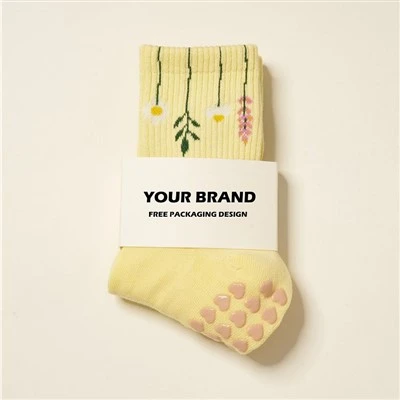
First, let’s get one thing straight: sport socks size isn’t the same as your shoe size. That’s a common mix-up, and it’s where most people go wrong. Think of it this way: your shoe size is about the length and width of your foot when it’s wearing a shoe, but sport socks are designed to fit the foot in motion, before you add layers of shoes and insoles. If you’re wearing a size 9 shoe, that foot swells when you’re active—running, jumping, hiking uphill, even walking fast—by up to half a size, sometimes more. A sock that fits perfectly on your static foot will feel tight or cut off circulation mid-workout if it’s sized for your shoe, or baggy enough to bunch and cause blisters if it’s sized for your static foot.
So how do you measure your foot correctly? It’s simple, and you don’t need a fancy podiatry kit. Grab a piece of paper, a pen, and a ruler. Stand on the paper (wear the socks you’d normally pair with your sport shoes, or thin casual socks if you’re measuring for bare-foot fitting—this mimics the real scenario), press your weight evenly, and trace the outline of your foot. Make sure the pen is held straight up, not slanted, so you don’t get a shorter measurement. Once you have the outline, measure the distance from the tip of your longest toe (that’s not always your big toe—for many people, it’s the second toe, especially if you have a longer foot) to the end of your heel. That’s your foot length in inches or centimeters. Then measure the widest part of your foot, across the ball, to get your foot width.
Now, compare those numbers to a sock size chart—and this is where a lot of suppliers cut corners. Many generic sock brands use a vague “one size fits most” that covers 5-13 shoe sizes, which is basically a grab bag. At our company, we design our size charts around actual foot measurements, not shoe sizes, because that’s what impacts fit. For example, our small sport socks fit feet 8.5 to 9.5 inches (21.6 to 24.1 cm) long, medium fits 9.5 to 10.5 inches (24.1 to 26.7 cm), large fits 10.5 to 11.5 inches (26.7 to 29.2 cm), and extra-large fits 11.5 to 12.5 inches (29.2 to 31.8 cm). We also note width: for wide feet, you can size up half a size, and for narrow feet, size down a half. That’s a detail most suppliers skip, but it’s game-changing for people who struggle with too-tight or too-loose socks even when their shoe size lines up.
Let’s talk about why size matters, beyond just comfort. Too-tight sport socks can compress blood flow, which means your foot doesn’t get the oxygen it needs during long workouts. That leads to fatigue faster, cramping, and even increased risk of plantar fasciitis or metatarsal pain. I had a customer last year, a 10K runner, who was complaining of foot pain every race. She’d been buying socks in her shoe size, which ended up being 2 sizes too small. When she switched to the size that matched her foot length, she said the pain vanished. On the flip side, socks that are too big will bunch at the heel or toe, creating friction. A 2021 study in the Journal of Sports Sciences found that ill-fitting sport socks are responsible for 30% of running-related blisters, mostly from excess fabric sliding against the skin mid-stride. That’s a big number, and it’s entirely avoidable with the right size.
Wait, but what about the type of sport? Does that change the size you need? Absolutely. Let’s break it down by activity:
For runners, especially long-distance runners, your foot swells a lot during a run—sometimes up to a full size by the end of a race. So you want a sock that’s snug but not tight, with enough stretch to expand with your foot. If you’re a road runner, a crew length sock that hits mid-calf is a good size, not so long that it rolls down, not so short that it exposes your ankle to blisters from your shoe’s collar. For trail runners, you might want a slightly thicker sock, so size up half a size to accommodate the extra fabric, without making it too loose.
For gym-goers and cross-trainers, you’re doing a mix of high impact and movement—squats, jumping, changing directions fast. You need a sock that stays in place, so a size that fits snug around the heel and arch, with no excess fabric around the toes. If you’re lifting weights, you might even want a no-show sock that hits just above the ankle bone, so it doesn’t get in the way of your shoes during deadlifts or squats. Make sure the no-show size isn’t too big, though—big no-show socks often slide down into your shoe mid-set, which is annoying and can cause tripping.
For hikers, whether day hikes or multi-day treks, your feet swell uphill and downhill, especially if you’re carrying a heavy pack. Hiking socks are usually thicker than running socks, so you’ll want to measure your foot at the end of the day, after a short warm-up hike, to get an accurate size. A common mistake here is buying socks that fit perfectly in the store, only to have them feel tight on the trail after your feet swell. So size for your foot’s maximum swelling, not its resting size. Also, for hiking, the toe box of the sock is extra important—you don’t want fabric cramming your toes together, which can cause black toenails, a huge nuisance for long-distance hikers.
For basketball or soccer players, you’re on your feet for hours, jumping, sprinting, sliding. These sports often use longer socks—crew or knee-high. The size here needs to fit around your calf too, not just your foot. A knee-high sock that’s too small will cut off circulation to your lower leg, leading to cramping, while one that’s too big will bunch around your knee, restricting movement. For these sports, measure both foot length and calf circumference when choosing size, and opt for a stretchy fabric (we use 75% nylon and 20% spandex in our sport socks, for that exact balance) that moves with you.
Another factor that a lot of people overlook: sock material. If your sport socks are made of 100% cotton, they’ll shrink a lot after the first few washes. That means if you measure your foot at 10 inches, a 10-inch cotton sock might shrink to 9 inches after a wash, making it too tight. Sport socks, on the other hand, are usually made of synthetic materials like polyester, nylon, or a blend with spandex, which have minimal shrinkage (usually less than 5%). At our company, we test every batch of socks for shrinkage, so our size charts are accurate even after 10+ washes. If you’re buying cotton sport socks (which we don’t recommend for high-impact activity, since they hold moisture), add a half size to your measurement to account for shrinkage.
What if you’re between sizes? That’s a common dilemma. Let’s say your foot is 10 inches long, and our medium is 9.5 to 10.5 inches, so medium works, but you have wide feet. Or your foot is 10.6 inches, right between medium and large. Here’s the rule: for activities where you need a snug fit (running, gym, team sports), size down. Excess fabric is worse than a little tightness, especially if the sock has spandex to stretch as your foot moves. For activities where you need extra room (hiking, long walks), size up a half size. Hiking is all about preventing blisters from friction, so a little extra space that the thicker hiking sock can fill is better than a tight sock that cuts off circulation.
I also get asked a lot: should you measure bare foot or with socks? It depends on what you’re pairing the sport socks with. If you’re wearing thin liner socks under your main sport socks, measure with the liner socks on. If you’re wearing the sport socks alone (like for trail running with minimal layers), measure bare foot. And always, always measure both feet—most people have one foot slightly larger than the other, usually the left foot for right-handed people, or vice versa. Size for the larger foot, that way you’ll have a comfortable fit on both.
Let’s use a real example to make this concrete. Last month, a customer ordered a large pair of our running socks, but returned them because they were too tight. She told me her shoe size is 10, so she’d assumed large was the right fit. When she sent me her measurements, her foot was 10.2 inches long and 4 inches wide—right at the lower end of our medium size range (9.5-10.5 inches) and within medium’s width spec. She’d sized up because “larger shoes need larger socks,” which is a mistake. We sent her a medium, and she left a 5-star review saying it was the first pair of socks that didn’t slip or cause blisters on her 5-mile runs. That’s exactly why measuring your foot is so much more reliable than guessing based on shoe size.
Now, what about care? Even the right size sock can go wrong if you wash it incorrectly. High heat drying (like a tumble dryer on high) can cause synthetic socks to shrink, even if they’re supposed to be low-shrink. We recommend air-drying or drying on low heat, and avoiding fabric softeners, which coat the fabric fibers and reduce stretch and moisture-wicking. If your socks start to feel tight after a few washes, check if they’ve shrunk—if they have, it’s time for a new pair, even if they look like they’re the right size.
As a sport socks supplier, we get that choosing the right size can feel overwhelming, especially with all the conflicting advice online. That’s why we’ve made our size charts easy to access, with clear measurement guides and customer support that can help you pick the right size for your specific sport. Whether you’re a casual hiker who walks once a week, a competitive runner training for a marathon, or a gym-goer who crushes crossfit 5 days a week, we have socks sized to fit your needs.
If you’re looking to stock up on sport socks for your team, your business, or just yourself, we’re here to help with bulk orders, custom sizing, and product samples. We work with athletes, retail brands, and organizations of all sizes, and we prioritize quality and fit above all else. Don’t let ill-fitting socks hold you back from performing your best—reach out to our team to learn more about our sport sock options and start a conversation about what you need.
Casual Socks References
- Haight, R., & Dixon, S. (2021). Blister prevention in running: The role of sock fit and material. Journal of Sports Sciences, 39(12), 1345-1352.
- American College of Sports Medicine. (2020). Foot care for endurance athletes. ACSM’s Health & Fitness Journal, 24(3), 12-18.
- International Society of Podiatric Sports Medicine. (2019). Sock sizing and lower extremity injury risk in active individuals. Journal of the International Society of Podiatric Sports Medicine, 11(2), 45-51.
- Textile Institute. (2022). Performance characteristics of synthetic sport socks: Shrinkage and stretch properties. Textile Research Journal, 92(15-16), 1124-1133.
Zhuji Fuchun Knitting Co., Ltd.
As one of the most professional sport socks manufacturers and suppliers in China, we offer a wide range of products with superior quality. Please feel free to wholesale bulk high quality sport socks made in China here from our factory.
Address: Building 6, No. 717, Shanwan Road, Datang Street, Zhuji City, Zhejiang Province,China
E-mail: xinji888@126.com
WebSite: https://www.fuchunsocks.com/
