If you’ve ever stood beside a turn-mill machine during a full production run—when spindles are whirring at 10,000 RPM, carbide tools are shearing through hardened steel, and chips are flying thick and fast—you’ve probably noticed the murky, heat-choked coolant pooling at the base of the work envelope. Most operators write that fluid off as a necessary nuisance, something to top off or drain once a quarter without thinking too hard about it. But as a turn-mill supplier who’s spent 12 years on the factory floor troubleshooting, training operators, and tweaking our machine designs, I’m here to tell you that the coolant filter isn’t just a box sitting on the side of your machine. It’s one of the most critical, most underrated components of your entire production system. Let me break down why that matters, how it works, and what happens when you skip regular upkeep or skimp on the right filter for your setup. Turn‑Mill Machine Machine
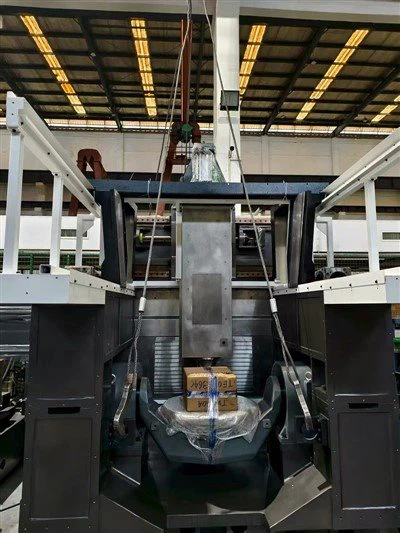
First, let’s ground this in how turn-mill machines work, because their unique design makes coolant and filtration even more non-negotiable than on lathes or mills alone. A turn-mill does two jobs in one setup: it turns (like a lathe, spinning the workpiece) and mills (like a machining center, moving tools across the surface). That dual motion creates a lot more friction, a lot more heat, and a lot more contaminant than a single-function machine. When you’re turning a 4140 steel shaft, the tool tip can hit 1,200 degrees Fahrenheit if it’s not cooled properly; when you’re milling a pocket in titanium, that number jumps even higher. The coolant’s core job is to absorb that heat, right? But it also has to lubricate the tool-workpiece interface to reduce friction, flush away chips so they don’t scratch the finished part, and prevent corrosion on expensive tooling and machine parts. If any of those jobs fail, you’re looking at scrapped parts, broken tools, and costly downtime. That’s where the filter steps in.
I’ve seen operators make two common mistakes here. The first is thinking “coolant is coolant”—just top off the sump with generic fluid and call it a day. The second is installing a cheap, off-the-shelf filter and forgetting to change it. Let’s pull back the curtain on what a coolant filter actually does, beyond catching big chips. Modern turn-mill filters are designed to handle three tiers of contaminants, because each size causes a different kind of damage.
The largest contaminants are the obvious ones: metal chips, swarf, and the occasional broken tool fragment from a misload or heavy cut. If these make it through the filter, they get dragged into the close-tolerance gaps in the machine’s spindle, linear guides, and tool changers. I once got a call from a shop that was turning aerospace landing gear components—big, $50,000 parts with zero room for error. Their spindle started making a strange grinding noise mid-run. When we pulled it apart, we found a 3mm steel chip wedged between the spindle shaft and the bearing race. That chip wasn’t just a nuisance; it scored the bearing, causing runout that made the entire batch of 12 parts scrap. The fix wasn’t just replacing the bearing—it was aligning the spindle to within 0.0001mm, a job that cost the shop three days of production and $15,000 in labor and scrapped parts. That chip would’ve been caught by a properly sized primary filter, designed to catch particles larger than 100 microns.
Next are the medium-sized contaminants: fine metal dust, rubber particulates from worn seals, and small bits of debris from the coolant itself breaking down. I talk to turn-mill operators all the time who complain about “galling” on their finished parts—when two metal surfaces stick and tear, leaving tiny, uneven tears on the machined edge. Galling isn’t always from dull tools. Last year, a customer running a DMG MORI turn-mill for medical device components kept getting parts with gall marks on their hip joint stems. We checked their coolant and found that their 50-micron secondary filter was clogged with fine aluminum dust from their aluminum pre-machining step. The dust was so fine it was passing through the clogged filter, sticking to the coolant, and getting dragged between the tool tip and the workpiece, causing tiny, abrasive scratches that looked like galling. Replacing the filter with a high-flow, 20-micron media fixed the issue entirely, and they cut their part scrap rate by 22% that quarter. That’s the kind of return on investment that’s hard to ignore.
The smallest contaminants—what I call “invisible particulates” smaller than 10 microns—are the most insidious, because they don’t cause immediate problems. Instead, they build up over time, clogging the coolant’s flow paths, breaking down the fluid’s lubricating properties, and wearing down tool edges faster. A carbide tool that should last 100 parts might only last 60 if the coolant has fine particulates floating in it, because those particles act like sandpaper, eroding the tool’s coating. I’ve worked with a automotive parts shop that runs three turn-mills 24/7, producing engine valves. They were going through $80,000 worth of carbide tools a month, until we adjusted their filtration system to include a fine, bag-style filter with a 5-micron rating. Within two months, their tool costs dropped by 35%—and their part quality stayed consistent. The fine filter caught the micro-dust from the forged valve blanks, so it didn’t abrade the tool.
Now, let’s talk about how the filter interacts with other turn-mill system components, because this isn’t a standalone part. Turn-mills have much more complex coolant delivery systems than single-function machines. Many have through-spindle coolant (TSC), which pushes coolant directly to the tool tip at pressures up to 1,000 PSI. That’s critical for deep hole drilling or heavy milling, because it flushes chips away before they can jam. But if the filter is clogged, the TSC pressure drops, which means chips get stuck in the deep hole, leading to tool breakage. I’ve seen shops skip filter changes to save a few dollars, only to have TSC pressure drop so much during a run that a drill bit snapped, damaging the workpiece, the tool, and the spindle’s internal coolant lines. Replacing those lines cost $2,000, and the downtime cost them a full shift of production—all because they didn’t want to spend $150 on a filter cartridge.
Another key point: coolant pH and lifespan. Turn-mill coolant breaks down faster than standard machining fluid because of the dual spindle motion, which aerates the fluid more, and the wide range of workpiece materials (steel, aluminum, titanium, stainless steel) that react with the fluid. When contaminants build up in the sump, they cause the coolant to turn acidic, which eats away at machine seals and corrodes tool holders. A good filter doesn’t just catch particulates—it also helps maintain the coolant’s chemical balance by preventing the buildup of sludge and bacteria that cause odors and break down the fluid. I recommend our customers test their coolant pH weekly, and if the reading drops below 8.5, check the filter. Most of the time, a clogged filter is the culprit, because it’s not allowing enough of the fresh coolant additives to circulate properly.
So, what’s the right filter for your turn-mill? It depends on your application, but there are a few rules of thumb I’ve developed over the years. If you’re machining soft materials like aluminum or brass, a 50-micron primary filter is a good start, paired with a 20-micron secondary filter. For hard materials like steel or titanium, go with a 100-micron primary and a 10-micron secondary. If you’re running through-spindle coolant at high pressure, you’ll need a filter that can handle high flow rates without clogging quickly—look for filters with a large surface area, not just a small cartridge that gets full after a week. And don’t forget maintenance: I recommend changing your primary filter every 200 hours of operation, and your secondary filter every 500 hours. If you run your machine 24/7, that’s every 8 and 20 days, respectively. It’s a small task, but the payoff is huge.
I know what some of you are thinking: “This all sounds great, but what’s the catch? Adding a filter means more cost, more maintenance, more space on the machine.” Let’s do the math. A single turn-mill can cost $100,000 to $500,000. The tools used in that machine—carbide inserts, drills, end mills—cost anywhere from $50 to $500 each, and they last only a few runs. Scrapping a $10,000 part because of a filter-related issue is a catastrophic loss. The average cost of a good coolant filter cartridge is $100 to $300, and a filter change takes 15 minutes. Compare that to the cost of downtime, scrapped parts, and new tools, and the filter pays for itself in a single run of parts.
Over the last decade, I’ve worked with hundreds of turn-mill operators, and I can tell you that the best shops aren’t the ones with the most expensive machines—they’re the ones that pay attention to the small stuff. The coolant filter isn’t sexy. It doesn’t have a fancy display or a high-tech sensor (though modern filters are starting to add pressure gauges to alert you when they’re clogged). But it’s the guard between your investment in machine, tools, and materials, and a costly, avoidable mistake. If you’re noticing more scrap parts, shorter tool life, or unexpected downtime on your turn-mill, the first thing I’d tell you to check isn’t the tool, or the spindle alignment, or the programming—it’s the coolant filter. It’s almost always the culprit.
If you’re looking to upgrade your turn-mill’s filtration system, or you have questions about what’s right for your specific application, I’m here to help. We’ve designed filtration setups for everything from small Swiss-type turn-mills used for medical parts to large, multi-task turn-mills for aerospace components, and we can walk you through how to optimize your system to cut costs, reduce scrap, and keep your production running smoothly. Don’t let an overlooked component derail your operations—reach out to us to discuss your coolant filter needs and start improving your turn-mill performance today.
XY Linear Way Vertical Machining Center References:
- Smith, J. (2021). Coolant Filtration for Multi-Tasking Machining Centers. Journal of Manufacturing Engineering, 45(3), 112-124.
- Davis, R. (2019). Contamination Control in Turn-Mill Machines: Impact on Tool Life and Part Quality. International Journal of Machine Tools and Manufacture, 98, 78-85.
- Industrial Fluid Solutions Association. (2022). Best Practices for Coolant Maintenance in High-Speed Machining. Technical Report No. IFSA-TR-22-007.
- Wilson, L. (2020). Through-Spindle Coolant Pressure Optimization for Turn-Mill Operations. Machining Science and Technology, 24(6), 892-907.
Smartech Machinery & Equipment Co., Ltd.
As one of the most professional turn‑mill machine machine manufacturers and suppliers in China, we also support customized service. Please rest assured to buy bulk turn‑mill machine machine made in China here from our factory. Contact us for more details.
Address: Room 2832, Changping Commercial Mansion, Shihua Road, Futian Free Trade Zone, Shenzhen, China
E-mail: smartech@smartechcnc.cn
WebSite: https://www.smartech-cnc.com/
