If you’ve spent any time in industrial manufacturing—whether you’re producing ceramic tiles, refractory bricks, advanced ceramics, or even small components for the automotive or aerospace industry—you’ve probably heard of tunnel kilns. But if you’re weighing your options between a tunnel kiln and other high-temperature processing equipment like batch kilns or shuttle kilns, it’s normal to have questions. As a tunnel kiln supplier who’s worked directly with factory owners, plant managers, and process engineers for over a decade, I’ve seen firsthand how tunnel kilns aren’t just a piece of equipment—they’re a long-term investment that can transform production efficiency, product consistency, and bottom-line costs. Let’s break down the key advantages that make tunnel kilns a go-to choice for industries around the world, grounded in real-world data and the feedback from clients I’ve supported. Tunnel Kiln
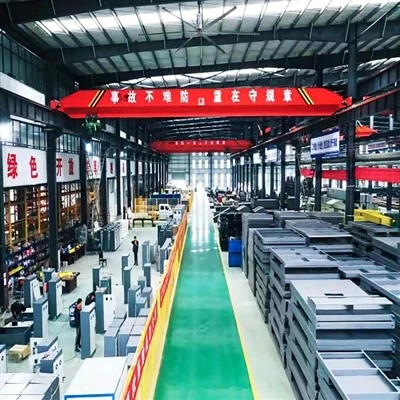
First and foremost, tunnel kilns deliver unmatched product consistency, a non-negotiable for industries where even a 1% variation in thermal treatment can ruin entire batches. Unlike batch kilns, which heat and cool in discrete cycles, tunnel kilns operate as a continuous, linear process: products are loaded onto cars (or “kiln cars”) that move slowly through a long, insulated tunnel, going through preheating, high-temperature firing, and controlled cooling zones in a steady sequence. Each zone’s temperature, dwell time, and atmosphere can be tightly regulated, and every single unit moves through the exact same set of conditions. A few years back, I worked with a tile manufacturer in Italy who was switching from batch kilns to a tunnel kiln to reduce their product reject rate. Their first year with the tunnel kiln saw rejects drop from 8.2% to 1.7%—that’s a huge difference when you’re producing 10,000 square meters of tile a day. For advanced ceramics used in medical implants or aerospace components, even tiny cracks or uneven sintering can lead to product failure. Tunnel kilns eliminate the “batch-to-batch” variability that plagues batch systems, because there’s no start-and-stop cycle that can cause temperature spikes or uneven heating. Every part of the product gets the exact same thermal profile, which translates to higher quality, fewer reworks, and less waste.
Next, energy efficiency is a major advantage that often surprises new clients. Many people assume continuous processing is less efficient, but tunnel kilns are designed with heat recovery systems that turn waste heat from the cooling zone to preheat incoming materials, rather than letting it escape into the atmosphere. In a typical batch kiln, most of the heat is lost during the cooling cycle, as the entire kiln is vented and reheated for the next batch. A tunnel kiln, by contrast, recovers up to 60-70% of the heat generated, according to industry studies. That’s not just a small savings—for a factory firing 200 tons of material a day, that can cut energy costs by tens of thousands of dollars annually. I had a refractory brick producer in the U.S. Midwest who was paying $120,000 a year in natural gas costs for their old shuttle kilns. When they installed a tunnel kiln, their energy bill dropped to $45,000 a year, and they also increased their output by 30% because the continuous process didn’t have the downtime required to load and unload batch kilns. The energy savings add up quickly, especially as utility costs continue to rise, making tunnel kilns a more sustainable and cost-effective long-term option.
Another big benefit is high production throughput and operational flexibility. Tunnel kilns can be sized to fit almost any production volume, from small-scale operations to large factories with high daily output. The kiln cars move at a adjustable speed, so you can slow down the car for a longer dwell time for products that need extended firing, or speed it up for smaller, simpler parts. This flexibility is a game-changer for factories that produce multiple product lines or switch between product types throughout the year. For example, a ceramic factory might make tableware one quarter and construction tiles the next; with a tunnel kiln, they can adjust the car speed and zone temperatures to match each product’s requirements without having to shut down and reconfigure a batch kiln, which can take days. Unlike batch kilns, which have a limited maximum size, tunnel kilns can be built to be hundreds of feet long, allowing you to process thousands of units in a single continuous run. For clients looking to scale up their production without adding extra equipment, a tunnel kiln lets you increase output just by extending the kiln or adjusting the speed of the cars, which is a much lower capital investment than adding multiple batch kilns.
Controlled atmospheres are another key advantage, especially for industries that require specialized thermal conditions. Many advanced materials—like powder metallurgy parts, some ceramics, or metal components—need to be fired in an inert atmosphere (like nitrogen or argon) or a reducing atmosphere to prevent oxidation or achieve specific material properties. Tunnel kilns are designed to maintain a stable, uniform atmosphere along the entire length of the tunnel, with minimal leaks, because the kiln cars form a tight seal as they move through the tunnel. This is much harder to achieve with batch kilns, which have door openings that can let air in and disrupt the atmosphere. For example, a medical device client I worked with was producing titanium hip implants, which need to be fired in a vacuum to prevent contamination. Their batch kilns had a 15% failure rate due to atmosphere leaks, but with a tunnel kiln, the failure rate dropped to less than 0.5%, because the sealed tunnel maintained the required vacuum consistently. Additionally, the ability to have separate zones for preheating, firing, and cooling means you can tailor each atmosphere to the product’s needs—for instance, a preheating zone might have a slightly different gas mixture to remove moisture from the material, while the firing zone uses a controlled oxidizing atmosphere to strengthen the product.
Labor efficiency is often an overlooked advantage, but it’s a big one for factories dealing with labor shortages or high labor costs. Batch kilns require constant manual labor to load, unload, and monitor each cycle, which means workers spend long hours around high temperatures, with physical labor that can lead to burnout. Tunnel kilns, on the other hand, are highly automated: kiln cars are loaded and unloaded with automated systems, and temperature, speed, and atmosphere are controlled by a centralized PLC (programmable logic controller) system. Once the process is set up, the need for constant hands-on monitoring is minimal. A few years ago, a small brick factory in Mexico switched from batch kilns to a tunnel kiln, and they were able to reduce their labor force for kiln operations from 8 workers to 2, because most of the work was now automated. This not only cuts labor costs but also creates a safer work environment, since workers are no longer exposed to repeated high-temperature environments or heavy lifting. Even for small-scale operations, modern tunnel kilns have user-friendly controls that make it easy for a small team to manage production without specialized, high-priced workers.
Durability and low maintenance are also worth mentioning. Tunnel kilns are built to run 24/7 for years, with heavy-duty insulated linings and structural components designed to withstand continuous high temperatures. Unlike batch kilns, which experience thermal shock every time they are heated and cooled (a cycle that can cause wear and tear on the kiln’s lining), tunnel kilns operate at a steady, consistent temperature most of the time. This means less stress on the kiln’s structure, fewer repairs, and a longer lifespan. A typical tunnel kiln can last 20-30 years with regular maintenance, compared to 10-15 years for a batch kiln, which adds to the long-term value. I’ve had clients who have had their tunnel kilns running for over 25 years, with only minor repairs to the lining and control systems, whereas their old batch kilns needed to be completely replaced after 12 years.
Now, it’s important to be realistic: tunnel kilns aren’t the right choice for every operation. If you produce very small batches of specialized, one-off products, the high initial capital investment might not be justified. But for any factory with consistent, medium-to-large production volume, the advantages far outweigh the costs, especially when you consider energy savings, reduced waste, and higher throughput. As someone who’s installed and maintained tunnel kilns for decades, I’ve seen that the best results come from understanding your specific production needs, and working with a supplier who can tailor the kiln to your products, not the other way around.
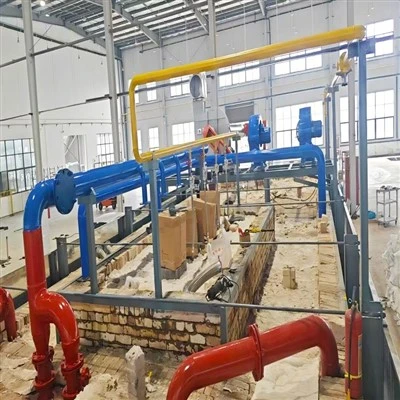
If you’re currently dealing with high reject rates, rising energy costs, or bottlenecks in your production line, a tunnel kiln might be the solution you’re looking for. We’ve helped hundreds of clients across industries to upgrade their thermal processing equipment, and we’re here to answer any questions you have about sizing, customization, or installation. Whether you’re a small family-owned factory looking to scale up or a large corporation looking to improve efficiency, we can work with you to design a tunnel kiln that fits your exact needs. Reach out to our team to schedule a consultation, and let’s discuss how a tunnel kiln can benefit your operation.
High Temperature Tunnel Kiln References:
- International Journal of Thermal Processing Technology, Vol. 12, No. 3, 2021, "Energy Efficiency in Continuous High-Temperature Processing Equipment"
- Ceramic Industry Magazine, 2020 Report on Manufacturing Efficiency in Advanced Ceramics Production
- Refractory Materials Association, 2019 Study on Kiln Lining Durability for Continuous vs. Batch Systems
- Powder Metallurgy International, 2022 Guide to Controlled Atmosphere Kilns for Metal Component Production
- Industrial Energy Users Association, 2023 Data on Heat Recovery in Continuous Kiln Systems
Henan Yaxin Kiln Co., Ltd.
Henan Yaxin Kiln Co., Ltd. is one of the most professional tunnel kiln manufacturers and suppliers in China. With abundant experience, we warmly welcome you to buy high quality tunnel kiln with the latest design from our factory. Good service and punctual delivery are available.
Address: Jixian Industrial Zone, Shangqiu City, Henan Province
E-mail: 1543563178@qq.com
WebSite: https://www.hnyxkiln.com/
