Hey there! I’m a supplier of enameled flat wire, and I often get asked about how it differs from round enameled wire. So, I thought I’d write this blog to clear things up. Let’s dive right in! Enameled Flat Wire
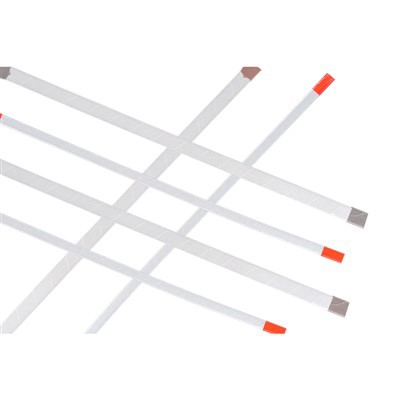
Physical Appearance
First off, the most obvious difference is the shape. Round enameled wire, as the name suggests, has a circular cross – section. It’s like a thin, long cylinder with an insulating enamel coating around it. You can find this type of wire in a bunch of small electrical components because of its uniform shape.
On the other hand, enameled flat wire has a rectangular cross – section. Picture a flat ribbon that’s been given an enamel coating. This unique shape gives it some distinct advantages and drawbacks compared to the round wire.
Production Process
The production of both types starts with the base metal, usually copper or aluminum. For round enameled wire, the metal is first drawn through a series of dies to reduce its diameter to the desired size. Then, the enamel coating is applied in multiple layers. The wire is passed through a furnace after each layer to cure the enamel.
Enameled flat wire production is a bit more complex. After the initial drawing process, the wire needs to be flattened. This is done using special rolling mills. Once flattened, the enamel coating process is similar to that of round wire. But because of the flat shape, it can be a bit trickier to ensure an even coating, especially on the edges.
Electrical Performance
When it comes to electrical conductivity, both round and flat enameled wires made from the same base metal have similar conductivity per unit area. However, the way they perform in different applications can vary.
Round enameled wire is great for applications where space isn’t a huge concern. It can carry electrical current evenly in all directions around its circular cross – section. But in high – power applications where you need to pack a lot of wire in a small space, round wire has its limitations. There are gaps between the round wires when they are bundled together, which means you can’t use the available space as efficiently.
Enameled flat wire, on the other hand, is a champ in space – constrained applications. When you stack flat wires together, there are fewer gaps between them. This allows for a higher copper or aluminum fill factor in a given area. As a result, you can achieve better power density and lower resistance in a smaller space. For example, in transformers and motors, the use of enameled flat wire can lead to more compact designs without sacrificing performance.
Thermal Performance
Heat dissipation is an important factor in electrical components. Round enameled wire has a relatively large surface – to – volume ratio. This means it can dissipate heat more easily in some cases, especially when the wire is not tightly packed. The circular shape allows air to flow around it freely.
Enameled flat wire has a different situation. While it has a large flat surface area, when multiple flat wires are stacked together, the heat transfer can be a bit more challenging. However, in some designs, the flat shape can be used to our advantage. For instance, in some heat – sink applications, the flat surface can be directly attached to a heat – conducting material, which can help in efficient heat transfer.
Mechanical Properties
Round enameled wire is more flexible compared to flat wire. Its circular shape allows it to bend easily in any direction without much risk of damage. This makes it ideal for applications where the wire needs to be bent or coiled in complex shapes, like in some types of sensors or small – scale electronics.
Enameled flat wire is stiffer. Its rectangular shape gives it more structural integrity. This stiffness can be an advantage in applications where the wire needs to maintain its shape, such as in large – scale transformers or heavy – duty motors. The flat wire can be better at resisting deformation under mechanical stress.
Cost
The cost of both types of wires depends on several factors, including the base metal, the enamel coating, and the production volume. Generally speaking, round enameled wire is often cheaper to produce. The manufacturing process for round wire is more straightforward and less labor – intensive compared to flat wire production. The equipment required for flattening the wire and ensuring an even enamel coating on the flat shape adds to the cost of enameled flat wire.
However, in some cases, the overall cost of using enameled flat wire can be justified. If it allows for a more compact design, it can reduce the size and cost of other components in the system. For example, in a motor design, using flat wire might lead to a smaller motor housing, which can save on material and assembly costs.
Applications
Round enameled wire is widely used in small – scale electronics, such as mobile phones, laptops, and small power supplies. Its flexibility and ease of handling make it suitable for these applications. You can also find it in some types of solenoids and magnetic coils where a relatively small amount of wire is needed.
Enameled flat wire is often used in high – power and large – scale electrical equipment. Transformers, large motors, and generators are common applications. The ability to achieve a high fill factor and better power density makes it a great choice for these devices. It’s also used in some special – purpose electrical applications, like in high – frequency communication equipment where the flat shape can affect the electromagnetic properties in a beneficial way.
Why Choose Our Enameled Flat Wire?
If you’re in the market for enameled flat wire, I want to tell you a bit about what we offer. We’ve been in the business for a while, and we know how to produce high – quality enameled flat wire. Our production process is strictly monitored to ensure that every wire we make meets the highest standards.
We offer a wide range of sizes and materials to suit your specific needs. Whether you need a small batch for a prototype or a large – scale production order, we’ve got you covered. Our prices are competitive, considering the quality we provide. And we also have a great customer service team that can help you with any questions or concerns you might have.
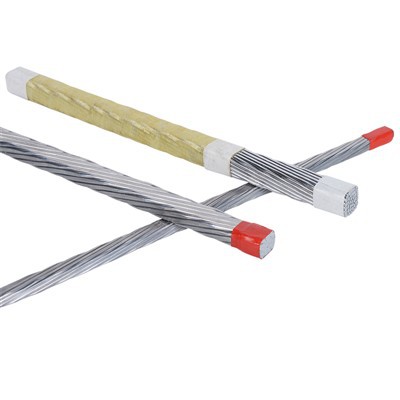
Continuously Transposed Conductors If you’re interested in purchasing enameled flat wire for your project, don’t hesitate to reach out. We’re here to discuss your requirements, answer your questions, and provide you with samples if needed. Get in touch, and let’s start a great business relationship!
References
- "Electrical Wiring Handbook", various authors.
- "Handbook of Materials for Electronics", edited by Christopher A. Flom.
Tianjin Jingwei Power Technology Co., Ltd.
As one of the most professional enameled flat wire manufacturers and suppliers in China, we’re featured by quality products and good service. Please rest assured to buy durable enameled flat wire made in China here from our factory. Contact us for more details.
Address: No.1 Chuangxin Rd. Xiaozhan Industrial Park, Jinnan District, Tianjin, China
E-mail: info@jwdc.cn
WebSite: https://www.jw-dcs.com/
