If you’re a small restaurant owner eyeing that dream of opening your own spot, one of the big questions you’re probably stuck on is: how much is that commercial cooking equipment really gonna set me back? Let me tell you straight—from someone who’s been in the commercial cooking equipment game for years, it’s not a one-size-fits-all number, and skipping the details will leave you stuck with a bill that’s way bigger than you planned. Commercial Cooking Equipment

First off, let’s get one thing clear: “small restaurant” isn’t a box. A 15-seat coffee shop making paninis and soups? Way different from a 40-seat casual spot turning out burgers, fries, and stir-fry. That’s why the average cost I hear thrown around online (like $20k to $50k) is just a rough guess—usually for full-service spots, not the tiny, niche places most new owners start with. Let’s break this down, like I would with a regular walking into my shop last week panicking about buying a fryer.
First, the must-have core equipment that you can’t open without. For any small kitchen, that’s the heavy hitters: a commercial range, a refrigerator (you can’t use a residential one—health inspectors will flip), a fryer, and a prep table. I’ve seen small cafes opt for a 36-inch commercial range for around $2,800 to $4,200, not the fancy professional one chefs brag about. A single-pot fryer for sides only? That’s $1,500 to $2,800. Then there’s refrigeration: a 48-inch reach-in fridge that fits all your ingredients is $3,200 to $4,800, and if you need a small freezer to stock burgers or ice cream, add $1,800 to $2,500. Those four alone add up to about $9,300 to $14,300. But wait—if you’re a pizza place, you can’t forget a countertop pizza oven, which tacks on another $3,000 to $5,500. If you’re Asian fusion? A wok range, not a regular range, will run you $1,200 to $2,200 more. That’s why it shifts so fast.
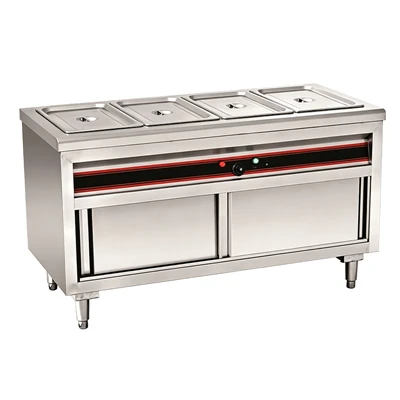
Next up, the stuff that’s easy to overlook until your health inspector is standing right in your kitchen. A commercial dishwasher? You can’t use a residential one, period. That’s $2,500 to $4,000 for a small under-counter model, which is the only one that fits a tiny kitchen. Prep tables with sinks, food warmers for holding takeout, a microwave (but commercial, not your home one—so $500 instead of $100), and basic tools like sheet pans, thermometers, and spatulas add up another $1,500 to $3,000. Suddenly, that base bill jumps to like $13,300 to $21,300 for a super basic, no-frills small kitchen.
But here’s the thing I tell every new owner who thinks they can skimp: buying new vs. used isn’t always the fix. Sure, a used 36-inch range might be half the price, but if it’s 10 years old, it’ll use way more electricity or gas, break down every 6 months, and void any service plan you might get. I’ve had customers buy a $1,000 used fryer that cost them $1,200 in repairs in a year—total waste. Used can be a good deal if it’s from a reputable seller, but only if it’s under 5 years old, has a clean service history, and you get it inspected by a tech before you buy. That said, if you’re really tight on cash, leaning gently used for non-core items like prep tables is fine, but don’t mess with the stuff that makes your food and stays on all day (fridges, ranges, fryers).
Now, let’s talk about average numbers that actually make sense for real small restaurants, not the ones on TV. For a 20-seat casual diner that does breakfast and burgers daily, the total is usually around $18k to $25k. For a 15-seat coffee shop that does sandwiches and pastries, it’s $12k to $18k. For a 30-seat pizza spot with oven, prep, and takeout, it’s $22k to $30k. Wait, but why do some quotes hit $50k? Those are places that add extras like multiple fridges, specialty equipment (sushi rice cookers, gelato machines), fancy venting systems (which you can’t skip—health codes require it), or delivery prep stations. Oh right, venting! I almost forgot that big one. Small restaurants often budget $2k to $5k for ductwork and hoods, which is non-negotiable—no venting means no cooking, period. That’s part of the hidden costs most new owners miss.
I get it, numbers feel overwhelming. Let me share a recent example: a couple came in last month opening a taco spot, 18 seats. They thought they needed $30k, but we worked with their budget. They didn’t splurge on a stainless steel backsplash or extra freezer space. We got them a high-quality range, a 2-burner wok for their street tacos, a compact reach-in fridge, a small fryer for churros, and all the prep gear—total came to $16,800, and we threw in a free 6-month service checkup so they didn’t stress about breakdowns. That’s the stuff most suppliers won’t tell you: there’s room to adjust, if you’re clear about what you actually need, not what the sales guy is pushing.
Wait, what about leasing options? A lot of small owners don’t know this, but leasing equipment is a common move for new spots, especially if you don’t want to drop a big lump sum right when you’re opening. Monthly lease payments are usually $150 to $350 a month for core gear, and after 3 to 5 years, you can own it or upgrade to newer stuff. That’s why some owners think the “cost” is lower, but it’s spread out—over 5 years, you might end up paying more than buying outright, but if cash flow is tight at the start, it’s a lifesaver.
Now, let’s address the myths I hear every week. “I can use my home oven for catering?” No, health departments will shut you down. “Generic equipment is just as good as brand-name?” Maybe for a tiny cafe, but brands like Vulcan, Imperial, or Hobart have parts available everywhere, so if something breaks, a tech can fix it in a day, not wait 2 weeks for a generic part. That’s a big deal when you can’t afford to be closed for a single day.
Another thing: size matters more than you think. If your kitchen is only 100 square feet, you can’t fit a 60-inch range. We specialize in fitting compact equipment for small spaces, which is why a lot of small owners come to me instead of big box stores that only sell big stuff. We’ll measure your kitchen, walk you through what fits, and tell you exactly what you need—no upselling the fancy extras you’ll never use.
So what’s the real average? If you’re a new small restaurant owner, opening in the next 6 months, the total for necessary commercial cooking equipment (plus basic refrigeration, dishwashing, and venting) will fall between $12k and $28k, depending on your menu, kitchen size, and whether you buy new or gently used. If you’re adding specialty items or a bigger menu, that number goes up, but you can almost always cut costs by skipping the non-essentials at first (like a $1,000 commercial coffee machine if you start with pre-made drinks, or a second freezer until you’re busy enough to need it).
Here’s the kicker: skimping on equipment to save a few bucks now will cost you way more later. I see it all the time—owners buy a $500 fryer that breaks in 3 months, have to close for a day to fix it, lose money on lost sales, and end up buying a $2,000 one anyway. Spend the extra $2k on a reliable, energy-efficient model that’ll last 10 years, and you’ll thank me when you’re not stressing about a breakdown on a Saturday night.
If you’re in the middle of planning your restaurant, or just trying to figure out what you actually need (not what a sales guy is telling you to buy), let’s talk. No pressure, no upsell—just straight answers about what fits your menu, your kitchen, and your budget. We can walk through your specific setup, compare options, and even help with leasing if that works better for you. Don’t let the cost scare you off—with the right planning, you can get the equipment you need to open and start serving customers, without breaking the bank.
Commercial Refrigeration Equipment References:
- National Restaurant Association. (2023). 2023 Restaurant Technology & Equipment Survey. National Restaurant Association.
- U.S. Small Business Administration. (2022). Small Restaurant Startup Costs Guide. U.S. Government Publishing Office.
- Food and Drug Administration. (2021). Commercial Kitchen Equipment Requirements for Small Food Establishments. U.S. Food and Drug Administration.
- Commercial Food Equipment Service Association. (2023). Used vs. New Equipment Cost-Benefit Analysis. Commercial Food Equipment Service Association.
Zhejiang Anneng Kitchen Equipment Co., Ltd.
As one of the most experienced commercial cooking equipment manufacturers and suppliers in China, we also accept customized order. With abundant experience, we warmly welcome you to wholesale advanced commercial cooking equipment in stock from our factory. For quotation, contact us now.
Address: No. 1003 Donghai Avenue, Taizhou Bay New Area, Taizhou City, Zhejiang Province
E-mail: 13968527240@163.com
WebSite: https://www.annengkitchen.com/
