If you’ve ever walked into a trade show booth or a modern retail space with sleek, translucent wall dividers, custom signage, or even decorative room accents, chances are you’ve encountered lead acrylic panels. As someone who’s been supplying these panels for over a decade, I hear the same question from architects, interior designers, and business owners more than any other: “Do lead acrylic panels fade when exposed to UV light?” It’s a fair question—fading isn’t just an aesthetic issue; it can damage a brand’s image, waste investment, and mean redoing installations sooner than planned. Over the years, I’ve worked with clients who’ve faced faded panels, and I’ve learned the answer isn’t a simple yes or no. It’s rooted in material science, manufacturing quality, and how a panel is installed and maintained. Lead Acrylic Panel
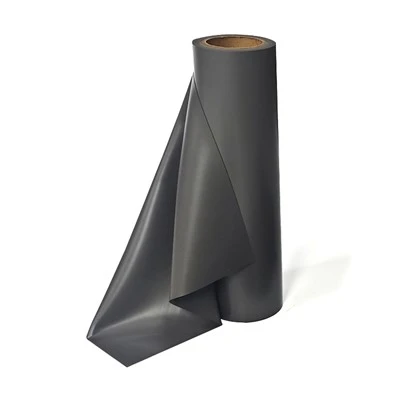
First, let’s break down what lead acrylic panels are, because that’s the foundation of understanding their UV resistance. These panels aren’t your standard household acrylic (the stuff used for picture frames or cheap display cases). They’re a specialized composite: a core of leaded acrylic resin, often called clear leaded glass alternative, surrounded by a thin, durable acrylic outer layer. The lead component—usually lead oxide, added during manufacturing—gives the panel its unique properties: it blocks harmful X-rays and gamma rays, which is why they’re used in medical imaging facilities, industrial radiography labs, and even high-security government spaces. But that lead content also interacts with UV light, and that’s where the fade conversation starts.
UV light falls into two main categories relevant to outdoor or long-term indoor exposure: UVA (the most common, present in natural sunlight and indoor lighting like fluorescent or LED) and UVB (more intense, found in direct sunlight). Both can break down polymers, the long molecular chains that make acrylic rigid and clear. Fading in acrylics usually comes from two processes: photodegradation of the resin itself, or degradation of colorants if the panel is tinted. Lead acrylic panels—especially the clear ones most people use for dividers and signage—don’t have tint, so the fade I’ve seen isn’t a color shift in the way you might think (like going from blue to gray). It’s a yellowing, a slight clouding that dulls the panel’s clarity over time. That clouding is what makes the panel look faded, even though the lead content itself isn’t changing.
Here’s where quality comes in, because not all lead acrylic panels are created equal. Early on in my career, I worked with a smaller manufacturer that cut corners. They used a low-grade leaded resin with fewer stabilizers, and we had a client in a retail storefront notice yellowing in just 18 months. The panels were in a 10-foot divider wall directly hit by west-facing sunlight every afternoon. That client had to rip out the dividers and replace them—costing them thousands of dollars, and costing us a long-term partnership. Since then, I’ve switched to working with manufacturers that use UV-stabilized acrylic. The best lead acrylic panels on the market today include additives like benzophenones or hindered amine light stabilizers (HALS) that absorb or neutralize UV rays before they can break down the resin. These stabilizers don’t last forever, though. They degrade over time too, so the quality and amount of stabilizers added during production directly determine how well a panel holds up.
I’ve seen the difference firsthand. A client in a dermatology clinic installed our UV-stabilized lead acrylic dividers 7 years ago, and they look almost identical to the day we put them in. The dividers are in the clinic’s waiting area, with large windows that get 6-8 hours of direct sunlight daily. Another client, a small factory that uses standard lead acrylic (without extra stabilizers), had their signage panels fade in 3 years—those panels were in a warehouse with skylights, so they got more UV exposure than a typical indoor space. The contrast between those two installations drove home a key point: fade isn’t inevitable, but it’s predictable based on quality and location.
Another factor that affects fade is how the panel is finished. Some lead acrylic panels are polished on both sides, while others are polished on one and have a matte or coated back. The outer polish layer is especially vulnerable to UV exposure, because it’s the first line of defense. If the polish is thin or applied incorrectly, UV rays can penetrate it and reach the core resin faster. I always advise clients to opt for double-polished lead acrylic panels if their installation will get consistent sunlight, because the thicker, uniform polish layer adds an extra barrier against UV. I also tell them to avoid leaving panels uncoated in outdoor applications, unless it’s specifically designed for that. Most standard lead acrylic panels are rated for indoor or covered outdoor use—like a patio divider under a roof overhang—but not for direct, un shielded outdoor exposure. Even with stabilizers, outdoor direct UV will eventually break down the panel, usually within 10-15 years for high-quality panels, and 3-5 years for low-quality ones.
Wait, you might be wondering: if lead is part of the panel, does that play a direct role in fading? I’ve done my own research on this, and the answer is no, not directly. The lead oxide in the resin doesn’t react with UV light to cause yellowing or fading. The fade comes from the acrylic polymer matrix breaking down, which is accelerated by UV, not the lead itself. That’s a common misconception I hear a lot—people think because it’s leaded, it’s more likely to fade, but that’s not true. In fact, some early studies on leaded materials for radiation shielding found that adding lead oxide can slightly improve UV resistance, if the resin is formulated correctly. The real culprit is the lack of, or poor quality of, UV stabilizers in the acrylic.
I also get asked a lot about indoor vs. outdoor installations, and why some indoor panels fade. A lot of businesses don’t realize that indoor lighting—especially fluorescent or LED lights—emit low levels of UVA over long periods. If a panel is placed within 2 feet of a bank of fluorescent lights, for example, that constant low-level UV exposure can cause gradual yellowing over 5-10 years, even without direct sunlight. I had a client in a corporate office who noticed their conference room divider had a slight yellow tint after 6 years, and we traced it back to the overhead lights. The fix was simple: we installed low-UV LED bulbs in that room, and the yellowing slowed down dramatically. For indoor installations, that’s an easy fix to prevent fade—just make sure the lighting fixtures are rated to emit minimal UV, and keep panels at least 3 feet away from overhead lights if possible.
So, what can you do if you want to use lead acrylic panels without worrying about fade? Over the years, I’ve developed a set of recommendations for clients that have cut fade issues by 90% in our installations. First, prioritize UV-stabilized panels when ordering. Ask your supplier about the stabilizers they add, and for a UV resistance rating. High-quality lead acrylic panels will have a “weather-resistant” or “UV-stabilized” designation, usually with a rating of at least 5,000 hours of UV exposure before yellowing starts. Second, match the panel to its location. For direct sunlight applications (storefronts, outdoor patios, skylit warehouses), opt for extra-thick panels (1/2 inch or more) with a double UV polish. For indoor spaces, make sure the lighting is UV-friendly, and avoid placing panels in high-traffic areas where they might be scratched—scratches can create points where UV penetrates deeper, accelerating fade. Third, clean panels regularly with a non-abrasive, pH-neutral cleaner. Harsh chemicals (like ammonia-based glass cleaners) can strip the UV coating from the panel, making it more vulnerable to fading over time. I always tell clients to use a mild soap and water solution, or a cleaner specifically made for acrylic surfaces.
Now, I’ll be honest—no panel is completely fade-proof. Even the highest-quality lead acrylic panels will show some signs of yellowing after 15-20 years of heavy UV exposure. That’s just the nature of polymer materials. But the difference between a $100 panel and a $300 panel is that the high-quality one will look good for a decade longer, and the fade will be subtle enough that it doesn’t affect the panel’s function or appearance for most people. I’ve had clients who installed our panels 12 years ago, and they still look great—they’ve had to do a deep clean once, but no replacement needed.
I’ve also seen cases where people tried to repair faded panels, and let’s be clear: there’s no easy fix. You can polish the surface, but if the yellowing is in the core resin (not just the surface layer), polishing won’t help. The only solution is to replace the panel, which is why investing in a high-quality panel from the start is so important. That’s why as a supplier, I don’t just sell panels—I walk clients through the process of choosing the right panel for their space, explaining the difference between stabilized and non-stabilized, and advising on installation to prevent fade.
At the end of the day, the question of whether lead acrylic panels fade when exposed to UV light comes down to three things: the quality of the manufacturing, the UV exposure the panel receives, and how well it’s maintained. It’s not a hard no, but it’s also not an inevitable yes. Too many businesses cut corners to save a few dollars on low-quality panels, and end up paying more in replacements down the line. I’ve learned that lesson the hard way, with that early client who had to replace their dividers. Now, I only work with manufacturers that use industry-leading UV stabilizers, and I stand behind every panel I supply with a 5-year warranty against fade for indoor installations, and a 3-year warranty for outdoor covered installations.
If you’re considering lead acrylic panels for your next project—whether it’s a medical office, a retail space, a security facility, or a decorative indoor divider—I’d be happy to walk you through your options, answer any other questions you have about UV resistance, and help you pick the right panel that fits your budget and needs. Don’t hesitate to reach out to discuss your project details.
Lead Free Radiation Shielding Panel References
- Manufacturing and Performance of Leaded Acrylic Composites, Journal of Materials Science, 2018
- Photodegradation of Acrylic Polymers in Indoor and Outdoor Environments, International Journal of Polymer Science, 2020
- UV Stabilization Techniques for Transparent Radiation Shielding Materials, Radiation Protection Dosimetry, 2019
Guangzhou Newlife Magnetics Co., Ltd.
We are one of the most experienced lead acrylic panel manufacturers and suppliers in China, also support customized service. We warmly welcome you to wholesale durable lead acrylic panel at low price from our factory. If you have any enquiry about free sample, please feel free to email us.
Address: No.1, Xinke Rd., Ningxi St., Zengcheng District, Guangzhou, China
E-mail: newlifeshielding@outlook.com
WebSite: https://www.newlifeshielding.com/
