Alright, let’s cut to the chase because if you’re here, you’re probably staring at a flexible metal hose spec sheet right now, squinting at the numbers like they’re hieroglyphics. I get it—when we’re supplying these hoses for everything from food processing lines to industrial piping rigs, the last thing you want is a pressure misstep that tanks a project. Let’s talk about working pressure, not as some boring engineering term, but as the non-negotiable that keeps your system from leaking, breaking, or costing you a weekend of emergency fixes. Flexible Metal Hoses

First off, let’s ditch the overcomplicated jargon. Working pressure (for the uninitiated) is the maximum internal pressure a flexible metal hose can handle on a regular basis without failing. That’s different from burst pressure (the point it explodes, which we never want you to hit) and test pressure (the pressure we yank it to during quality checks, just to be sure it’s tough enough). And before you ask—no, it’s not a one-size-fits-all number. That’s where most folks go wrong when they first reach out to us. They say “I need a hose for 100 PSI” and that’s only half the story.
Let’s break down what actually shapes a flexible metal hose’s working pressure. We build these hoses in layers, right? The inner core is usually corrugated stainless steel (304 or 316, depending on your needs) and that’s the main pressure-bearing part. Then there’s the interlocked carcass, and finally, the outer braid—that’s the secret sauce for pressure. The braid is made of fine metal wires woven tight, and its density and wire gauge are the biggest drivers of working pressure. For example, a single-braid hose for low-pressure stuff like water lines might handle ~150 PSI, but a double-braid hose for high-pressure hydraulic systems? That can jump up to 500 PSI or more. And don’t even get me started on triple-braid hoses for extreme applications like oil and gas drilling—those can hit 10,000 PSI easy.
Wait, but here’s the curveball: working pressure isn’t static. Temperature plays a huge role. If you’re moving hot steam (300°F, say) through a hose, that stainless steel core expands a little, and the braid’s tension changes. Most of our spec sheets have a pressure-temperature derating curve (we call ’em “derate curves” around the shop) that shows working pressure drops as temp climbs. For instance, a 300 PSI double-braid hose at room temp might only do 220 PSI at 400°F. Skip that curve, and you’re asking for trouble. We’ve seen customers do this before—they ordered a hose based on room temp specs, installed it for a hot oil line, and had a leak within a week. Not fun.
Then there’s the end fittings. Yeah, those little bits on the ends that connect to your pipe or machinery. If the fitting isn’t rated for the same working pressure as the hose, it’s the weak link. We work with our customers to match fittings (flanges, NPT, quick connects, whatever) to the hose’s pressure rating. A lot of cut-rate suppliers will skimp on fitting quality, but that’s not our style—we test every hose end-to-end to make sure the whole system holds, not just the flexible part.
Another thing people overlook: cycle fatigue. If your hose is moving a lot (like on a robotic arm or a telescoping conveyor), the constant bending and flexing lowers the effective working pressure over time. We call this “fatigue derating.” A hose that’s rated for 500 PSI in a fixed straight setup might only handle 300 PSI if it’s bending 100 times a day. That’s why we talk to you about the application’s movement rate—no guesswork, just real data on how the hose will perform when it’s actually working for you.
Let’s talk about common use cases so you can relate. If you’re in the food and beverage industry, you’re probably using single-braid 304 stainless hoses for transfer lines—those have a working pressure around 100–150 PSI, perfect for water, milk, or low-pressure beverage syrups. For HVAC systems, where you might have refrigerant lines, double-braid 316 stainless is standard, handling ~200–300 PSI, and 316 is better for corrosion from refrigerants. Hydraulic systems for construction equipment? Those run super hot and high-pressure, so we spec double or triple-braid hoses with derating curves accounted for, hitting 400–800 PSI depending on the model. And for oil and gas, especially upstream drilling? We’re talking triple-braid hoses, often with Inconel wire braid, that handle up to 15,000 PSI and extreme temps (like -40°F to 600°F).
Wait, should we mention how we test our hoses? Yeah, because trust is everything. Every flexible metal hose we leave our warehouse goes through hydrostatic testing. We pump water into it at 1.5x the rated working pressure for 1 minute, and check for leaks or deformation. For hoses going into high-pressure apps, we do a second burst test to make sure they don’t fail at 3x the working pressure. We keep test logs for every order—no hiding that stuff.
Now, let’s address a myth: a lot of people think thicker inner core equals higher working pressure. Not exactly. The corrugated design is key—corrugations give the hose flexibility, and the pitch (how far apart the corrugations are) plays a role too. Tighter corrugations mean higher pressure handling, but still, the braid is the main pressure barrier. We’ve seen a 0.5mm thick corrugated core with a heavy double braid outperform a 1mm thick core with a thin single braid. So never pick a hose just by core thickness.
Here’s the part that ties it all together: when you’re shopping for flexible metal hoses, don’t just grab the cheapest option. Ask us about the application: what fluid are you moving? What’s the working temp? Is the hose going to move or stay fixed? What size line do you need? We don’t just sell hoses—we help you pick the right one that fits your pressure needs and your budget. We’ve been at this long enough to know that cutting corners on pressure ratings ends up costing more in repairs, downtime, and replacements.
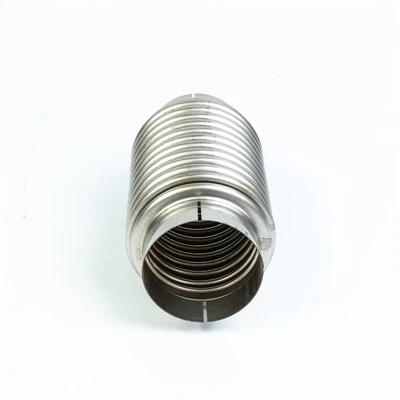
Last thing: if you’re dealing with a pressure problem right now, or you’re just planning a new project, hit us up for a chat. We’ll walk you through all the details, no engineering degree required, no confusing spec sheet jargon. We’ll send you tailored pressure ratings based on your exact use case, and even share test data if you need it. No sales pitches, just honest talk about what works.
Metal Expansion Joints References:
- Flexible Metal Hose Institute. (2022). Design and Performance Standards for Industrial Flexible Metal Hoses.
- ASME B31.3. (2023). Process Piping Code, American Society of Mechanical Engineers.
- Parker Hannifin Corporation. (2021). Flexible Hose Pressure Derating Guidelines for Temperature and Fatigue.
Yixing Blog Pipeline Equipment Co., Ltd.
As one of the most professional flexible metal hoses manufacturers and suppliers in China, we’re featured by quality products and good service. With abundant experience, we warmly welcome you to wholesale bulk flexible metal hoses in stock here and get quotation from our factory. Customized orders are welcome.
Address: Zhizao Park, No.50 Chunjiang Road, Industrial Cluster Zone, Heqiao Town, Yixing City, Wuxi City, Jiangsu Province
E-mail: 1351116816@qq.com
WebSite: https://www.blogbellows.com/
