If you’ve ever worked in a microbiology, biotechnology, or synthetic biology lab, you’ve probably encountered systems that grow microbial cells, mammalian cell lines, or algae for research, drug development, or bioprocess optimization. But few lab tools are as central to precise, reproducible continuous culture work as the chemostat laboratory bioreactor. As a supplier focused exclusively on lab-scale bioreactors, I get a lot of questions from early-career researchers, PhD students, and even seasoned principal investigators (PIs) who know they need consistent, controlled cultures but aren’t sure exactly what a chemostat is, how it works, and why it’s different from the batch reactors most labs use for small-scale work. Laboratory Bioreactor
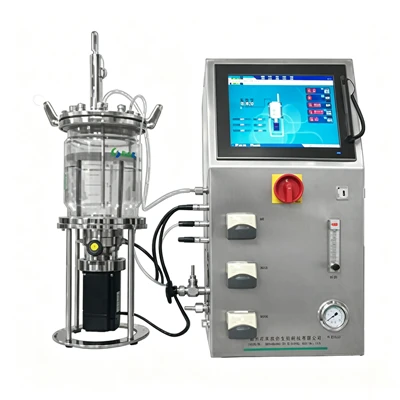
Let’s start with the basics: most lab bioreactors you’ll find are batch systems. In a batch setup, you load a fixed volume of growth medium, inoculate it with your organism, and let it grow until nutrients run out or waste products accumulate. Every run is finite, growth patterns shift over time (lag, log, stationary, death phases), and you can’t easily maintain a constant, uniform culture for hours, days, or even weeks. For many experiments—like studying metabolic pathways, testing antibiotic efficacy, optimizing enzyme production, or engineering microbes for industrial use—batch systems introduce too much variability, because each culture is at a different growth stage at any given time. That’s where the chemostat comes in.
A chemostat is a continuous culture bioreactor designed to maintain a stable, controlled environment for microbial or cell culture indefinitely, as long as you supply fresh medium and remove old culture at an equal, constant rate. The name itself comes from “chemical homeostasis”—the idea that you keep key chemical variables fixed, rather than letting them change as cells grow. This is the core of what makes it so powerful for research.
Let’s break down how a lab-scale chemostat works in practice. First, you load your reactor vessel with sterile growth medium, inoculate it with your target organism (say, E. coli, CHO cells, or algae), and let it grow until it reaches a steady state. Steady state is the sweet spot here: that’s when the rate of new cell growth exactly equals the rate of cells being washed out of the reactor, and the concentration of nutrients, cell density, pH, temperature, and dissolved oxygen (DO) all stay constant over time.
To maintain this steady state, you use two key pumps: one to infuse fresh, sterile medium into the reactor at a set flow rate, and a second to remove an equal volume of spent culture (cells, waste, leftover medium) at the same rate. The ratio of the flow rate to the reactor’s working volume is called the dilution rate (D), which is a critical parameter you control. For example, if your reactor holds 1 liter of medium, and you pump in 100 mL of fresh medium per hour, your D is 0.1 per hour.
Now, to keep that steady state stable, a chemostat isn’t just two pumps. It has a suite of sensors and controllers that monitor and adjust conditions in real time. pH sensors keep acidity or alkalinity locked to your organism’s optimal range—for E. coli, that’s usually around 7.0; for mammalian cells, it’s closer to 7.4. DO sensors track oxygen levels, adjusting aeration rates or stirring speed if oxygen drops too low, which is vital for aerobic cultures. Temperature control is non-negotiable too; even a 1°C shift can alter enzyme activity and growth rates, so most lab chemostats have precision heating/cooling jackets to keep the vessel at a constant, calibrated temp.
What makes a chemostat different from other continuous bioreactors, like a turbidostat? That’s a common question I get from lab teams who are weighing their options. A turbidostat works by measuring the cloudiness (turbidity) of the culture and adjusting the flow rate automatically to keep turbidity constant. That’s useful if you want to maintain a fixed cell density, regardless of how fast cells are growing. But a chemostat fixes the concentration of a single limiting nutrient—like glucose, ammonium, or phosphate—instead. That’s the key: you design your growth medium so that one nutrient is in short supply, even as other nutrients are abundant. For example, if your medium has 1 g/L of glucose and 10 g/L of nitrogen, glucose is the limiting nutrient. That means the only thing holding back cell growth is how much glucose you add, so by adjusting the flow rate of fresh medium, you directly control the growth rate of your cells. That level of control is why chemostats are the gold standard for experiments where you need to study growth rate-dependent biology.
Let’s talk about what you’d actually use a chemostat lab bioreactor for, because that’s where its value shines. I’ve supplied chemostats to labs across biotech, academia, and contract research, and the most common use cases fall into a few key areas.
First, basic microbiology research. For decades, chemostats have been used to study evolutionary biology—for example, tracking how E. coli evolve to use a limiting nutrient faster over hundreds of generations, or how antibiotic resistance develops in constant, low-nutrient environments. Batch cultures can’t do that, because the growth conditions change every few hours, so you can’t maintain a consistent selection pressure long-term.
Second, metabolic engineering and biotechnology production. If you’re engineering yeast to produce biofuels, or bacteria to make recombinant proteins, you need to optimize production without sacrificing cell health. In batch cultures, production often peaks during the stationary phase, when cells stop growing because nutrients are gone. In a chemostat, you can tune the dilution rate to keep cells in the log phase of growth, where metabolic activity for production is high, and maintain that for days or weeks. That leads to far higher, more consistent yields than batch runs, because you eliminate the lag between growth and production.
Third, toxicology and antibiotic testing. When researchers want to test how a drug affects cells at a specific, constant growth rate—say, the rate that human pathogens grow in the human gut—a chemostat lets them mimic that environment exactly. Batch cultures would see growth rates change as nutrients are used up, so test results would be inconsistent. Chemostats also let you test how cells adapt to constant low doses of a drug, which is critical for understanding how resistance develops, something that’s impossible in short batch runs.
Fourth, cell culture for biopharmaceuticals. Even for mammalian cells, lab-scale chemostats (often called perfusion bioreactors, a type of continuous culture system closely related to chemostats) are used to produce monoclonal antibodies, viral vectors, and other biologic drugs. Perfusion chemostats remove spent media and add fresh media continuously, keeping cell density high and reducing waste buildup, which leads to higher product quality and lower production costs compared to batch fed-batch systems.
Now, I know a lot of lab teams are hesitant to switch from batch to chemostat, especially if they’re used to small-scale benchtop setups. The good news is that modern lab-scale chemostats are way more user-friendly than the old glassware-and-tubing rigs of 20 years ago. The ones we supply for labs are benchtop units, with touchscreen controllers that let you set dilution rates, adjust pH, DO, and temperature, and log all data automatically. They’re compact enough for a standard lab bench, with autoclavable vessels so you can reuse equipment without cross-contamination.
But there are also common pitfalls to watch out for, which I see new users run into all the time. First, contamination. Continuous cultures run for so long that a single bacteria or fungal spore introduced at inoculation can take over the entire culture, ruining weeks of work. That’s why sterile technique is non-negotiable: every component (pumps, tubing, medium reservoirs) needs to be autoclaved or filtered, and you need to test for contamination regularly with streak plates or PCR. Second, steady state maintenance. It takes time for a chemostat to reach steady state—usually 3 to 5 volume changes, meaning if your vessel is 1 L, it can take 3 to 5 hours just to replace the volume once. Rushing that leads to inconsistent conditions, so patience is key. Third, matching the chemostat to your organism. A chemostat designed for bacterial cultures won’t work for mammalian cells, which are more sensitive to shear stress from stirring and require gas exchange for CO2. That’s why we work with each lab to help them select the right vessel size, control range, and accessories for their specific experiment—no one-size-fits-all setup works.
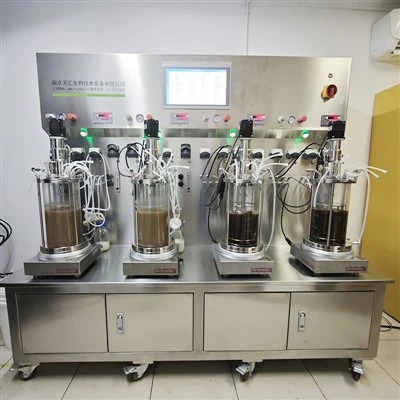
If you’re considering adding a chemostat laboratory bioreactor to your lab, whether for a new research project, optimizing a production process, or streamlining your cell culture work, we can help you navigate every step. From selecting the right benchtop or multi-vessel system for your workflow, to training your team on setup, operation, and maintenance, we’re here to ensure you get consistent, reproducible results from every run. To discuss your specific needs, from culture type (bacterial, mammalian, algal) to experiment duration and required parameters, feel free to reach out to coordinate a consultation tailored to your lab’s goals.
Laboratory Bioreactor References
- Pirt, S. J. (1975). Principles of Microbe and Cell Cultivation. Blackwell Scientific Publications.
- Doyle, P. S., & Cady, N. C. (2015). The evolving chemostat: Applications in microbiology and biotechnology. Current Opinion in Biotechnology, 35, 104–110.
- Varley, J. C., & Stewart, P. S. (2006). Continuous culture of microorganisms. Methods in Microbiology, 35, 249–275.
- Lv, L., et al. (2014). Perfusion bioreactors for mammalian cell culture: Advances and applications in biopharmaceutical manufacturing. Biotechnology and Bioengineering, 111(10), 1925–1936.
Nanjing Tianhong Bioengineering Equipment Co., Ltd.
As one of the most professional laboratory bioreactor manufacturers and suppliers in China, we’re featured by quality products and good price. We warmly welcome you to buy customized laboratory bioreactor made in China here from our factory. If you have any enquiry about pricelist, please feel free to email us.
Address: No.8 Xingshi South Road, Shiqiu Sub-district, Lishui District, Nanjing City, Jiangsu Province, P.R. China
E-mail: 13951637999@163.com
WebSite: https://www.njth-bio.com/
