Hey there, welcome to my little corner of the blog! If you’ve ever wondered how that super versatile foamed ceramic stuff we supply every single day actually comes to life, you’re in the right spot. I’m gonna walk you through this step-by-step like I’d chat with a regular customer at a trade show—no stuffy jargon, no confusing terms, just the real process we use here at our facility. For anyone who’s worked with us before, you know we’re all about transparent, quality products, so why would I hide how we make ’em? Foamed Ceramic

First off, let’s get one thing straight: foamed ceramic isn’t just some random foam you see on a couch. It’s a lightweight, heat-resistant, super strong material that’s used for all kinds of stuff—insulation in factories, filters for metal casting, even landscaping. But how do you turn regular ceramic into foam? It’s not like stirring a latte, trust me. The process starts way before we even think about adding bubbles.
The Raw Material Mix (No Magic, Just Good Ingredients)
Every batch of foamed ceramic begins with a mix of raw materials. We don’t cut corners here—our go-tos are feldspar, kaolin, and sometimes a little quartz, depending on what the customer needs. Feldspar helps lower the melting point, so we don’t have to crank the kiln to 1,500 degrees every single time (saves energy, which is a win for both us and the planet). Kaolin is that soft white clay you’ve probably seen in pottery, and it gives the ceramic its structure. Quartz adds durability, so the final product doesn’t crumble if you drop it (we test that, by the way—accidentally dropped a sample once during a demo, learned real quick we needed more quartz for outdoor applications).
Now, here’s the part that’s key: we grind all these ingredients into a fine powder. Like, really fine—finer than flour. If the powder’s too coarse, the bubbles we add later won’t be even, and you’ll end up with some big holes and some tiny ones, which messes up the strength. We use a ball mill for this—just a big rotating drum with ceramic balls inside that bash the raw materials until they’re perfect. Takes a few hours, but it’s worth it.
Once we’ve got the powder, we mix it with water and a little binder—usually something like methyl cellulose, which is safe and easy to work with. The binder keeps the mix from falling apart when we shape it. We end up with a thick, spreadable slurry, like cake batter but way heavier. You don’t want it too runny, otherwise the bubbles will pop before they can set.
Making the Bubbles (The Foam Part)
This is where it gets fun. We need to turn that thick slurry into a foam, so we add a foaming agent. Wait, not the kind you use for bath bombs—this is a chemical or sometimes a powdered material that releases gas when we heat it up. The most common one we use is calcium carbonate, which is just chalk, honestly. When we heat the slurry to around 800 degrees, the calcium carbonate breaks down and releases carbon dioxide gas, which blows up little bubbles in the mix. That’s where the “foamed” part comes from.
Wait, hold on—we also could use a mechanical foaming process, right? Like whipping the slurry with a mixer to create bubbles. But for our products, chemical foaming is more consistent. We tried mechanical once, and some batches had bubbles that were too big (like, 10mm wide) which made the ceramic weak. Chemical gives us bubbles that are all around 1-5mm, perfect for most applications.
Once we’ve mixed in the foaming agent, we pour the slurry into molds. These molds are usually rectangular, since that’s what most customers order—they can cut them to size if needed. We let the molded slurry dry for a day or two, until it’s hard enough to handle. It’s not totally dry, though—there’s still a little moisture left, which helps during the next step.
Firing in the Kiln (The Make-or-Break Step)
Now we’re moving to the kiln, and this is where the magic happens. Wait, no, not magic—controlled heat. We put the dried, molded foamy slurry into a kiln and slowly crank up the temperature. First, we heat it to around 600 degrees to burn off any leftover moisture and the binder. Then, we ramp it up to around 1,200 to 1,400 degrees—depends on the type of foamed ceramic we’re making. That’s where the calcium carbonate does its thing, releasing CO2 and making the bubbles expand. You can actually see it through a small window in the kiln if you’re nearby—little bubbles getting bigger, like bread rising in an oven.
Here’s the thing: if we heat it too fast, the bubbles will get too big and pop, leaving empty spaces where the foam was. If we heat it too slow, the ceramic will shrink too much, and the bubbles will be too small. We have a specific schedule for every batch—been tweaking it for years, so it’s almost second nature now. Our kilns are computer-controlled, but I still check in on every batch personally. Can’t trust a machine 100% (ask me about the time a kiln glitch messed up a whole batch of landscaping foamed ceramic—total disaster, had to re-make it).
After firing, we let the foamed ceramic cool down slowly over a day. If we cool it too quickly, it can crack, which is useless for most applications. Once it’s cool, we take it out of the kiln and that’s pretty much the product—light, porous, strong, heat-resistant, all that good stuff. We trim the edges a little, check for any defects, and package it up ready to ship.
What Makes Our Process Different?
I get it—other suppliers out there are making foamed ceramic too. So why choose us? Well, we don’t just pump out product. We test every batch. We have a lab on-site where we check the density, the porosity, the strength, the heat resistance. If a customer needs foamed ceramic for metal casting filters, we make sure it can handle the high temp of molten metal. If they need it for insulation in a cold storage warehouse, we check that it doesn’t let heat through too much.
Also, we’re flexible. A lot of big suppliers have one-size-fits-all, but if you need a custom size or a specific density, we can adjust the mix or the firing schedule to make it happen. Last year, a customer in the solar industry came to us needing foamed ceramic that could hold up to extreme UV light—we tweaked the raw material mix, and they loved the result. No hoops to jump through, just talking directly to someone who actually works with the product every day.
How This Translates to Your Business
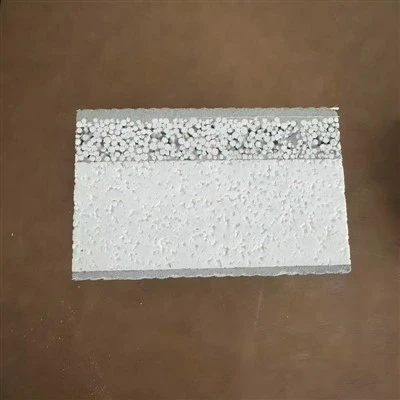
Why does how it’s made matter to you as a buyer? Because if the process is sloppy, you’ll end up with foamed ceramic that cracks easily, or has uneven bubbles, or breaks down after a few uses. We’ve had customers come to us after buying from another supplier—their filters were clogging in a month, whereas ours last 6 months. Their insulation was letting too much heat escape, wasting energy. That’s why we’re so strict with our process—we want your foamed ceramic to work as good as it can, for as long as it can.
Ready to Chat?
Fiberglass Mesh If you’re in the market for foamed ceramic—whether it’s for insulation, filtration, landscaping, or something else entirely—hit me up. I don’t do sales pitches that sound like robot scripts. I’ll tell you exactly what we can make, answer any questions you have about the process, even send you a free sample if you want to test it for your project. No hidden fees, no long wait times, just reliable product from someone who’s actually making it, not just reselling it.
References
- “Foamed Ceramics: Processing, Properties, and Applications.” Journal of Materials Science, vol. 48, no. 10, 2013, pp. 3521-3542.
- Singh, R., et al. “Recent Advances in Foamed Ceramic Manufacturing for Industrial Applications.” Industrial Ceramics, vol. 37, no. 2, 2017, pp. 119-126.
- American Ceramic Society. “Handbook of Ceramic Foams: Production and Performance.” 2020.
Shanxi Rongshengchang Trading Co., Ltd.
As one of the most professional foamed ceramic suppliers in China, we’re featured by quality products and good price. Please rest assured to buy premium foamed ceramic for sale here from our factory. Welcome to view our website for more information.
Address: No.1602, 16th Floor, Unit 4, Building 13, Pingyang Jingyuan, No.65 Pingyang Road, Pingyang Road Street, Xiaodian District, Shanxi Province, China
E-mail: postmaster@rongshengchang.com
WebSite: https://www.rongshengchang.com/
