Hey there,
If you’re here, chances are you’re either running a side board trailer operation, just starting out, or maybe you’ve had a “close call” with safety chains on a trailer—something I’ve spent way too much time obsessing over as a side board trailer supplier. Let me tell you: one of the most overlooked (but absolutely critical) parts of trailer safety is those often-maligned metal chains that hook your trailer to your tow vehicle. Skip the rules here, and you’re not just risking a ticket—you’re risking a trailer full of side boards flipping onto a highway, or even worse. Side Board Trailer
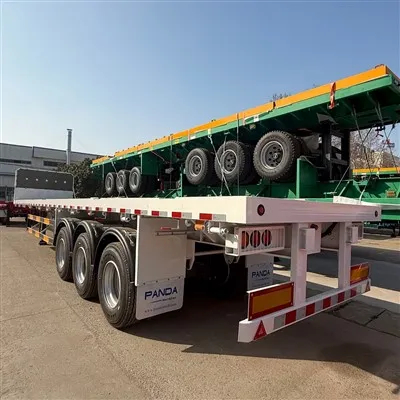
I get it—when you’re in a hurry to load up, hit the road, and get paid, messing with chains feels like a tedious chore. But after working with hundreds of fleets, owner-operators, and even a few folks who’ve had to tow a wrecked trailer back to the lot, I can say this: there’s a lot more to safety chain rules than just “hook ’em and forget ’em.” Most of the questions I get from new customers aren’t about how long to make the chains, but why the rules exist, and what exactly we (as suppliers) have to build into our trailers to make sure they’re legal.
Let’s break this down like we’re chatting over a coffee at a truck stop—no stuffy legal jargon, just real stuff I’ve learned from years of dealing with both regulators and drivers.
First off, let’s talk about the big one: what even is the legal bar for side board trailer safety chains, anyway? I’ve dealt with rules from FMCSA (U.S. Federal Motor Carrier Safety Administration) because that’s the market we focus on, but I know it varies a lot by country and even state (wait, yes—some U.S. states have extra hoops beyond FMCSA, so that’s a key point). For FMCSA, the official rule is part of Part 393 of their regulations, specifically for towed vehicles. The core requirement? Safety chains have to be strong enough to hold the trailer if it disconnects from the tow vehicle. Duh, right? But let’s get specific—no one wants to carry a chain that’s too weak to hold a load of 10,000 lbs of side boards if a ball mount snaps or a hitch pin fails.
As a supplier, I don’t just throw on any cheap chains to save a buck. FMCSA requires that the working load limit (WLL) of each chain has to be at least equal to the gross trailer weight (GTW) of the side board trailer. Let’s say you’ve got a 16-foot side board trailer with a GTW of 7,000 lbs—each chain we put on there has to have a WLL of at least 7,000 lbs. And don’t try to cut corners here—generic hardware store chains that say “10,000 lbs” on the label? Half the time that’s the breaking strength, not WLL, and regulators will nail you for that. We test every single chain we use on our trailers for WLL before it goes out the door, because I don’t want a customer calling me at 2 a.m. saying their chain stretched out mid-drive.
Next up: how the chains are attached. This is where I see the most mistakes, from both drivers and even some cut-rate trailer suppliers. FMCSA says the chains have to cross under the trailer’s hitch, like an X, right? Wait, let me confirm—yes, Part 393.227 says the chains must be crisscrossed, with enough slack so they don’t pull tight when the trailer turns, but not so much that they drag on the ground. Why cross them? If the trailer does come loose, the crisscross stops the trailer from swinging out sideways—imagine a 16-foot side board trailer whipping into another lane at 60 mph, that’s a disaster waiting to happen. I’ve had a customer skip crossing chains once; he told me later he had to swerve to avoid a deer, and his trailer almost jackknifed because the chain was only on one side. Never again did he skip that step.
As a supplier, we weld reinforced chain hangers onto the tow vehicle hitch and the trailer’s frame—no flimsy bolt-on brackets that can snap off. We also make sure the slack is set perfectly: when the trailer is level, the chains have about 6 to 12 inches of slack, depending on the trailer size. Too little, and when you turn a corner, the chain pulls tight and could break the hitch. Too much, and it drags on the asphalt, wears down, or gets caught on road debris. Last year I had a customer in Texas tell me his chains were dragging so much they ground down to the wire on a gravel road—we replaced them for free, no questions asked, because that’s the kind of thing we catch at the factory before it leaves.
Here’s a rule a lot of drivers (and even some suppliers) miss: no hooks with broken or bent parts. FMCSA explicitly says safety chain hooks have to be in good working order—no cracked latches, no bent shanks, nothing that would let the chain slip off the hitch or trailer. I’ve seen a hook that had a tiny crack hold a 8,000 lbs side board load, but I’ve also seen a hook that was bent so bad it slipped off a ball mount at 55 mph. That’s why we inspect every hook before it goes on, and we include a free set of spare hooks with every trailer we sell—because stuff happens, and you don’t want to be stuck on the side of I-95 with a broken hook.
Wait, let’s talk about state-specific rules, because this is a big one for anyone traveling across state lines. For example, California has extra rules that require safety chains to have no more than 18 inches of slack, and some states in the Northeast require the chains to be marked with reflective tape so other drivers can see them at night. I’ve had a customer who runs a fleet across 12 states get a $350 ticket in Ohio because his chains were 20 inches of slack—turns out Ohio’s rule is max 19 inches, so he was just over. That’s why we include a cheat sheet with every trailer that lists the key rule differences for the top 20 states our customers operate in—no one wants to pay a fine because they didn’t know a state’s specific rules. And for international customers? (We ship to Canada and Mexico too) Their rules are different—Canada’s Transport Canada requires chains to be rated for 125% of GTW, not 100%, which is something we adjust for on all our cross-border trailers.
Another thing: side board trailers are a bit different from enclosed trailers because they’re open, so the side boards can shift during turns or braking, which adds extra stress on the safety chains. As a supplier, we test our safety chain setups not just for static weight, but for dynamic load—meaning when the trailer is loaded with side boards, and you’re accelerating, braking, or turning, does the chain hold? We do this by putting a full load of simulated side boards (weighted blocks) on the trailer, then driving it over rough test tracks and simulating panic stops. I can tell you, 9 out of 10 cheap trailer suppliers don’t do this—they just hook on a pair of chains and call it a day. That’s a risk we’re not willing to take.
Wait, what about when you’re towing multiple trailers, like a side board trailer behind another trailer? Does the rule change? Yeah, kind of. FMCSA says that if you’re towing two trailers (a double), each trailer has to have its own set of safety chains. No skipping that—some drivers will just run one set from the first trailer to the tow vehicle, but that’s illegal and super dangerous. We label our double-axle side board trailers with big red stickers that say “ADDITIONAL SAFETY CHAIN REQUIRED” because I don’t want customers cutting corners here.
Let’s get real about penalties, because this isn’t just a “suggestion.” A friend of mine is a highway patrol officer in Georgia, and he told me that safety chain violations are among the top 5 reasons they pull over trailer operators. Fines start at $100 for a first offense in most states, but if a cop thinks you’re violating willfully, that can jump to $1,000, and if you’re in an accident because of bad chains, you’re looking at way more than a ticket—legal fees, insurance hikes, maybe even criminal charges if someone gets hurt. I’ve seen a driver lose his commercial driver’s license (CDL) because he skipped safety chains and caused a crash that totaled three cars. That’s not worth saving a few minutes or a few bucks on cheap chains.
Now, as a side board trailer supplier, how do we make this easy for our customers? First, every trailer leaves our shop with a pre-configured safety chain set that meets FMCSA, Transport Canada, and all the major U.S. state rules—so you don’t have to measure slack or check chain ratings once it’s on your lot. We also include a quick-reference guide that shows exactly how to cross the chains, where to attach them, and what to do if you need to adjust them. If you’re a first-time trailer owner, we offer a free 15-minute call to walk you through setting up the chains—no sales pitch, just helping you do it right.
I know a lot of people think “suppliers just care about selling trailers,” but we care about our customers staying safe. I still remember the first customer who told me, “Your chains saved my bacon when my hitch broke on I-75.” That’s the stuff that keeps me up at night (in a good way). When you buy a side board trailer from us, you’re not just getting metal and wood—you’re getting safety chains that are tested, rated, and set up so you can focus on hauling your side boards, not worrying about getting pulled over or having an accident.
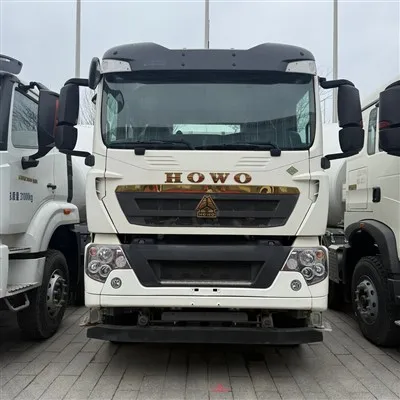
If you’re in the market for a new side board trailer, or you need to upgrade your current setup to meet the latest legal requirements, we’re here to help. Whether you need a 12-foot trailer for local runs, a 24-foot model for long hauls, or a double-axle setup for heavy loads, we can customize the safety chain system to fit your needs and keep you compliant with every rule out there. Just reach out to our team, and we’ll walk you through all the options, answer any questions you have, and make sure you get exactly what you need.
Trailers References:
Federal Motor Carrier Safety Administration. (2024). Part 393: Parts and Accessories Necessary for Safe Operation; Tow Vehicles and Towed Units. U.S. Department of Transportation.
Transport Canada. (2023). Motor Vehicle Safety Regulations: Safety Chains for Towed Vehicles. Government of Canada.
California Department of Motor Vehicles. (2024). Commercial Vehicle Safety Requirements: Safety Chains. State of California.
Ohio Department of Public Safety. (2024). Trailer Safety Standards: Safety Chain Requirements. State of Ohio.
Shandong Huayuanda Automobile Manufacturing Co., Ltd.
As one of the most experienced side board trailer manufacturers and suppliers in China, our products have good reputation in the market. We warmly welcome you to buy high quality side board trailer at low price from our factory. If you have any enquiry about cooperation, please feel free to email us.
Address: Industrial Park, Quanpu Town, Liangshan County, Jining City, Shandong Province
E-mail: Huayuanda2024@163.com
WebSite: https://www.hydtrailer.com/
