Hey guys, let’s cut to the chase — if you’re in the game of picking materials for parts that take a beating, you’ve probably asked yourself: Is wear-resistant carbide actually fit for impact applications? As a carbide supplier who’s worked with fabricators, mining teams, and machine shops for years, I’ve seen way too many folks write off carbide as too brittle for hits, or jump in blind and ruin parts before they even break in. Today, I’m breaking down what’s actually true, where carbide works, and where it might not — no corporate jargon, just real talk from someone who sells the stuff and fixes these mistakes every week. Wear-resistant Carbide
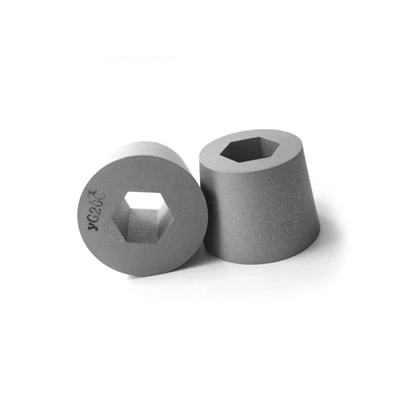
First, let’s get one thing straight: “impact applications” isn’t a one-size-fits-all term. If you’re slamming a part with a 500-pound drop hammer, that’s way different than a rock crusher liner taking constant moderate hits with abrasive sand mixed in. Most people mix up “toughness” and “hardness” when they talk about carbide — and that’s where half the bad calls happen. Carbide is insanely hard, way harder than steel or even ceramic, but its brittleness depends on what kind of carbide you’re using, how it’s made, and how you mount it. I can’t tell you how many times a guy will come in saying he broke a carbide tip in his punch press, and turns out he used a high-hardness, low-toughness grade for a part that takes repeated sharp blows. That’s not carbide’s fault — that’s a wrong grade pick.
Let’s start with the good side, because carbide actually crushes it in a lot of impact scenarios. Take mining and excavation, for example. We supply carbide components for rock drill bits, conveyor chain sprockets, and wear plates on haul trucks. Those parts don’t just wear down from abrasion — they take hits from boulders, loose rock, and rough terrain. A few years back, we worked with a copper mining outfit that was using high-chrome steel for their chute liners, and they were replacing them every 6 months because they’d crack from big rocks sliding down. Switched them to a medium-toughness, medium-hardness carbide grade, and those liners lasted 3 years. No, they didn’t look perfect — there were a couple tiny impact cracks around the edges — but they were still doing their job, not falling apart entirely. The key here was balancing hardness (to fight abrasive wear) with enough toughness to handle the intermittent hits. That grade had a higher cobalt content — cobalt is the binder in most carbide, right? The more cobalt, the tougher the part, the less likely it is to chip or break. Most of us here know that, but new guys just grab the hardest grade available because they think that’s where the value is. It’s not.
Another win: metal stamping and forming. Those dies take repeated impact from metal blanks being slammed into them, and if they crack, production stops. I’ve seen guys use carbide dies for progressive stamping lines running 24/7, and they last 10x longer than tool steel dies — even with the constant punches. Again, it’s the grade. If you use a tungsten carbide grade with 12-15% cobalt, it’s way better at taking those sharp, repeated blows than a 6% cobalt high-hardness grade. The high-cobalt binder acts like a shock absorber, absorbing the impact instead of letting the carbide grains crack. I’ve had one shop tell me their carbide die outlasted three tool steel dies, and the only “impact issue” was a tiny chip on the edge that they just stoned off and kept running. That’s not a failure — that’s normal wear for impact applications.
Now, let’s talk about the times where carbide does not work, because it’s not a magic bullet. If you have a single, extremely high-force impact — like dropping a 1000-pound load right on a carbide part — that’s going to break it. Carbide is rigid, so when a big force hits all at once, there’s no give. Steel bends a little, which disperses the impact; carbide doesn’t, so the stress concentrates in a spot and it cracks. I had a customer a while back who wanted to use a carbide blade for a demolition tool that was swinging a 20-pound sledge at concrete chunks. The first time he hit a rebar, the blade shattered. That’s not a bad part — that’s a wrong application. He should have gone with a tougher material, like a high-toughness steel or even a ceramic matrix composite, for that kind of single, hard hit.
Another case where carbide falls flat: uneven impacts. If the force is concentrated on one tiny spot over and over, instead of being spread out, carbide will chip. Think of a gear tooth in a misaligned assembly — every time it engages, the impact is only on the corner of the tooth. Over time, that corner chips off, and the part fails. I’ve seen guys try to fix this by using a thicker carbide plate, but usually, the fix is actually aligning the machine, not the material. If you’ve got a misaligned part, no material is going to last. Also, temperature matters. If you’re working in extreme cold, carbide gets more brittle — same as most metals. We’ve had a customer in Canada who used our standard carbide for snow plow blades, and in -40°F weather, they were cracking every week. Switched to a low-temperature-toughened grade, and that fixed it. So even if you pick the right grade, environmental factors will mess with it.
Wait, let’s get into some common mistakes I see, because these are the things that make people swear carbide is bad for impact. First, mounting. So many guys just glue or bolt carbide parts on like they would steel, and that’s a mistake. Carbide is denser and harder, so it doesn’t flex, and if the mounting isn’t giving just a tiny bit, the impact will transfer straight to the carbide. For example, if you’re putting a carbide tip on a drill bit, you need a soft, compliant interface layer — like a copper shim or a specific adhesive — that absorbs some of the impact before it hits the carbide. If you bolt it tight with a steel washer, there’s no give, and the tip will crack on the first hard hit. I had a drilling contractor do exactly that last year, and he was back in a week with 12 broken tips. Showed him the shim trick, and he hasn’t had a break since.
Second, overestimating “toughness”. Carbide’s toughness is way lower than steel — like, a tenth or a hundredth, depending on the grade. So if you compare carbide to 4140 steel, yeah, carbide is less tough, but compare it to other hard materials, it’s one of the toughest. And for most impact applications, the impact isn’t that constant or that hard. It’s just abrasive wear with occasional moderate hits. That’s where carbide shines. I always tell people: if your part is wearing out from abrasion more than it’s breaking from impact, carbide is a no-brainer. If it’s breaking more than wearing, you need to adjust.
Let’s throw in a real example from our own work, because that’s what matters. Last year, we supplied a set of carbide wear plates to a sand and gravel operation. Their old plates were AR500 steel, lasting 8 months. The carbide plates we sent? They’ve been in use for 16 months now, and only had two small chips — not cracks, just chips — from a couple big rocks that slipped through. The rest of the plate is still in perfect shape, no significant wear. The grade we used was WC-Co with 12% cobalt, sintered with a fine grain structure — fine grains make carbide harder, but medium grain gives a better balance of hardness and toughness. That’s the sweet spot for most impact-abrasion applications.
Another example: agricultural tillage tools. Tractor tillers hit rocks, roots, hard soil — constant moderate impact and abrasive wear. A lot of farmers use steel tillage points, but switching to carbide points cuts replacement time by half. I had a farmer in Iowa tell me he used to replace his tiller points every planting season, and now they last two seasons. The only issue he had was when he hit a concrete foundation slab someone dumped in the field — that shattered a point, but that’s a single, extreme impact, not normal operation.
So what’s the takeaway here? Is wear-resistant carbide suitable for impact applications? Yes — if you pick the right grade, mount it correctly, and it’s not dealing with single, extremely high-force impacts. It’s not for every impact scenario, but it’s way more versatile than most people think. The biggest mistake is lumping all carbide into one bucket — high-hardness, low-toughness vs high-toughness, medium-hardness. For impact, you want the latter, not the former.
Now, if you’re someone who’s dealing with parts that take hits and wear, and you’re not sure if carbide will work — don’t guess. We’ve helped hundreds of folks pick the right grade, test a sample, and avoid wasting money on wrong materials. No hard sells, no corporate hoops. If you want to chat about your specific application, hit us up to get a sample or ask questions. We can even run a quick impact test in our shop to show you how different grades hold up. No obligation, just real advice from someone who’s been doing this long enough to know what works and what doesn’t.
Die-casting Material References:
- Cardelli, E. (2008). Tungsten carbide: Properties and applications. International Journal of Refractory Metals and Hard Materials, 26(3), 187-195.
- ASTM B876-19, Standard Specification for Sintered Tungsten Carbide Products. American Society for Testing and Materials.
- Gates, J. D., & Steele, A. (2015). Wear performance of carbide vs. steel in mining applications. Mining Engineering, 67(12), 124-129.
- Fischmeister, H. F., & Altenpohl, D. G. (1978). The role of cobalt in cemented carbides. Powder Metallurgy, 21(3), 115-121.
Kunshan Zhiyi Dingli Cemented Carbide Tool Co., Ltd.
We are one of the most professional wear-resistant carbide manufacturers and suppliers in China, also support customized service. We warmly welcome you to wholesale high quality wear-resistant carbide made in China here from our factory. If you have any enquiry about cooperation, please feel free to email us.
Address: No. 80 Chuangfu Road, Qiandeng Town, Mondragon Industrial Park, Kunshan City, Suzhou, Jiangsu, China.
E-mail: 2060056236@qq.com
WebSite: https://www.kszydl.net/
