When a construction project manager walks into a lumber yard looking for film faced plywood, the first question they usually ask is whether to go domestic or imported. As a film faced plywood supplier who’s been in this industry for over a decade, I hear this question at least three times a week, and it’s not just a random preference—it’s a choice that hinges on everything from material sourcing to quality control, shipping costs, and even local building code requirements. I’ve seen too many projects get delayed because someone picked the wrong type, so let me break down the real differences, not just the marketing buzz, between domestic and imported film faced plywood. Film Faced Plywood
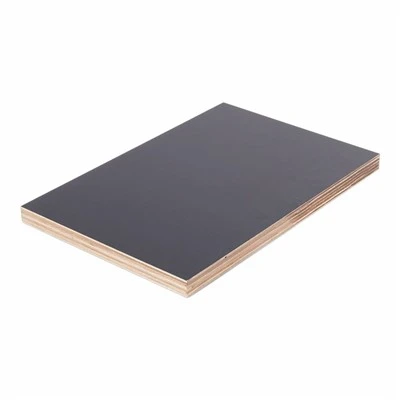
First, let’s get clear on what film faced plywood actually is, because that’s the foundation of every difference. It’s a layer of hardwood or softwood plywood bonded with a thin film of resin, usually phenolic or melamine, on one or both sides. That film is what makes it water-resistant, smooth, and durable enough for concrete formwork, which is where most of it goes. Without that protective film, plywood would warp or delaminate after just a few uses. Now, domestic vs. imported versions start to diverge as soon as you get into the raw materials.
Domestic film faced plywood—for context, here in North America, that means plywood milled within our region, using trees sourced from nearby forests. The US and Canada have strict forest management rules: we’re talking about sustainably harvested softwoods like Douglas fir, pine, and spruce, or hardwoods like birch, depending on the region. The raw material here is something local suppliers control closely. I can tell you exactly which forest our timber comes from, because we work with a small family-owned mill an hour from our warehouse in Ohio. That transparency matters. When you source domestically, you cut out the middleman between the forest and your project, so the logs are fresher when they’re milled into veneers. Fresh veneers bind better during the pressing process, which translates to a stronger plywood sheet.
Imported film faced plywood, on the other hand, usually comes from regions with larger forest resources, like Southeast Asia, parts of Eastern Europe, or South America. Those regions have their own forest regulations, but they’re not always as strict as what we follow here. Most imported plywood uses fast-growing timber, like acacia or eucalyptus, which is cheaper but often has a shorter growth cycle—around 7 to 10 years, vs. 20 to 30 years for the softwoods we use domestically. That shorter growth time means the wood has wider growth rings and less density, which can affect the plywood’s structural integrity. I’ve had clients show me imported sheets that bowed after just two concrete pours, because the core layers weren’t dense enough to hold up under the pressure of wet concrete.
Next up: quality control, and this is where the gap gets really noticeable. Domestic suppliers operate under rigorous standards. In North America, that’s the PS 1-10 standard from the American Plywood Association (APA), which tests for things like delamination, moisture content, and bond strength. We test every batch of our film faced plywood before it leaves our warehouse—we’ll submerge a sample in water for 24 hours to make sure the film doesn’t peel, or drop a sheet from a height to check for core separation. Imported plywood often doesn’t go through those same checks. Some manufacturers will cut corners on the adhesive to save money, or apply a thinner resin film, which means the plywood will absorb water faster. I’ve seen imported sheets that started swelling after a single rainstorm, ruining them before they even made it to the job site. That’s a costly mistake for contractors who are on tight schedules.
Then there’s thickness consistency. When you’re building a concrete form, every sheet needs to be exactly the same thickness so the formwork is level and doesn’t shift during concrete pouring. Domestic plywood mills have precise cutting equipment that ensures a tolerance of just plus or minus 0.5 millimeters. Imported plywood, though, often has variable thickness—some sheets will be a millimeter thinner than advertised, which can lead to gaps in the formwork. I once had a contractor switch to an imported batch to save money, and they ended up with concrete seeping through the gaps, costing them thousands in cleanup and rework. That “savings” turned into a loss in the long run.
Moisture resistance is another key difference, and it’s all tied to that resin film. Domestic film faced plywood almost always uses a high-quality phenolic resin, which is more durable and water-resistant than the melamine resin some imported suppliers use. Phenolic film can withstand up to 100 concrete pours if stored and handled properly, while melamine film will start to peel or scratch after 30 to 40 uses. Imported products sometimes use lower-grade resin to cut costs, so even if the sheet looks good out of the box, it won’t last as long. That means you’re buying more sheets over time, which actually ends up being more expensive than investing in domestic plywood that works for more uses.
Shipping and lead times are practical factors that contractors can’t ignore, too. Domestic plywood is local, so lead times are short. If a job needs an extra 50 sheets overnight, we can drop them off the next day. Imported plywood has to travel thousands of miles—across oceans, through customs, and sometimes waiting in port for weeks. I’ve had a client whose project was delayed for two weeks because their imported plywood got stuck at the California border during a tariff change. That kind of delay can cost a construction company thousands in penalty fees or missed deadlines. Plus, shipping domestic reduces the carbon footprint—no long ocean freighters burning fossil fuels, which is a big plus for projects that aim for green building certifications.
Price is the most obvious difference, and it’s where a lot of people make their mistake. Imported film faced plywood is cheaper upfront. You might pay $10 to $15 less per sheet for an imported batch. But here’s the catch: when you factor in longevity, reusability, and the cost of rework, domestic plywood is actually more cost-effective. Let’s do the math: an imported sheet that lasts 30 uses is $0.50 per use, while a domestic sheet that lasts 100 uses is $0.30 per use. That’s a huge difference, and it doesn’t even include the cost of fixing formwork that fails because the imported plywood was too weak. I’ve seen clients brag about saving money on imported plywood, only to come back a month later asking for domestic because their project had to pause for repairs. That’s not a trade-off worth making.
There are exceptions, of course. Some imported suppliers have started adopting stricter quality standards, and there are high-end imported sheets that match domestic quality. But as a supplier who’s worked with both, I can tell you that those premium imported options are almost the same price as domestic ones, so there’s no real advantage. For most projects, the cheaper imported stuff is a false economy.
Another thing to consider is local building codes. Many North American cities and states now require construction materials to be sourced from sustainable, domestically verified suppliers. If you’re working on a public project, you might not even be able to use imported plywood—it has to meet APA standards and be labeled as a domestic product. I once had a municipal project turn down a batch of imported plywood because it didn’t meet the local requirements, so they ended up paying more for domestic anyway. That’s a rule you don’t want to get on the wrong side of.
What about the way the film performs? Domestic film faced plywood has a smoother, more uniform film surface, which makes it easier to release concrete from the form. The film is also less likely to scratch, so you get a cleaner concrete finish, which means less work smoothing and finishing the surface. Imported sheets sometimes have bubbles or uneven spots in the film, which leave marks on the concrete that have to be sanded or patched. That’s extra labor cost that adds up.
I’ve built relationships with contractors over the years, and the ones who stick with domestic film faced plywood are the ones who value reliability over short-term savings. They know that a delayed project or a bad concrete finish can cost them more than the difference in sheet price. A few years back, I worked with a commercial developer who was building a new office complex. They initially went with a cheaper imported plywood, but after two batches failed, they switched to ours. They’ve used our plywood on every project since, and they tell me it’s saved them hundreds of thousands in rework fees.
At the end of the day, choosing between domestic and imported film faced plywood isn’t just about where the material comes from—it’s about quality, reliability, and long-term value. If you’re working on a project where consistency, durability, and on-time delivery matter, domestic is the clear choice. If you go with imported, make sure it’s from a supplier you trust to test every batch, because not all imported plywood is created equal.

If you’re in need of film faced plywood for your next construction project, and you want a product that’s tested, reliable, and ready to be delivered on time, reach out to us. We’ll walk you through the differences, help you pick the right grade for your needs, and make sure your project runs smoothly. We’re here to answer any questions you have about materials, sourcing, or batch testing—we’ve been doing this long enough to know what works, and we want to help you make the right choice.
Standard CD Structural Plywood References
- American Plywood Association. (2022). PS 1-10 Standard for Performance Standard for Wood-Based Structural Panels.
- Forest Stewardship Council. (2021). Global Sustainable Forest Management Report.
- Construction Materials Association. (2023). Film Faced Plywood Performance in Concrete Formwork Applications.
- International Trade Administration. (2022). Lumber and Plywood Import Tariff and Quality Standards Report.
Shandong Rogge Wood Industry Co., Ltd.
As one of the most professional film faced plywood manufacturers in China, we also support customized service. We warmly welcome you to buy bulk premium film faced plywood from our factory. If you have any enquiry about cooperation, please feel free to email us.
Address: No.1 Road, Jinyang Village, Huyang Town, Felxlan County, Linyi City, Shandong China.
E-mail: sales@roggewood.com
WebSite: https://www.roggewood.com/
