If you’ve ever worked in industrial automation, you’ve encountered the Abb temperature transmitter name plate on control panels, process skids, or piping racks—those compact, unassuming devices that turn a simple temperature reading into data a plant’s DCS or PLC can trust. Over the years, I’ve lost count of how many times I’ve fielded the same question: What is the size of an Abb temperature transmitter? It’s such a straightforward question, but the answer isn’t one number, and it’s not a one-size-fits-all scenario. As an Abb temperature transmitter supplier, I’ve spent years digging through datasheets, talking to field engineers, and troubleshooting installations, and I’m here to break it down the way I explain it to my customers—no jargon, just real-world, actionable details. Abb Temperature Transmitter

Let’s start with the biggest mistake people make when asking about size. They assume a transmitter’s size boils down to the circuit board or the electronics casing, but for industrial temperature transmitters, size is about how they fit into the actual process. Abb designs its transmitters to integrate with two core types of temperature sensors: RTDs (resistance temperature detectors) and thermocouples. The two most common models our team supplies are the TTH300 and the TTF300, and these are the ones that come up in 90% of customer questions, so I’ll focus on them first. That said, Abb does make niche models for specialized applications, so I’ll touch on those too later.
First, the TTH300, Abb’s flagship head-mount temperature transmitter. This is the workhorse you’ll find in almost any standard industrial plant—oil and gas, food and beverage, pharmaceuticals, you name it. Head-mount transmitters are designed to clamp directly onto the thermowell of a temperature sensor, so their size is optimized to fit inside a standard terminal head. Let’s get specific, no vague measurements here. The TTH300’s body (the part that houses the electronics) is 50 mm tall, 42 mm wide, and 22 mm deep. But wait—if you measure the whole assembly when it’s mounted on a M27x2.0 thermowell (the most common thread for temperature sensors globally), add another 10 mm to the total height for the thermowell’s projection and the mounting adapter. That’s why people often mix up transmitter size and sensor size: the transmitter itself is tiny, but the overall installation size depends on the sensor it’s paired with. A lot of first-time buyers will order a transmitter that fits their head, then show up on site to find their old thermowell was M33x2.0, not M27, and they need an adapter. That’s where our team comes in—we always check the customer’s existing sensor threading before they place an order to avoid that headache.
Now, the TTF300, Abb’s rail-mount temperature transmitter, made for panel installations rather than head-mount. This one is for customers who don’t want transmitters scattered across the plant—they want a row of them mounted on a DIN rail inside a control cabinet. DIN rails are standard, so the TTF300’s size is defined by that industry standard. Each TTF300 module is 18 mm wide (it fits exactly into one DIN rail slot, which is also 18 mm), 110 mm tall, and 60 mm deep. That’s a critical detail for panel designers: if you’re retrofitting an old control cabinet, you can’t just squeeze any rail-mount transmitter in—you need to make sure the depth fits, especially if you have other wires or components mounted behind the rail. We once had a customer who forgot that and had to rework half his cabinet because the TTF300’s depth was an extra 10 mm.
But here’s the thing: those are the “standard” sizes, and Abb has a whole lineup of specialty transmitters with different dimensions that are built for specific environments. Let’s talk about the TTH500, the explosion-proof version of the TTH300. If you’re working in a Zone 1 or Zone 2 hazardous area—think refineries, gas pipelines, or chemical plants where explosive gases are present—you can’t use a standard transmitter. Explosion-proof models have to be sealed and rated to contain any internal spark so it doesn’t ignite the surrounding atmosphere. That adds bulk. The TTH500’s body is 65 mm tall, 50 mm wide, and 28 mm deep—about 20% larger than the standard TTH300. And because of the certification, the mounting threading is different too: it uses a 1/2” NPT thread instead of M27, so adapters are non-negotiable here.
Another niche model is the TTH700, the high-temperature transmitter for applications where the sensor is exposed to extreme heat—like furnace stacks, kilns, or engine exhaust. These transmitters have to be rated to work in ambient temperatures up to 185°C (365°F), way higher than the standard TTH300’s max of 85°C. The extra heat resistance comes with a larger, more robust housing: 60 mm tall, 45 mm wide, and 25 mm deep, plus an integrated heat sink that adds another 15 mm to the total length when mounted. If you’re installing a transmitter on a furnace, that heat sink is non-negotiable to keep the electronics from frying, so you have to account for that extra length when planning space around the sensor.
Now, I want to address a common misconception I hear all the time: bigger isn’t always better. A lot of engineers think “industrial grade” means bigger, but Abb has engineered its transmitters to shrink size without sacrificing performance. The TTH300, for example, is 10 mm smaller in depth than the old TTH200 model it replaced, thanks to a new surface-mount electronics design. That’s a game-changer for customers who have tight spaces on skids or small terminal heads—we’ve had a handful of customers who switched to TTH300s just because they couldn’t fit their old transmitters anymore.
Size also ties directly to another key spec: weight. For head-mount transmitters, weight matters because if you have a long thermowell sticking out of a high pipe, a heavy transmitter can cause the thermowell to sag over time, leading to bad temperature readings or even failure. The TTH300 weighs just 85 grams, while the explosion-proof TTH500 is 150 grams—still light enough that it’s not a problem for most thermowells. The rail-mount TTF300 is 120 grams per module, which is light enough that you can mount 20 of them on a single DIN rail without any structural issues.
Wait, let’s also talk about why size matters for accuracy and signal quality, beyond just fit. A transmitter that’s too big for a terminal head will be loose, leading to poor electrical connection, which can cause signal noise or drift. I once had a customer who tried to use a generic third-party transmitter in an Abb head-mount housing, and it was 5 mm too wide, so he stuffed foam around it to make it fit. That led to a bad connection, and his temperature readings were off by 3°C for three months before we figured it out. Abb’s transmitters are precision-engineered to fit exactly into their rated housings, so that loose-fit problem is non-existent if you use the right size.
Another point: spare parts inventory. If your plant uses two different transmitter sizes, you have to stock two sets of spares—adapters, mounting hardware, circuit boards. That adds up fast. Most of our customers standardize on the TTH300 for head-mount applications and TTF300 for rail-mount, which keeps their inventory simple. We even have a bulk discount for customers who order 50+ units at a time, which makes that standardization even more attractive.
Now, for the engineers reading this who are doing new installations: how do you pick the right size? First, identify your application. Is it hazardous? Use the TTH500. Is it for a control cabinet? Use TTF300. Is it a standard process line? TTH300. Then, check your sensor’s threading: M27 for standard, 1/2” NPT for explosion-proof, and special threads for high-temperature models. Finally, measure the space you have: make sure there’s enough clearance around the sensor for the transmitter, and for the wiring (most transmitters need 10-15 mm of space on each side for cable connections).
I should also mention that Abb offers custom size configurations for really unique applications. We had a customer a couple of years ago who worked on a small-scale food processing line where every inch of space was at a premium—they needed a transmitter that fit in a terminal head half the size of the standard M27. Abb worked with them to build a miniaturized version of the TTH300, and we supplied them 20 units for their line. That’s the beauty of working with a major manufacturer like Abb—size doesn’t have to be a one-way door.
Let’s wrap this up with a real example from last quarter, to make this concrete. We had a customer in the Midwest who was retrofitting a 10-year-old ethanol plant. They had 120 old temperature transmitters that were failing, and they needed replacements that fit their existing terminal heads and DIN rails. They’d ordered generic transmitters online before, and half of them didn’t fit, so they were frustrated. We walked them through the sizes: TTH300 for the head-mount units (they had M27 heads, perfect fit) and TTF300 for the rail-mount in the control room. We also sent them a free adapter sample to confirm the fit before they ordered. When they installed them, they told us the process took half the time it did with the old transmitters, and their temperature accuracy improved by 0.5°C. That’s the impact of getting the size right.
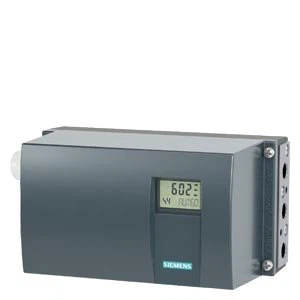
If you’re reading this and still have questions about which size Abb temperature transmitter fits your application, or if you need help checking threading, space clearance, or spare parts, our team is here to help. We’re Abb temperature transmitter suppliers with 10 years of experience in industrial automation, and we’ve worked with hundreds of plants from food and beverage to oil and gas. We can walk you through datasheets, send you sample dimensions, or even arrange a site visit if you need on-site measurements. Don’t let a bad transmitter size slow down your process or cause inaccurate readings—reach out to our team to start a conversation about your project.
Siemens Pressure Transmitter REFERENCES
Abb Process Automation. TTH300 Temperature Transmitter Datasheet.
Abb Process Automation. TTF300 Rail-Mount Temperature Transmitter Datasheet.
Abb Process Automation. Explosion-Proof Temperature Transmitters Specification Guide.
Industrial Automation Standards Association. DIN Rail Component Size Guidelines.
Iges Instrument Co., Ltd.
With abundant experience, we are one of the most professional abb temperature transmitter suppliers in China. Please feel free to buy high quality abb temperature transmitter in stock here and get quotation from our factory. Good service and low price are available.
Address: No. 103, 1st Floor, Dacheng Commercial Building, Chezhan Avenue, Lucheng District, Wenzhou City
E-mail: igesinst@gmail.com
WebSite: https://www.iges-inst.com/
