Hey there, folks! I’m a supplier of Enclosed Integrated Lead Screw Linear Modules, and today I wanna chat about one of the most important specs of these nifty devices: the resolution. Enclosed Integrated Lead Screw Linear Module
So, what exactly is the resolution of an Enclosed Integrated Lead Screw Linear Module? In simple terms, resolution refers to the smallest increment of motion that the linear module can achieve. It’s kinda like how the pixels on your smartphone screen determine how sharp an image can be. The higher the resolution of the linear module, the more precise its movements can be.
Let’s break down how resolution works in these linear modules. The lead screw, which is a key component of the module, plays a crucial role here. The lead of the screw is the distance it travels in one full rotation. For example, if a lead screw has a lead of 5mm, it will move the nut (and whatever is attached to it) 5mm along the screw’s axis in one complete turn.
Now, the resolution is affected by how we control the rotation of the lead screw. Most of the time, we use stepper motors or servo motors to drive the lead screw. These motors can be controlled to rotate in very small steps.
For stepper motors, they move in discrete steps. The standard step angle for a stepper motor is usually 1.8 degrees. This means that in one full rotation (which is 360 degrees), the stepper motor makes 200 steps. If we have a lead screw with a 5mm lead and a 200 – step stepper motor, we can calculate the basic resolution.
Each step of the motor will cause the lead screw to move a tiny amount. To figure it out, we divide the lead (5mm) by the number of steps per rotation (200). So, 5mm / 200 = 0.025mm. That 0.025mm is the basic resolution of the linear module when driven by this particular combination of a 5 – mm lead screw and a 200 – step stepper motor.
But here’s the thing. We can often improve the resolution. One way is through micro – stepping. Micro – stepping allows the stepper motor to move in fractions of a step. For example, with 1/4 micro – stepping, the motor can move in steps that are 1/4 of its standard step angle. If we go back to our 1.8 – degree step angle motor, 1/4 micro – stepping makes the effective step angle 1.8/4 = 0.45 degrees. This means the number of effective steps per rotation increases from 200 to 800.
If we recalculate the resolution with 1/4 micro – stepping for our 5 – mm lead screw, we do 5mm / 800 = 0.00625mm. As you can see, the resolution has improved significantly.
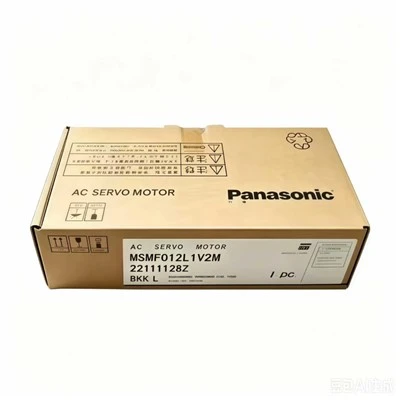
Servo motors work a bit differently. They can provide continuous rotation and are controlled by a feedback system. This feedback can come from encoders, which can give very precise information about the position of the motor shaft. The resolution of a linear module driven by a servo motor depends on the encoder’s resolution.
An encoder with a high number of pulses per revolution (PPR) can provide more detailed position information. For instance, if we have an encoder with 1000 PPR and a lead screw with a 5mm lead, we can get a very good estimate of the resolution. Each pulse from the encoder represents a certain amount of rotation of the motor and thus a small movement of the lead screw.
But why does resolution matter? Well, in a whole bunch of applications, precision is key. In the field of 3D printing, for example, high resolution is essential for creating detailed and accurate models. If the linear module that moves the print head doesn’t have a good resolution, the printed object might come out with rough edges or inaccurate dimensions.
In the electronics manufacturing industry, when placing tiny components on a circuit board, even the slightest deviation can cause a malfunction. That’s where our high – resolution Enclosed Integrated Lead Screw Linear Modules come in. They can move with the precision needed to place components exactly where they should be.
In the medical field, too, precision is a must. For example, in some surgical robots, linear modules are used to control the movement of surgical instruments. A high – resolution module can ensure that the instruments move with extreme accuracy, reducing the risk of errors during surgery.
As a supplier of these Enclosed Integrated Lead Screw Linear Modules, I’m always looking to offer products with the best possible resolution. We’ve spent a lot of time researching and developing different combinations of lead screws, motors, and control systems to improve resolution.
We’ve also made sure to test our products thoroughly. We use advanced measurement tools to check the actual resolution of each module we produce. This way, we can guarantee that our customers get a product that meets their precision requirements.
If you’re in the market for an Enclosed Integrated Lead Screw Linear Module and resolution is important to you, you’ve come to the right place. Our team is full of experts who can help you figure out the best solution for your specific application. Whether you need a high – resolution module for a 3D printing project or a delicate medical device, we can work with you to find the perfect fit.
So, don’t hesitate to reach out to us if you have any questions or are ready to start a conversation about purchasing. We’re here to make sure you get the best linear module for your needs.
Assembly Equipment References
- "Motion Control Handbook", various authors, a comprehensive guide on motor control and linear motion systems.
- Industry whitepapers on linear motion technology from leading manufacturers in the field.
Yangning (Xiamen) Intelligent Technology Co., Ltd.
With abundant experience, we are one of the most professional enclosed integrated lead screw linear module manufacturers in China. As we have world-leading production equipment and strong manufacturing capabilities, we warmly welcome you to buy bulk advanced enclosed integrated lead screw linear module from our factory. Customized orders are welcome.
Address: Room 307-2, No. 15 Duiying Road, Software Park Phase III, Torch Hi-Tech Zone, Xiamen, Fujian, China
E-mail: mia@ynautos.com
WebSite: https://www.ynautos.com/
