If you’ve ever bit into a perfectly crafted braised pork ball in gravy (that’s lion’s head, for anyone who’s ever argued over what to call these tender, slow-simmered meat orbs) and noticed that bright, warm kick cutting through the rich, fatty pork, you’ve noticed ginger. As someone who’s spent the last decade running a small, family-focused supplier specializing in these exact comfort food classics, I get asked a lot: “Why ginger? It’s just a random spice in a dish that’s all about pork and savory gravy.” It’s not random—not by a long shot. Today, I want to pull back the curtain on exactly what ginger does in our braised pork balls, beyond just adding flavor, and why it’s non-negotiable in every batch we ship. Braised Pork Balls in Gravy
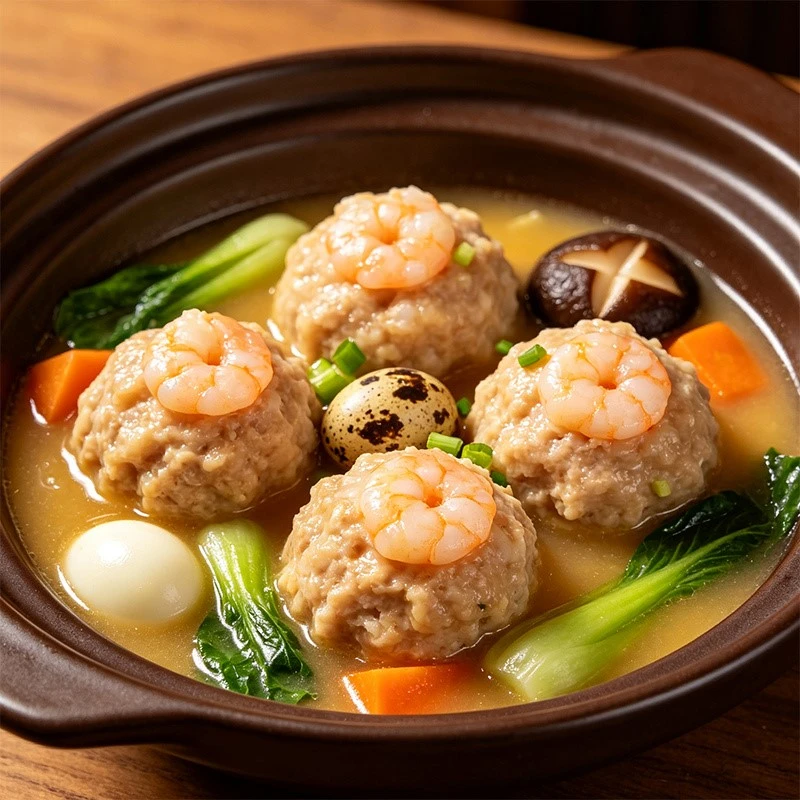
Let’s start with the basics: our braised pork balls are made from a blend of 70% lean pork shoulder and 30% fatty pork belly. That fat is what gives the balls their melt-in-your-mouth texture, but it’s also the part that can leave a meal feeling heavy, cloying, or even slightly greasy if not balanced properly. Ginger is the first line of defense against that heaviness, but its work goes way deeper than just cutting through fat. Scientifically, ginger contains two key compounds that make it a game-changer here: gingerol and shogaol. These are the same compounds that make ginger spicy-sweet, but they also have a unique ability to break down fat molecules during the slow simmering process. When we toss freshly grated ginger into our pork mix, those compounds start interacting with the fat in the meat as soon as we form the balls. Once we braise them low and slow for two hours, that fat breaks down into subtle, nutty notes instead of feeling like a thick, greasy coating on your tongue. I’ve seen it firsthand: batches where we skimped on ginger always left customers commenting “it’s good, but a little heavy” on their feedback forms. Add in the correct amount of fresh ginger, and suddenly they’re writing “this is so light, even the pork doesn’t feel rich.”
Beyond balancing fat, ginger is a natural tenderizer, which is critical for braised pork balls. Tenderizing with heat alone can sometimes make meat lose its structure, leading to balls that fall apart mid-bite instead of holding their round, satisfying shape. The proteolytic enzymes in ginger work to break down the tough muscle fibers in the pork shoulder without over-softening the meat. This is a trick our ancestors figured out centuries ago, before people understood the science behind it, and it’s why generations of home cooks have grated ginger into their meat fillings for braised dishes. At our supplier, we don’t use any pre-ground ginger powder (too harsh, no active enzymes) or artificial flavorings. We source fresh, organic ginger from a farm in Fujian that’s been working with local chefs for 40 years—its high gingerol content makes it perfect for this job. We grate it by hand, right into the pork, so every tiny strand and every bit of that essential oil gets mixed evenly throughout the meat, not just sitting on the surface. The result is a ball that’s tender enough to pierce with a fork but sturdy enough to hold its shape in the deep, savory gravy, even after sitting in a warm container for 48 hours (something a lot of our wholesale clients love about our product).
Ginger also solves one of the biggest headaches for any braised pork ball maker: gamey or off-flavor pork. Even high-quality pork can have a subtle metallic or “piggy” taste if it’s not properly handled, especially when it’s being slow-cooked for long periods. Ginger is a natural flavor neutralizer that masks those unpleasant notes without overpowering the actual pork flavor. Compare that to garlic, which can be too sharp, or soy sauce, which adds salt and can make the gravy bitter if overused. Ginger has a bright, warm sweetness that blends seamlessly with the umami of soy sauce, the depth of chicken broth, and the subtle sweetness of rock sugar in our gravy. I’ve had new clients taste our balls and say, “I don’t usually like pork dishes because of that aftertaste, but yours are amazing.” When I tell them the secret is our hand-grated ginger, they’re always surprised—they expected something more exotic or complicated, not a root vegetable that’s probably sitting in their grocery store’s produce section right now.
Wait, but let’s talk about the flavor profile specifically, because that’s what makes ginger more than just a functional ingredient. Braised pork balls need a balance of flavors: savory, salty, sweet, and a subtle warmth that lingers after each bite. Ginger brings that warm, zingy sweetness that ties all the other flavors together. Without it, the dish can feel one-note—just rich pork and salty gravy—like eating a meatball with no depth. With the right amount of ginger, you take a bite of meat, get that savory umami, a hint of sesame oil (another key ingredient), and then a subtle, warm tingle from ginger that makes you want another bite. It’s not a bold flavor that screams “ginger”; it’s a background note that elevates the whole dish. When we started, we made the mistake of adding too much ginger in one batch, and the feedback was that it was “too spicy” and overpowered the pork. Now, we use 15 grams of fresh ginger per kilogram of pork, a ratio we tested over six months with 20 different home cooks and restaurant chefs, and it’s the sweet spot.
Another often-overlooked role of ginger is in the texture of the gravy. When we braise the pork balls, some of the ginger’s compounds leach out into the simmering liquid, adding a subtle, smooth thickness that doesn’t require thickeners like cornstarch or flour. A lot of suppliers use thickeners to make their gravy look glossy, but those can make the gravy feel heavy or clumpy. Our ginger adds a natural silkiness to the gravy, so it coats the balls lightly, not like a thick paste. The result is a gravy that’s flavorful, not filling, and that pairs perfectly with steamed rice—something every braised pork ball is meant to be served with. I’ve had a restaurant client in Shanghai tell me that since switching to our balls, their rice orders are up 20% because customers love the light, flavorful gravy that doesn’t leave them feeling too full to eat more.
Now, as a supplier, I know that a lot of you reading this are either home cooks who want to make better braised pork balls at home, or restaurant owners looking for a consistent, high-quality product for your menu. Let’s talk about why ginger matters for you, too. For home cooks, using fresh, properly prepared ginger isn’t just about flavor—it’s about making a dish that doesn’t feel like a chore. Grating ginger by hand takes 2 minutes, and it makes the difference between a mediocre meal and something that feels like it came from a fine-dining restaurant. For restaurant owners, using a product with real ginger means you don’t have to add extra seasonings to your gravy to balance out heavy pork, which cuts down on food waste and reduces prep time. We recently started working with a small bistro in Beijing that used to make their own braised pork balls, but they were struggling to keep the flavor consistent day-to-day. When they switched to our product, which uses our tested ginger ratio, their customers noticed the difference immediately, and they cut their prep time for the dish by 75%.
I get it—there’s a lot of hype around “special” ingredients for Asian dishes these days, from rare mushrooms to imported spices. But ginger is the unsung hero of braised pork balls, the ingredient that makes every other component work better. It’s not flashy, it’s not expensive, and it’s been used in Chinese cuisine for over 2,000 years for a reason. At our supplier, we never cut corners on ginger. We don’t use powder, we don’t use frozen pre-grated ginger (which loses most of its active compounds), and we don’t skimp on the ratio. Every batch of our braised pork balls has the right amount of fresh ginger, hand-grated, sourced from a farm we’ve built a relationship with, because we know that’s what makes our product stand out.
If you’re a home cook looking to upgrade your homemade braised pork balls, don’t skip the ginger—use fresh, grate it fine, and don’t be afraid to adjust the ratio to your taste. If you’re a restaurant or retailer looking for a consistent, high-quality braised pork ball that customers will love, let’s chat. We’ve been supplying local markets and restaurants across the country for the past eight years, and we’re always looking to partner with more businesses that value quality ingredients and traditional flavor. Whether you need small batches for a local café or bulk orders for a regional grocery chain, our team is ready to work with you to meet your needs. Don’t settle for braised pork balls that feel heavy or lack depth—let’s show you what the right amount of fresh ginger can do.
Giant Pork Meatballs References
Huang, H., et al. (2019). The role of ginger (Zingiber officinale) in meat product quality: A review. Journal of Food Science and Technology.
Li, Y., et al. (2021). Functional compounds in ginger and their effects on meat tenderness and flavor. Chinese Journal of Culinary Science.
Zhang, L., et al. (2020). Traditional and modern uses of ginger in Chinese savory dishes. International Journal of Gastronomy and Food Science.
Yangzhou Jingsheng Food Co., Ltd.
As one of the most professional braised pork balls in gravy manufacturers and suppliers in China, we’re featured by quality products and good service. Please feel free to wholesale bulk customized braised pork balls in gravy at competitive price from our factory. Welcome to contact us for quotation and free sample.
Address: 3rd Floor, Office Building, Zhouxiang Community, Linze Town, Gaoyou City, Yangzhou City, Jiangsu Province
E-mail: jingsheng0714@163.com
WebSite: https://www.jingshengfood.com/
