What are the display functions of special mechanical test machines? Special Mechanical Test Machines
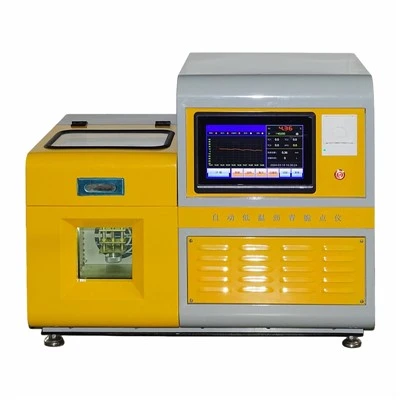
As a supplier of special mechanical test machines, I’ve witnessed firsthand the crucial role these machines play in a wide range of industries. Special mechanical test machines are designed to evaluate the mechanical properties of materials, components, and products under various conditions. One of the key aspects that makes these machines so useful is their display functions. In this article, I’ll delve into the different display functions of special mechanical test machines and explain why they are so important.
Real – time Data Display
One of the most fundamental display functions of special mechanical test machines is the real – time data display. During a test, the machine continuously collects data such as force, displacement, strain, and stress. This data is then presented on the machine’s display in real – time. For example, in a tensile test, the display will show the increasing force applied to the specimen as well as the corresponding elongation. This real – time feedback is essential for operators. They can monitor the progress of the test, identify any abnormal behavior, and make adjustments if necessary. If the force reading suddenly drops during a test, it could indicate a failure in the specimen or a problem with the testing setup. The operator can then stop the test immediately to investigate.
The real – time data display also allows for quick decision – making. In a quality control environment, operators can compare the real – time test data with pre – set specifications. If the data falls outside the acceptable range, they can reject the product right away, saving time and resources.
Graphical Representation
In addition to numerical data, special mechanical test machines also offer graphical display functions. Graphs are a powerful way to visualize the relationship between different variables during a test. The most common types of graphs include force – displacement graphs, stress – strain graphs, and load – time graphs.
A force – displacement graph shows how the force applied to a specimen changes as the specimen is deformed. This graph can provide valuable information about the material’s stiffness, strength, and ductility. For example, a steep slope in the initial part of the force – displacement graph indicates a high stiffness of the material. The maximum point on the graph represents the ultimate tensile strength of the material.
Stress – strain graphs are particularly useful for understanding the mechanical behavior of materials. They show the relationship between the internal stress in the material and the resulting strain. Different materials have distinct stress – strain curves. For instance, brittle materials typically have a linear stress – strain relationship up to the point of failure, while ductile materials exhibit a more complex behavior including an elastic region, a yield point, and a plastic deformation region.
Load – time graphs are used to show how the load applied to a specimen changes over time. This can be important in fatigue testing, where the specimen is subjected to repeated loading. By analyzing the load – time graph, engineers can study the effect of cyclic loading on the specimen and predict its fatigue life.
Test Result Summary
After a test is completed, special mechanical test machines display a comprehensive summary of the test results. This summary typically includes key parameters such as the maximum force, minimum force, average force, maximum displacement, maximum strain, and ultimate strength. It also provides information about the test duration and any notable events during the test.
The test result summary is a concise and convenient way for users to understand the outcome of the test. It can be used for documentation purposes, quality control reports, and research analysis. For researchers, the test result summary can be used to compare the properties of different materials or to validate theoretical models. In a manufacturing setting, it can be used to ensure that products meet the required quality standards.
Multi – channel Display
Many advanced special mechanical test machines are equipped with multi – channel display functions. This means that they can simultaneously display data from multiple sensors. For example, in a complex test where multiple forces and displacements need to be measured, the machine can display each set of data on a separate channel.
The multi – channel display is especially useful in large – scale testing or when testing complex structures. In a structural test of a bridge component, different sensors may be placed at various locations to measure forces, displacements, and strains. The multi – channel display allows the operator to monitor all the data at once, providing a comprehensive view of the structural behavior.
Historical Data Display and Comparison
Special mechanical test machines often have the ability to store historical test data. This data can be retrieved and displayed on the machine’s screen for further analysis. Operators can compare the results of different tests, either on the same specimen or on different specimens of the same type.
Historical data comparison is valuable for quality control and process improvement. By comparing the test results of different batches of products, manufacturers can identify trends in the material properties. If the strength of a particular product is gradually decreasing over time, it could indicate a problem in the manufacturing process. The historical data can also be used to evaluate the long – term performance of materials and products.
Alarm and Warning Display
To ensure the safety and proper operation of the test machine, alarm and warning functions are integrated into the display. These functions alert the operator when certain conditions are met. For example, if the force applied to the specimen exceeds the maximum capacity of the machine, an alarm will sound and a warning message will be displayed on the screen.
Alarms can also be set for other parameters such as displacement limits, temperature limits (if the test involves temperature control), and abnormal sensor readings. The alarm and warning display helps prevent damage to the test machine and the specimen, and it also ensures the safety of the operator.
Customizable Display
Many special mechanical test machines offer customizable display options. Users can choose which data to display, how to format the data, and what kind of graphs to show. This flexibility allows the machine to be tailored to the specific needs of different users and applications.
For example, a research laboratory may be more interested in detailed stress – strain analysis, so they can customize the display to show a large stress – strain graph with additional data points and annotations. On the other hand, a quality control inspector may only need to see the key test results, so they can set up the display to show a simple summary of the maximum force and displacement.
In conclusion, the display functions of special mechanical test machines are essential for their effective operation. Real – time data display, graphical representation, test result summary, multi – channel display, historical data comparison, alarm and warning display, and customizable display all contribute to a better understanding of the test process and the mechanical properties of the specimens. These functions not only improve the efficiency and accuracy of testing but also enhance the safety and usability of the machines.
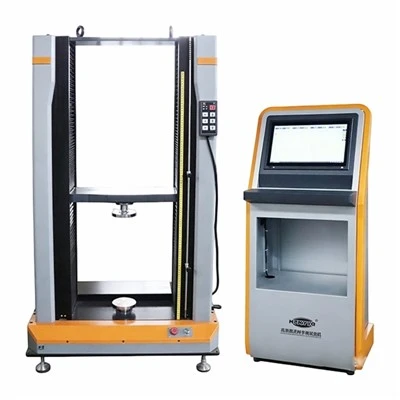
If you are in need of a special mechanical test machine with advanced display functions, we are here to help. Our team of experts can provide you with detailed information about our products, assist you in choosing the right machine for your specific requirements, and offer comprehensive after – sales support. Contact us to start a procurement negotiation and take your testing capabilities to the next level.
Door Window Performance Test Apparatus References
- ASTM International Standards on Mechanical Testing
- ISO Standards related to Material Testing
- Textbooks on Materials Science and Engineering
Hebei Wanluda Testing Instrument Equipment Co., Ltd.
As one of the most professional special mechanical test machines manufacturers and suppliers in China, we have world-leading production equipment and strong manufacturing capabilities. Please rest assured to buy advanced special mechanical test machines made in China here from our factory.
Address: Zhouguantun Village, Xian County, Cangzhou City, Hebei Province, P.R.China
E-mail: wldinstrument@163.com
WebSite: https://www.wldinstrument.com/
