What is the working principle of a hydraulic surface grinder?
As a supplier of hydraulic surface grinders, I’m often asked about the working principle of these remarkable machines. Hydraulic surface grinders are essential tools in the manufacturing industry, used for precision grinding of flat surfaces on a variety of workpieces. In this blog post, I’ll delve into the inner workings of hydraulic surface grinders, explaining how they operate and why they’re so effective. Hydraulic Surface Grinder
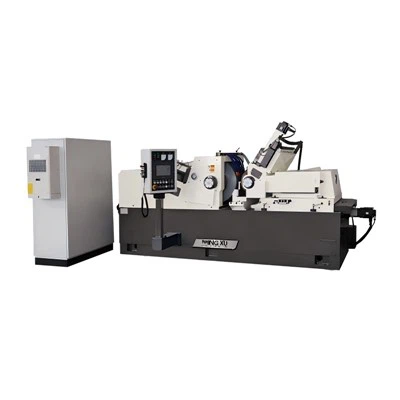
The Basics of a Hydraulic Surface Grinder
Before we dive into the working principle, let’s first understand the basic components of a hydraulic surface grinder. A typical hydraulic surface grinder consists of the following main parts:
- Base and Column: The base provides a stable foundation for the machine, while the column supports the grinding head and other components.
- Table: The table is where the workpiece is placed. It can move horizontally and vertically, allowing for precise positioning of the workpiece during the grinding process.
- Grinding Head: The grinding head holds the grinding wheel and is responsible for delivering the grinding action. It can be adjusted in height and angle to achieve the desired grinding depth and finish.
- Hydraulic System: The hydraulic system is the heart of the hydraulic surface grinder. It controls the movement of the table and the grinding head, providing smooth and precise operation.
- Grinding Wheel: The grinding wheel is the cutting tool of the grinder. It is made of abrasive particles bonded together and rotates at high speed to remove material from the workpiece.
The Working Principle of a Hydraulic Surface Grinder
The working principle of a hydraulic surface grinder can be broken down into several key steps:
Step 1: Workpiece Setup
The first step in the grinding process is to secure the workpiece to the table. This is typically done using clamps or a magnetic chuck, depending on the type of workpiece and the requirements of the grinding operation. The workpiece should be positioned accurately on the table to ensure proper alignment with the grinding wheel.
Step 2: Grinding Wheel Installation
Once the workpiece is set up, the appropriate grinding wheel is selected and installed on the grinding head. The choice of grinding wheel depends on factors such as the material of the workpiece, the desired surface finish, and the grinding operation to be performed. The grinding wheel is then dressed to ensure a sharp and uniform cutting edge.
Step 3: Hydraulic System Activation
The hydraulic system is activated to control the movement of the table and the grinding head. The hydraulic pump generates hydraulic pressure, which is transmitted through a series of valves and cylinders to move the table and the grinding head in the desired directions. The speed and force of the movement can be adjusted using the control panel.
Step 4: Grinding Operation
With the workpiece and grinding wheel in place and the hydraulic system activated, the grinding operation can begin. The table moves horizontally back and forth under the grinding wheel, while the grinding wheel rotates at high speed. As the grinding wheel comes into contact with the workpiece, it removes material from the surface, gradually reducing the thickness and improving the surface finish.
Step 5: Depth of Cut Adjustment
During the grinding process, the depth of cut can be adjusted to control the amount of material removed from the workpiece. This is typically done by adjusting the height of the grinding head using the control panel. The depth of cut should be carefully controlled to avoid overgrinding or undergrinding the workpiece.
Step 6: Surface Finish Control
In addition to controlling the depth of cut, the surface finish of the workpiece can also be adjusted. This can be achieved by changing the speed of the grinding wheel, the feed rate of the table, and the type of grinding wheel used. A finer surface finish can be obtained by using a slower grinding wheel speed, a lower feed rate, and a finer grit grinding wheel.
Step 7: Coolant Application
To prevent overheating and damage to the workpiece and the grinding wheel, a coolant is typically applied during the grinding process. The coolant helps to remove heat and debris from the grinding zone, improving the efficiency and quality of the grinding operation. The coolant is usually sprayed onto the grinding wheel and the workpiece using a nozzle.
Step 8: Completion of Grinding
Once the desired surface finish and dimensions have been achieved, the grinding operation is completed. The table and the grinding head are returned to their original positions, and the workpiece is removed from the table. The grinding wheel is then dressed again to prepare it for the next grinding operation.
Advantages of Hydraulic Surface Grinders
Hydraulic surface grinders offer several advantages over other types of grinding machines, including:
- Precision and Accuracy: Hydraulic surface grinders are capable of achieving high levels of precision and accuracy, making them ideal for applications where tight tolerances are required.
- Smooth and Stable Operation: The hydraulic system provides smooth and stable movement of the table and the grinding head, resulting in a high-quality surface finish and reduced vibration.
- Versatility: Hydraulic surface grinders can be used to grind a wide range of materials, including metals, plastics, and ceramics. They can also be used for various grinding operations, such as surface grinding, cylindrical grinding, and internal grinding.
- Efficiency: Hydraulic surface grinders are designed to be highly efficient, with fast grinding speeds and high material removal rates. This helps to reduce production time and increase productivity.
- Ease of Use: Hydraulic surface grinders are relatively easy to operate, with intuitive controls and a user-friendly interface. This makes them suitable for both experienced operators and beginners.
Applications of Hydraulic Surface Grinders
Hydraulic surface grinders are widely used in a variety of industries, including:
- Automotive: Hydraulic surface grinders are used to grind engine blocks, cylinder heads, and other automotive components to ensure precise dimensions and a smooth surface finish.
- Aerospace: In the aerospace industry, hydraulic surface grinders are used to grind turbine blades, aircraft structural components, and other high-precision parts.
- Tool and Die Making: Hydraulic surface grinders are essential tools in tool and die making, used to grind dies, molds, and other tooling components to exact specifications.
- Medical Device Manufacturing: Hydraulic surface grinders are used in the manufacturing of medical devices, such as surgical instruments and implants, to achieve the required surface finish and dimensional accuracy.
- General Manufacturing: Hydraulic surface grinders are used in a wide range of general manufacturing applications, including the production of machine parts, bearings, and other precision components.
Conclusion

In conclusion, hydraulic surface grinders are powerful and versatile machines that play a crucial role in the manufacturing industry. Their working principle, based on the use of a hydraulic system to control the movement of the table and the grinding head, allows for precise and efficient grinding of flat surfaces on a variety of workpieces. With their high levels of precision, smooth operation, and versatility, hydraulic surface grinders are the preferred choice for many manufacturers seeking to achieve the highest quality surface finishes and dimensional accuracy.
Precision Centerless Grinder If you’re in the market for a hydraulic surface grinder, I encourage you to contact us to discuss your specific requirements. Our team of experts can help you select the right machine for your application and provide you with the support and service you need to ensure its optimal performance. We look forward to the opportunity to work with you and help you take your manufacturing operations to the next level.
References
- "Machinery’s Handbook," 31st Edition, Industrial Press Inc.
- "Modern Grinding Technology," Second Edition, CRC Press
- "Manufacturing Engineering and Technology," Fifth Edition, Prentice Hall
Wuxi Mingxu Machinery Equipment Co., Ltd.
As one of the most professional hydraulic surface grinder manufacturers and suppliers in China, we’re featured by quality products and good price. Please rest assured to buy the best hydraulic surface grinder for sale here from our factory. Also, custom service is available.
Address: No. 5-5 Jinke Wealth Plaza, Changjiang North Road, Xinwu District, Wuxi City, Jiangsu Province
E-mail: yingyingmxjd@163.com
WebSite: https://www.mingxu-china.com/
